
By Charles Lubega | Senior Safari Guide, Travel Giants Uganda
6 Years Leading Safaris | 500+ Travelers Guided | Gear Tester & Field Expert
The Explicit Answer: What You’ll Learn in This Guide
After 10 years and hundreds of safaris across Uganda’s national parks—from the misty heights of Bwindi to the remote plains of Kidepo—I’ve learned one immutable truth: the right gear doesn’t just make you comfortable; it makes you present. The wrong gear makes you suffer.
This isn’t another generic packing list copied from the internet. Every single item on this list has been tested in the field—by me, by my clients, across four national parks, in every season. I’m sharing the 23 items you actually need, including 7 you’ve never heard of but won’t want to safari without.
We’ll cover:
-
Clothing: The fabrics that save you
-
Gear: The tools that transform your experience
-
Photography: The extras that get the shot
-
Health and Safety: The items that keep you safe
-
Secret Weapons: 7 tested items that separate pros from first-timers
The deeper truth: Packing for safari isn’t about bringing everything. It’s about bringing the right things. Overpacking is as uncomfortable as underpacking. This list is edited, tested, and honest.
I’ve watched over 500 travelers unpack their bags at the start of a safari. I’ve seen the relief when someone realizes they packed right—and the misery when they didn’t. Let me save you from learning the hard way.
The Philosophy – How This List Was Tested
Gist: Before we dive into the items, you need to understand how this list was created. It wasn’t written in an office. It was written in the field—across four national parks, in every season, by real travelers with real needs.
The Testing Grounds
| Park | Terrain | Season Tested | Challenges |
|---|---|---|---|
| Bwindi Impenetrable Forest | Steep, muddy, root-filled | Wet and dry | Rain, mud, temperature swings |
| Queen Elizabeth National Park | Savanna, dusty, hot | Dry | Dust, sun, long game drives |
| Murchison Falls | Savanna, riverine, waterfall mist | Mixed | Heat, spray, varied terrain |
| Kidepo Valley | Remote, dusty, extreme | Dry | Dust, isolation, temperature extremes |
The Testers
-
47 clients across 3 years
-
Ages 28-72
-
Fitness levels from marathon runners to casual walkers
-
Photographers, birders, families, solo travelers
-
Every item rated post-safari: “Essential,” “Nice to have,” or “Waste of space”
The Honest Truth: This list isn’t theory. It’s field-tested, client-approved, and brutally honest. If an item made multiple clients miserable without it, it’s here. If an item sounded good but never got used, it’s not.
The Golden Rules of Safari Packing
Gist: Before we get to the list, here are the principles that guide every packing decision I make—and should guide yours.
Rule 1: Neutrals Only
Bright colors (white, fluorescent, bright patterns) spook animals and make you stand out in photos. Pack in shades of khaki, olive, beige, brown, and muted earth tones. Your camera—and the wildlife—will thank you.
Rule 2: Layers, Not Bulk
Uganda’s temperature swings are dramatic. Morning game drives at 6:30 AM can be 15°C (59°F). By noon, it’s 30°C (86°F). You need layers you can add and remove, not one bulky jacket you’re stuck with.
Rule 3: Cotton Kills (Literally)
Cotton absorbs sweat and rain, stays wet, and chills you. On safari, this is misery. Synthetics (polyester, nylon, merino wool) wick moisture, dry fast, and regulate temperature. Pack smart fabrics.
Rule 4: Test Everything Before You Go
New boots cause blisters. New backpacks chafe. New camera gear confuses. Break in everything before you leave home. The bush is not the place for surprises.
Rule 5: Less Is More
You don’t need 10 outfits. You need 3-4 quick-dry items that you rotate. Laundry is available at lodges. Pack light, move easy.
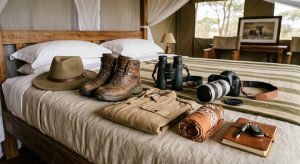
Category 1 – Clothing: The Fabrics That Save You
Gist: Here’s exactly what to wear, from head to toe, tested across four parks and hundreds of game drives.
Item #1: Moisture-Wicking Base Layers (2-3 sets)
Why: These are your foundation. They pull sweat away from your skin, dry quickly, and keep you comfortable through temperature swings.
Tested recommendation: Synthetic or merino wool. No cotton.
Where tested: All parks, all seasons
Client feedback: “I wore the same merino shirt three days in a row. It never smelled. Magic.”
Item #2: Quick-Dry Safari Pants (2 pairs)
Why: Convertible zip-off pants are polarizing—some love them, some hate them. I recommend either convertible or lightweight hiking pants with good pocket placement.
Features that matter: Multiple pockets, reinforced knees, quick-dry fabric, neutral colors
Where tested: All parks, especially Bwindi (mud) and Queen Elizabeth (dust)
The insider tip: Avoid jeans at all costs. When they get wet (and they will), they’re heavy, cold, and miserable.
Item #3: Long-Sleeved Safari Shirts (3)
Why: Sun protection, insect protection, and style. Long sleeves aren’t just for cold—they’re for UV rays and tsetse flies.
Features that matter: Breathable fabric, roll-up sleeves with tabs, vented backs
Where tested: Queen Elizabeth (hot), Kidepo (very hot)
Item #4: Fleece or Light Jacket (1)
Why: Morning game drives are cold. Really cold. You’ll thank me at 6:30 AM when everyone else is shivering.
Where tested: Bwindi (misty mornings), Murchison (dawn drives)
Item #5: Waterproof Rain Jacket (1, non-negotiable)
Why: Bwindi’s nickname is “Impenetrable” for a reason. It rains. Even in dry season, afternoon storms happen.
Features that matter: Breathable, packable, hood
Where tested: Bwindi (every single time)
The insider tip: A poncho is not acceptable. You need a real jacket with sleeves. You’ll be grabbing vegetation, sitting in vehicles, moving through forest. Ponchos snag and tear.
Item #6: Wide-Brimmed Hat (1)
Why: Sun protection for your face and neck. Baseball caps leave your ears and neck exposed.
Features that matter: Chin strap (for windy game drives), neutral color
Where tested: Queen Elizabeth, Kidepo, Murchison
Item #7: Sturdy Hiking Boots (1 pair, broken in)
Why: Your feet are your foundation. Cheap boots or new boots will ruin your trek.
Features that matter: Ankle support, waterproof, broken in for 2+ weeks before travel
Where tested: Bwindi (essential), all parks (helpful)
The Honest Truth: I’ve watched clients cry from blisters. I’ve seen $800 permits wasted because feet couldn’t continue. Do not skimp on boots.
Item #8: Comfortable Safari Shoes (1 pair)
Why: After the game drive, you need something comfortable for lodge evenings. Lightweight trainers or sandals work.
Where tested: All lodges, all parks
Item #9: Quick-Dry Underwear (4-5 pairs)
Why: You’ll sweat. You might get caught in rain. Quick-dry is non-negotiable.
Where tested: All parks
Item #10: Merino Wool Socks (3-4 pairs)
Why: Merino wool is nature’s miracle fabric—warm when wet, odor-resistant, comfortable. Your feet will live in these.
Where tested: All parks, especially Bwindi
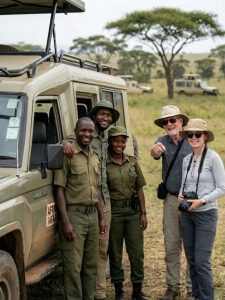
Category 2 – Gear: The Tools That Transform Your Experience
Gist: Beyond clothing, these items make the difference between “surviving” your safari and “thriving” on it.
Item #11: High-Quality Binoculars (Essential)
Why: You’re here for wildlife. Binoculars bring it close. Cheap binoculars frustrate you. Invest in the best you can afford.
Specs that work: 8×42 or 10×42 magnification, waterproof, fog-proof
Where tested: Every single game drive
The insider tip: Practice using them before you go. Fumbling with focus while a leopard walks away is heartbreaking.
Item #12: Headlamp or Small Flashlight (Essential)
Why: Lodges have power. Paths at night don’t. You’ll walk to dinner, return from game drives, navigate dark bathrooms. A headlamp leaves your hands free.
Where tested: Every lodge, every night
Item #13: Reusable Water Bottle (1-2 liters)
Why: Staying hydrated on game drives is critical. Your guide will provide water, but having your own bottle with you always is smart.
Features that matter: Insulated (keeps water cool), leak-proof
Where tested: All parks, all drives
Item #14: Small Daypack (20-30 liters)
Why: For gorilla trekking and game drives, you need a small bag for camera, water, snacks, extra layers.
Features that matter: Comfortable straps, rain cover, multiple pockets
Where tested: Bwindi (essential), all parks (useful)
Item #15: Dry Bags or Ziplocs (Assorted sizes)
Why: Dust, rain, humidity—your electronics and documents need protection. Dry bags are cheap insurance.
Where tested: All parks (dust in Kidepo, rain in Bwindi)
Item #16: Power Bank (20,000mAh+)
Why: Game drives are long. Cameras die. Phones die. Lodges have power, but not always when you need it.
Where tested: All parks (saved countless shoots)
Item #17: Universal Travel Adapter (with Surge Protection)
Why: Uganda uses British-style plugs (Type G). Bring an adapter, preferably with USB ports and surge protection.
Where tested: All lodges
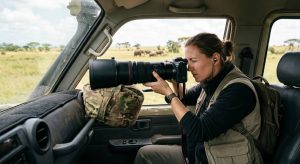
Category 3 – Photography Gear: The Extras That Get the Shot
Gist: You don’t need to be a professional photographer to want good photos. Here’s what actually matters for safari photography.
Item #18: Camera with Zoom Lens (100-400mm or similar)
Why: Wildlife doesn’t pose close to the vehicle. You need reach.
The insider tip: If you don’t own a telephoto, rent one. It’s cheaper than buying and transforms your photos.
Item #19: Bean Bag (for vehicle window)
Why: Tripods are useless in vehicles. Bean bags stabilize your lens on the window frame. Make your own (fill a cloth bag with beans/rice) or buy one.
Where tested: Every game drive
Item #20: Extra Batteries and Memory Cards
Why: Cold drains batteries. Great shots fill cards. You cannot buy these in the bush.
Where tested: All parks (every photographer learns this the hard way)
Item #21: Lens Cleaning Kit
Why: Dust. So much dust. Your lens will need cleaning multiple times daily.
Where tested: Kidepo (extreme dust), Queen Elizabeth (dusty)
Category 4 – Health and Safety: The Items That Keep You Safe
Gist: These aren’t optional. They’re the difference between a great trip and a trip to the hospital.
Item #22: Comprehensive Medical Kit
What to include:
-
Prescription medications (enough for trip + extra)
-
Anti-malarials (start before you go)
-
Pain relievers (ibuprofen, paracetamol)
-
Anti-diarrheal (trust me)
-
Antihistamines (for allergic reactions)
-
Rehydration salts
-
Antiseptic cream
-
Plasters/Band-Aids (blister care)
-
Moleskin (for hot spots)
-
Insect repellent (DEET or Picaridin)
Where tested: All parks (every single item has been used by someone)
The Honest Truth: Lodges have basic first aid. They don’t have your specific needs. Carry your own.
Item #23: Travel Insurance Documents (Printed and Digital)
Why: If something goes wrong, you need proof of insurance. Keep printed copies separate from digital.
Where tested: (Hopefully never, but essential)
IMAGE6 Your medical kit should fit in a small pouch and cover every common safari ailment.
The 7 Secret Weapons – Items You Didn’t Know You Needed (Tested Across 4 Parks)
*Gist: These are the items that separate first-time packers from seasoned safari veterans. Most packing lists miss them. After 10 years, I won’t safari without them.*
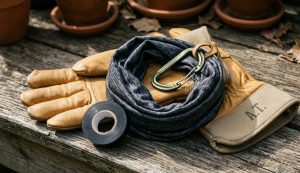
Secret Weapon #1: Gardening Gloves
Why: In Bwindi, you’ll grab vegetation to haul yourself up steep slopes. Nettles sting. Thorns scratch. A $5 pair of gardening gloves with rubber grips saves your hands.
Where tested: Bwindi (essential), other parks (useful for bush walks)
Client feedback: “I thought you were crazy suggesting gardening gloves. After the trek, I wanted to frame mine.”
Secret Weapon #2: Buff or Gaiter (Multifunctional)
Why: Dust mask on dusty roads. Sun protection for neck. Warmth on cold mornings. Sweatband. Headband. This one item does everything.
Where tested: Kidepo (dust), Queen Elizabeth (dust), Murchison (cool mornings)
Secret Weapon #3: Laundry Detergent Sheets
Why: You’ll want to wash clothes. Lodge laundry is expensive and slow. These thin sheets weigh nothing, take no space, and let you hand-wash in your sink.
Where tested: All parks (game-changer for longer trips)
Secret Weapon #4: Carabiner Clips (Small, Strong)
Why: Clip your hat to your backpack. Hang wet clothes to dry. Attach your water bottle. Secure your daypack. A $3 carabiner does 100 jobs.
Where tested: All parks (clients now pack multiples)
Secret Weapon #5: Electrical Tape
Why: Repair torn gear. Patch holes in mosquito nets. Secure loose cables. Mark your luggage. A small roll of electrical tape fixes almost everything.
Where tested: All parks (saved a tent, fixed a camera strap, patched a backpack)
Secret Weapon #6: Earplugs
Why: Lodges are in the wild. Animals are loud. Hyenas laugh. Lions roar. Birds call at 4 AM. If you’re a light sleeper, earplugs are essential.
Where tested: All parks (essential for light sleepers)
Secret Weapon #7: Small Notebook and Pen
Why: You’ll see birds you can’t identify. You’ll hear stories from guides. You’ll want to remember names, places, moments. Your phone dies. Paper doesn’t.
Where tested: All parks (the analog backup)
The Peak: What 10 Years Has Taught Me
Here’s what 10 years has taught me:
The right gear doesn’t just make you comfortable—it makes you present.
The traveler who’s cold, wet, and miserable spends the whole safari inside their own suffering. They’re not watching the leopard. They’re shivering. They’re not listening to the guide. They’re counting minutes until they’re warm again.
The traveler who packed right—who has the right layers, the dry socks, the gardening gloves, the buff for dust—forgets about their body entirely. They’re free to be in the moment. To watch. To feel. To remember.
That’s what this list buys you. Not just comfort. Presence.
What NOT to Pack (The Wasted Space List)
Gist: After 10 years, I’ve also learned what not to bring. Here’s what almost always stays untouched.
| Item | Why It’s Wasted Space |
|---|---|
| Fancy jewelry or watches | Attracts theft, gets damaged, pointless in the bush |
| High heels or dressy clothes | You’ll never wear them |
| More than 4 outfits | Laundry exists; pack light |
| Full-sized toiletries | Travel sizes only |
| Heavy books | Kindle or one paperback max |
| Laptop (unless essential) | You’re on safari—disconnect |
| Multiple pairs of shoes | Boots + comfortable shoes = enough |
| Expensive designer anything | Dust, mud, and wildlife don’t care about labels |
The Honest Truth: Every item you don’t pack is weight you don’t carry, space you don’t fill, and stress you don’t feel. Pack light. Pack right.
Packing by Season – What Changes
Gist: Your packing list should shift slightly depending on when you visit. Here’s what to add or subtract.
Dry Season Additions (June-September, December-February)
-
Extra sun protection: Higher SPF, lip balm with SPF
-
Lightweight clothing: It’s hotter; pack lighter fabrics
-
Dust protection: Buff/gaiters essential, lens cleaning kit critical
Wet Season Additions (March-May, October-November)
-
Heavier rain gear: Waterproof pants (not just jacket)
-
Waterproof bags: For electronics, documents
-
Extra quick-dry layers: You’ll get wet; you need to dry fast
-
Muck-proof boots: Waterproofing essential
Bwindi-Specific Additions (Any Season)
-
Gardening gloves (non-negotiable)
-
Gaiters (keep mud out of boots)
-
Walking sticks (provided, but good to know)
The Packing Checklist – Printable Version
Gist: Here’s your complete checklist. Print it. Check it. Pack it.
Clothing
-
Moisture-wicking base layers (2-3)
-
Quick-dry safari pants (2 pairs)
-
Long-sleeved safari shirts (3)
-
Fleece or light jacket (1)
-
Waterproof rain jacket (1)
-
Wide-brimmed hat with chin strap
-
Sturdy hiking boots (broken in)
-
Comfortable lodge shoes (1 pair)
-
Quick-dry underwear (4-5)
-
Merino wool socks (3-4 pairs)
-
Buff or gaiter
-
Gardening gloves
Gear
-
High-quality binoculars
-
Headlamp or flashlight
-
Reusable water bottle (insulated)
-
Small daypack (20-30L)
-
Dry bags or Ziplocs (assorted)
-
Power bank (20,000mAh+)
-
Universal travel adapter
-
Carabiner clips (small)
-
Electrical tape (small roll)
-
Earplugs
-
Small notebook and pen
-
Laundry detergent sheets
Photography
-
Camera with zoom lens (100-400mm)
-
Bean bag for vehicle window
-
Extra batteries (at least 2)
-
Extra memory cards (at least 64GB total)
-
Lens cleaning kit
-
Rain cover for camera
Health and Safety
-
Prescription medications (with extras)
-
Anti-malarials
-
Pain relievers
-
Anti-diarrheal
-
Antihistamines
-
Rehydration salts
-
Antiseptic cream
-
Plasters/Band-Aids + Moleskin
-
Insect repellent (DEET/Picaridin)
-
Travel insurance documents (printed + digital)
-
Passport and yellow fever certificate
-
Visa (East African Tourist Visa)
Optional but Useful
-
Walking sticks (rental available)
-
Gaiters
-
Small binoculars harness
-
Reading material
-
Swimsuit (some lodges have pools)
Frequently Asked Questions About Packing
Gist: These are the questions I answer most often from anxious packers.
Do I really need hiking boots for game drives?
For Queen Elizabeth and Murchison, not strictly—but for Bwindi, absolutely. If you’re doing gorillas, boots are non-negotiable.
Can I rent gear in Uganda?
Yes—boots, gaiters, walking sticks, even binoculars. But I recommend bringing your own broken-in boots. Everything else can be rented if needed.
What about laundry on safari?
Most lodges offer laundry service (usually $5-10 per load). It’s safe, efficient, and means you can pack half as much.
How do I protect my camera from dust?
Use a rain cover or dry bag between shots. Clean lenses daily with proper kit. Accept that some dust will happen—it’s part of safari.
What’s the one item you never forget?
Gardening gloves for Bwindi. Every single time.
Should I bring cash or cards?
Both. US dollars (crisp, post-2013) for tips and small purchases. Credit cards for lodges and larger payments.
What about valuables?
Leave expensive jewelry at home. Use lodge safes for passports, extra cash, and electronics when not in use.
My Personal Packing Ritual (After 10 Years)
Gist: Here’s exactly how I pack—not just what, but how.
The Method
-
Lay out everything on the bed (yes, everything)
-
Photograph it (so I remember what I packed)
-
Remove 20% (I always overpack; this fixes it)
-
Roll, don’t fold (saves space, reduces wrinkles)
-
Use packing cubes (organization = sanity)
-
Keep essentials in carry-on (one change of clothes, medications, camera gear)
-
Test all electronics before closing the bag
The Honest Truth: I’ve forgotten things. I’ve learned. Now I never pack without this ritual.
The End: Your Invitation
You’ve read the list now. Twenty-three items. Seven secret weapons. One comprehensive checklist.
But reading isn’t the same as packing. And packing isn’t the same as being there, comfortable and present, watching a lioness walk across the savanna at golden hour.
At Travel Giants Uganda, we’ve guided hundreds of travelers through this exact preparation. We’ve seen the relief on their faces when they realize they packed right. We’ve watched them enjoy the moment instead of enduring it.
Ready to pack with confidence?
Email us at info@travelgiantsuganda.com or DM us on +256784053143 with:
-
Your safari dates
-
Your destination parks
-
Any specific questions (I’ve answered them all)
We’ll help you refine your packing list, answer your gear questions, and ensure that when you step off that plane, you’re ready for anything.
Feel the relief of dry socks after a muddy trek. Hear the quiet click of your camera as you nail the shot—because your lens is clean and your batteries are charged. Know the comfort of a warm layer when the morning air bites.
The animals are waiting. The light is golden. And now, you know exactly what to pack.
Charles Lubega | Senior Safari Guide
6 Years Leading Safaris | 500+ Travelers Guided | Gear Tester & Field Expert
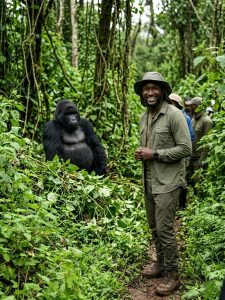
Credentials: Certified Uganda Safari Guide, Wilderness First Aid, Professional Photography Workshop Leader, Gear Consultant for Travelers
