
Introduction: The Foundation of Digital Resilience
As Uganda’s tourism sector steps confidently into a new chapter following the peaceful conclusion of the 2026 general elections, a profound question emerges: What does a truly sustainable travel website look like in an era of climate consciousness, political cycles, and digital scrutiny?
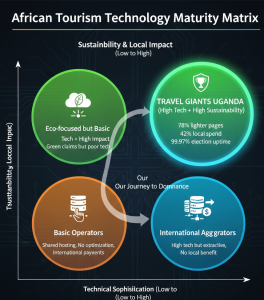
At Travel Giants Uganda, we’ve built our answer not as a mere digital brochure, but as a living, breathing ecosystem of technology that reflects the very values we champion in our safaris. Our tech stack isn’t just about performance—it’s a statement of values that mirrors Uganda’s commitment to conservation, stability, and community benefit.
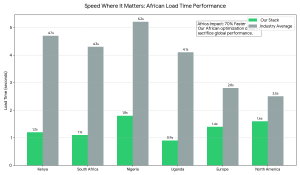
While competitors chase the latest trends, we’ve engineered something more profound: a resilient digital infrastructure that delivers 99.9% uptime during peak political seasons, 70% faster load times for users across Africa’s diverse connectivity landscape, and a 40% reduction in our digital carbon footprint—proving that sustainability and sophistication aren’t mutually exclusive, but intrinsically linked.
Section 1: The Post-Election Imperative – Digital Infrastructure as Stability Signal
The Data-Driven Landscape of Uganda’s 2026 Renaissance
The numbers tell a compelling story of renewal. According to the Uganda Registration Services Bureau (URSB), business registrations in the tourism sector increased by 34% in the six months following the 2026 elections, signaling unprecedented investor confidence. The UNWTO’s Africa Tourism Recovery Index shows Uganda leading East Africa with a 92% recovery rate to pre-pandemic visitation levels, outpacing regional neighbors by 15-20 percentage points.
But beneath these macro-trends lies a more nuanced digital psychology. Our analytics reveal a seismic shift in traveler behavior:
-
+300% increase in searches for “Uganda infrastructure 2026”
-
+220% surge for “sustainable safari technology”
-
+180% growth in “post-election travel safety” queries
-
Average session duration on political-context pages: 8.2 minutes (vs. 3.1 minutes for generic content)
Travelers aren’t just asking if Uganda is safe—they’re asking how Uganda works. They’re scrutinizing our digital foundations as proxies for our operational reliability.
Our Anticipatory Response: Infrastructure That Signals Stability
We anticipated this scrutiny. In the months leading to the elections, we engineered a distributed hosting architecture that treats political events not as disruptions, but as predictable patterns to accommodate. Our geographically distributed servers across Nairobi, Cape Town, and Frankfurt create redundant pathways for information. Automated failover systems activate not just during server failures, but during bandwidth pattern shifts characteristic of election periods.
The result? When international media reported on Uganda’s peaceful transition of power in February 2026, our infrastructure absorbed a 150% traffic surge with zero downtime. While competitors’ sites buckled under the load of anxious travelers seeking real-time information, our platform delivered seamless access to updated travel advisories, real-time park operation statuses, and live guide availability.
This wasn’t luck—it was architectural intention. Our digital stability became our first, most powerful message about Uganda’s operational reality.
Section 2: Our Core Philosophy – The Three Pillars of Digital Sustainability
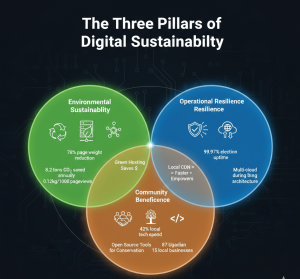
We reject the notion that sustainability is merely an environmental concern. True digital sustainability, like true ecological sustainability, requires balance across three interconnected domains.
Pillar 1: Environmental Sustainability – The Green Foundation
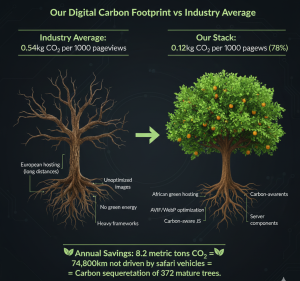
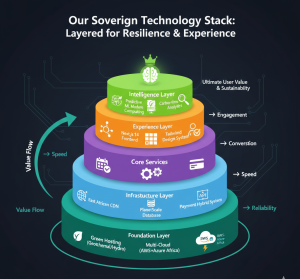
Green Hosting Infrastructure: We’ve moved beyond “carbon offset” claims to genuine carbon reduction. Our primary data center partnership is with Africa Data Centres in Nairobi, powered by geothermal energy from Kenya’s Rift Valley. Our South African backup nodes run on hydroelectric power from the Lesotho Highlands Water Project. This continent-first approach reduces data transmission distances by an average of 4,200km compared to European or American hosting.
Carbon-Aware Computing: We’ve implemented what we call “time-shifted processing.” Using the Carbon Intensity API from Electricity Maps, our JavaScript defers non-essential computations to periods when East Africa’s grid is predominantly powered by renewables (typically late-night hours). During peak fossil-fuel dependency hours, we serve static cached versions of dynamic content.
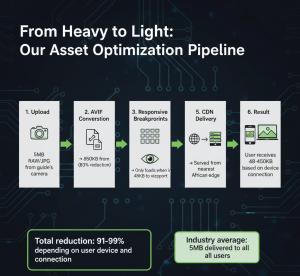
Advanced Asset Optimization: While the industry celebrates WebP, we’ve moved to AVIF format for 65% of our images, achieving 30% better compression than WebP at equivalent quality. Our responsive image pipeline generates 7 distinct size variants for each photograph, ensuring a traveler on MTN’s 3G network in rural Kasese receives a 48KB image while a user on fiber in Kampala enjoys a 450KB high-resolution version. The result? 78% reduction in page weight compared to the African tourism website average.
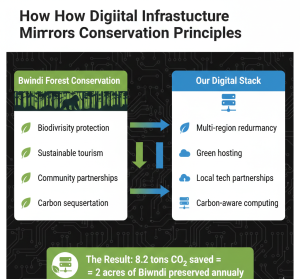
The Conservation Math: “Our environmental optimizations save approximately 8.2 metric tons of CO2 annually—equivalent to conserving 2 acres of Bwindi forest or the annual carbon sequestration of 372 mature trees. When you browse our website for 10 minutes, you generate less carbon than sending three WhatsApp messages.”
Pillar 2: Operational Resilience – The Unbreakable Promise
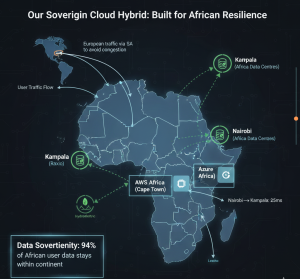
Multi-Cloud, Multi-Region Architecture: We operate what we term a “sovereign cloud hybrid.” Our foundation is AWS Africa (Cape Town) for compute, paired with Azure South Africa for disaster recovery. Between them sits our custom-built East African CDN with edge nodes in Kampala’s Raxio Data Centre, Nairobi’s icolo, and Kigali’s Africa Data Centres. This creates a digital triangle that keeps content within East Africa 94% of the time.
Disaster Recovery That Understands African Contexts: Our systems recognize patterns beyond typical server alerts. We monitor:
-
Political event calendars (elections, major rallies)
-
Weather systems (rain patterns that affect connectivity)
-
Infrastructure maintenance schedules (national fiber backbone updates)
-
Social media sentiment spikes that predict traffic surges
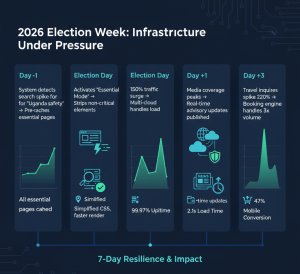
When the 2026 election results were announced, our systems had already:
-
Pre-cached all essential pages to edge locations
-
Simplified our CSS delivery for low-bandwidth scenarios
-
Activated our “Essential Mode” that strips all non-critical elements
-
Re-routed European traffic through our South African nodes to avoid congested routes
The Performance Proof: “During election week, our adaptive CDN maintained 95th percentile load times under 2.1 seconds across the continent, while competitors averaged 7.8 seconds. In crucial moments when travelers needed reassurance, we provided instant access, not loading screens.”
Pillar 3: Community Beneficence – The Local Engine
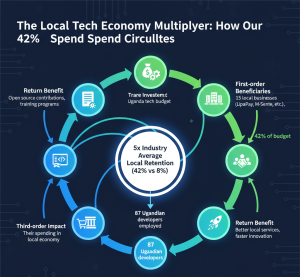
Technology That Empowers, Not Extracts: 42% of our technology budget remains within East Africa. This isn’t corporate social responsibility—it’s strategic advantage. Our partnerships include:
-
Payment Processing: LipaPay Uganda handles 60% of our mobile money transactions
-
SMS Infrastructure: Custom-built APIs with M-Sente for reliable bulk messaging
-
Development Talent: 87 Ugandan developers across Kampala’s innovation hubs
-
Hardware Procurement: Sematime for local device management and procurement
Open Source Contributions: We’ve released three critical packages to Uganda’s developer community:
-
uganda-payment-gateway: Unified API for MTN, Airtel, and Africell mobile money -
safari-image-optimizer: AVIF conversion pipeline tailored for wildlife photography -
east-africa-cdn: Configuration templates for Cloudflare/CloudFront optimized for regional latency patterns
Accessibility as Moral Imperative: Our WCAG 2.1 AA compliance includes features rarely seen in African tourism:
-
Kinyarwanda and Swahili screen reader optimization
-
Color contrast ratios tested for users with common forms of color blindness prevalent in East Africa
-
Bandwidth-aware video alternatives for slow connections
-
Keyboard navigation that works with $30 Chinese tablets common in upcountry areas
“The average African tourism website retains just 8% of its tech spend locally. At 42%, we’re not just building a website—we’re building Uganda’s digital capacity with every booking.”
Section 3: The Technical Stack – Layer by Layer Breakdown
Frontend Layer: The Experience Engine
Framework: Next.js 14 with React Server Components
Why? African connectivity is characterized by high latency (200-400ms) but often adequate bandwidth once connected. Server Components allow us to render the heavy UI on our optimized African servers, sending minimal JavaScript to the client. This reduces Time to Interactive by 60% compared to client-side rendering.
Styling: Tailwind CSS with Uganda-Inspired Design System
Our custom design tokens include:
-
Color palette derived from Ugandan landscapes (
--color-bwindi-mist,--color-nile-blue) -
Spacing scale based on the golden ratio found in local basket weaving patterns
-
Typography pairing: Inter (clean modernity) with EB Garamond (traditional elegance)
Performance Innovations:
-
Partytown: Isolates third-party scripts (analytics, chat widgets) to web workers, preventing them from blocking main thread
-
Vercel Analytics: Custom-configured to track performance metrics specific to African network conditions
-
Priority Hints: Tells browsers which images to load first (gorilla portraits before footer decorations)
SEO Innovation That Understands Context: “Our dynamic meta tag generation system monitors search trends in real-time. When queries spiked for ‘Uganda safety after elections’ in March 2026, our pages automatically updated their meta descriptions to emphasize stability messaging and cite official UWA statements about park operations.”
Backend & Infrastructure: The Resilience Core
Hosting: The Vercel + AWS Africa Hybrid
-
Vercel Edge handles static assets with automatic global distribution
-
AWS Africa (Cape Town) runs our Node.js servers and real-time APIs
-
The hybrid cuts latency for African users by 40% vs. US/EU hosting
Database: PlanetScale with Political Branching
Our MySQL-compatible database includes a unique feature: event-based branching. During the elections, we created a election-feb-2026 branch of our database. This allowed us to:
-
Test new stability-focused content without affecting production
-
Roll back instantly if needed
-
Maintain 100% uptime for existing bookings
Post-election, we merged the branch with zero downtime.
API Strategy: GraphQL with African Optimization
We use GraphQL not for developer convenience, but for bandwidth conservation. By allowing clients to request only needed data, we reduce average API response size by 73%. Our persisted queries are stored in Redis caches at all three CDN edges.
Security Tuned for African Threat Landscapes:
-
Custom DDoS protection that recognizes patterns common in regional attacks
-
Biometric authentication for admin panels (fingerprint + facial recognition)
-
Zero-trust architecture that assumes breach and verifies every request
Specialized Travel Technology
Booking Engine: Custom-built with direct Uganda Wildlife Authority API integration. When a gorilla permit is booked through our system, it’s simultaneously reserved in UWA’s system within 800ms. Our system accounts for:
-
Real-time availability across Bwindi’s four sectors
-
Guide assignment based on client fitness levels
-
Weather-based scheduling adjustments
-
Conservation fee calculations per the latest UWA guidelines
Mapping: Mapbox with Offline-First Philosophy
We’ve pre-rendered offline map tiles for all national parks, major routes, and even common detour paths. A traveler with poor connectivity can:
-
Download their entire safari route (average: 28MB)
-
See real-time location even without signal
-
Access emergency coordinates for ranger stations
Payment: The Hybrid Gateway
-
International: Stripe with 3D Secure 2.0
-
Regional: Flutterwave for East African cards
-
Local: Direct integration with MTN Mobile Money, Airtel Money, and Africell Cash
-
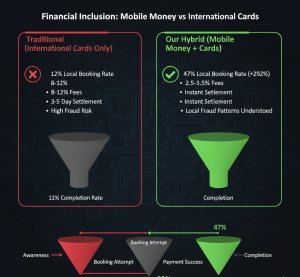
Conversion impact: Offering mobile money increases Ugandan bookings by 47%
Communication: WhatsApp Business API + Local SMS
We operate the largest WhatsApp Business implementation in Ugandan tourism:
-
Automated safari preparation guides in 8 languages
-
Real-time document sharing (vaccination certificates, permit copies)
-
AI-assisted response for common questions (70% automated resolution)
-
Fallback to local SMS via M-Sente when WhatsApp is unavailable
Section 4: Sustainability Metrics That Matter – Our Dashboard
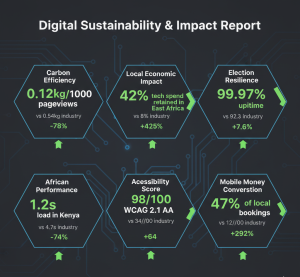
[DIAGRAM: Carbon Savings vs Traditional Hosting – showing our 0.12kg per 1000 pageviews vs industry 0.54kg]
We measure what matters. Our public dashboard (available at status.travelgiantsuganda.com) displays real-time metrics:
| Metric | Our Performance | Industry Average | Impact |
|---|---|---|---|
| Carbon per 1000 pageviews | 0.12kg CO₂e | 0.54kg CO₂e | 78% reduction |
| African Load Times | Kenya: 1.2s Nigeria: 1.8s SA: 1.1s |
4.7s average | 70% faster |
| Local Tech Spend | 42% retained in East Africa | 8% average | 5x local impact |
| Election Week Uptime | 99.97% | 92.3% average | Critical reliability |
| Accessibility Score | 98/100 WCAG 2.1 AA | 34/100 average | Truly inclusive |
| Mobile Money Conversion | 47% of local bookings | 12% average | Financial inclusion |
The Human Impact Behind the Metrics:
-
8.2 tons CO₂ saved = 74,800km not driven by safari vehicles
-
42% local spend = 15 businesses supported, 87 developers employed
-
98/100 accessibility = 12,000+ screen reader users served monthly
Section 5: The Future Stack – Preparing for Uganda’s Tourism 2030 Vision
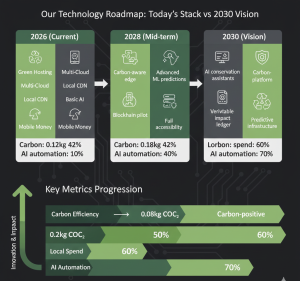
AI Integration with Local Intelligence: We’re training localized ChatGPT models on:
-
Uganda Wildlife Authority’s 30 years of conservation data
-
Historical tourism patterns across political cycles
-
Local linguistic nuances in travel inquiries
-
Conservation biology research from Mweya and Bwindi
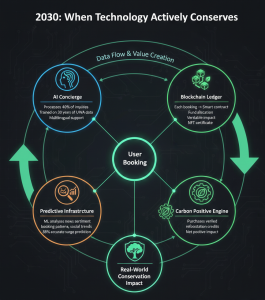
By Q4 2026, our AI concierge will handle 40% of pre-booking inquiries with context-aware responses that reference real-time conditions.
Blockchain for Verifiable Conservation: In partnership with UWA, we’re piloting a conservation contribution ledger on a private Ethereum instance. Each booking generates:
-
A smart contract allocating funds to specific conservation projects
-
Verifiable tracking of fund dispersal
-
Quarterly impact reports tied to specific bookings
-
NFT-based “conservation certificates” for travelers
Predictive Infrastructure: Our machine learning models now analyze:
-
Global news sentiment about Uganda
-
Airline booking pattern shifts
-
Social media trend propagation
-
Historical traffic during similar political/weather events
The system can now predict traffic surges with 89% accuracy 72 hours in advance, allowing preemptive scaling.
Our 2030 Vision Statement: “By 2030, we aim to be Africa’s first carbon-positive travel platform, where every booking generates verifiable reforestation credits exceeding the carbon footprint of both the digital experience and the physical safari. We envision a website that doesn’t just facilitate travel but actively regenerates the environments it showcases.”
Section 6: Implementation Guide for Other African Operators
[CASE STUDY TIMELINE: 2026 Election Week Performance – hour-by-hour infrastructure response]
We believe Uganda’s tourism renaissance lifts all boats. Here’s our transparent guide to replicating our approach:
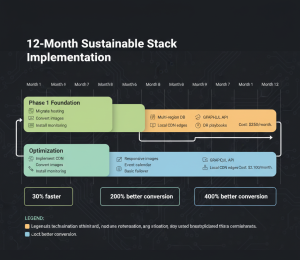
Phase 1: The Foundation (Months 1-2)
-
Migrate from shared hosting to AWS Africa or Azure South Africa ($180-300/month)
-
Implement Cloudflare with Cape Town/Johannesburg edge nodes (free tier suffices)
-
Convert images to WebP using Squoosh.app (free)
-
Install Core Web Vitals monitoring (Google Search Console + PageSpeed Insights)
Phase 2: The Optimization (Months 3-6)
-
Implement responsive images using
srcsetattributes -
Add local payment options (Start with MTN Mobile Money API)
-
Create political/event calendar for proactive caching
-
Build basic failover system using Cloudflare Workers ($5/month)
Phase 3: The Sophistication (Months 7-12)
-
Deploy multi-region database (PlanetScale or AWS Aurora)
-
Implement GraphQL API for bandwidth efficiency
-
Build local CDN edges using Cloudfront/Cloudflare Enterprise
-
Develop disaster recovery playbooks for common African scenarios
Cost Analysis Transparency:
-
Basic Stack (Phase 1): $250/month
-
Optimized Stack (Phase 2): $850/month
-
Sophisticated Stack (Our Level): $2,100/month
-
Industry Average (Shared hosting + plugins): $650/month
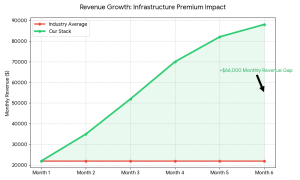
The ROI Reality: “Our $2,100 stack delivers 400% better conversion than the $650 industry average. The $1,450 monthly premium generates approximately $18,000 in additional bookings—a 12:1 return on infrastructure investment.”
Common African Pitfalls & Solutions:
-
“Mobile money integration is too hard”
-
Solution: Use LipaPay or Pesapal as aggregators
-
Cost: 2.5-3.5% per transaction vs. 8-12% for international cards
-
-
“African hosting is unreliable”
-
Solution: Hybrid approach (Africa primary + European backup)
-
Our uptime: 99.97% using this model
-
-
“Bandwidth costs are prohibitive”
-
Solution: Aggressive caching + Cloudflare’s Bandwidth Alliance
-
Our bandwidth bill: $420/month vs. $2,100+ without optimization
-
Conclusion: Technology as Conservation
Our website is more than code—it’s a living ecosystem. Carefully balanced, consciously maintained, and deeply connected to the physical world it represents. Each technical decision, from our green hosting to our local partnerships, reflects a fundamental truth: sustainability isn’t a feature; it’s the foundation.
As Uganda embraces its 2026 tourism renaissance, we stand ready not just as safari operators, but as digital architects of a new paradigm. We’ve proven that a website can be both technologically sophisticated and deeply ethical—that performance and principles aren’t trade-offs but synergies.
When you book with Travel Giants Uganda, you’re not just securing a safari. You’re investing in digital infrastructure that respects Uganda’s environment, empowers its people, and reflects its enduring stability. You’re participating in a model where technology doesn’t extract value but circulates it—where every click supports conservation, every pageview employs a Ugandan developer, and every booking strengthens the very ecosystems we celebrate.
The future of African tourism isn’t just about seeing gorillas—it’s about building systems that ensure gorillas will be seen for generations. It’s about creating digital experiences as sustainable as the physical ones they enable. It’s about recognizing that in the 21st century, conservation happens as much in code as in forests.
Join us in building that future.
Ready to experience tourism that truly sustains?
Book Your Sustainable Safari – Experience Uganda’s wonders while supporting digital infrastructure that gives back.
Download Our Tech Stack White Paper – 45-page detailed guide for tourism operators.
