
By Charles Lubega | Senior Guide, Travel Giants Uganda
5 Years Leading Treks | 200+ Gorilla Encounters | Fitness Assessment Specialist
The Explicit Answer: What You’ll Learn in This Guide
Here’s the truth no one tells you: Gorilla trekking fitness has almost nothing to do with how you look in gym clothes or how fast you run on a treadmill.
I’ve watched marathon runners weep on Bwindi’s slopes and 68-year-old retirees glide through the forest like they were born there. The difference? Specific preparation.
After 5 years and 200+ treks guiding clients through Bwindi and Mgahinga, I’ve assessed hundreds of fitness levels—and watched people succeed or struggle based on exactly three factors: leg strength, cardiovascular endurance, and mental preparation.
This guide gives you:
-
A brutally honest self-assessment test (so you know where you really stand)
-
5 specific exercises you can start today
-
An 8-week training plan
-
Sector recommendations based on your fitness level
-
The honest truth about what your fitness actually buys you
Your fitness level doesn’t just determine whether you reach the gorillas—it determines whether you have the energy, breath, and presence to actually enjoy them once you arrive.
Train for the trek, and you’ll remember the gorillas. Skip the training, and you’ll remember the pain.
The Big Lie About Gorilla Trekking Fitness
Gist: Most articles tell you to “be active” or “do some cardio.” That’s like telling someone to “be rich” before buying a house—technically true, completely useless. Here’s what actually matters.
The Story
I once guided a client named Mark—triathlete, Ironman finisher, 42 years old and proud of it. He booked Nkuringo sector, the most challenging in Bwindi, because he assumed his elite cardio would carry him.
Two hours in, his legs were shaking uncontrollably. Not from lack of fitness—from lack of specific training. Triathlons are on roads. Gorilla trekking is on roots, mud, and 60-degree slopes. Different muscles. Different demands. Different result.
He made it to the gorillas, but he doesn’t remember them. He remembers the shaking. The fear. The relief when it ended.
What Actually Matters
-
Leg strength (specifically quads for steep descents)
-
Core stability (for balance on uneven terrain)
-
Grip strength (for hauling yourself up using vegetation)
-
Cardiovascular endurance (sustained effort over 3-6 hours)
-
Joint resilience (knees and ankles take the beating)
What Doesn’t Matter
-
How you look in gym clothes
-
Your bench press max
-
How fast you run a 5K on pavement
-
Whether you did CrossFit in 2019
The Honest Truth: Gorilla trekking is a specific sport with specific demands. Train for the sport, or the sport will humble you.
The Self-Assessment Test – Where Do You Really Stand?
Gist: Before you train, you need to know where you are. Answer these 7 questions honestly—not how you wish you were, but how you actually are right now. No judgment. Just data.
The 7-Question Self-Assessment
Question 1: Stairs
Can you climb 5 flights of stairs (about 100 steps) without stopping and without feeling breathless?
-
Yes, easily → Score 3
-
Yes, but I’m winded → Score 2
-
No, I need to stop → Score 1
Question 2: Hills
When you walk up a steep hill, do your legs burn within minutes?
-
Rarely or never → Score 3
-
Sometimes → Score 2
-
Always → Score 1
Question 3: Balance
Can you stand on one foot for 30 seconds without holding onto anything?
-
Yes, easily → Score 3
-
Yes, but I wobble → Score 2
-
No → Score 1
Question 4: Joints
Do your knees or ankles ache after walking on uneven ground?
-
Never → Score 3
-
Sometimes → Score 2
-
Always or frequently → Score 1
Question 5: Duration
Have you walked for 3+ hours continuously in the past month?
-
Yes, multiple times → Score 3
-
Yes, once or twice → Score 2
-
No → Score 1
Question 6: Weight
Do you carry weight when you walk/hike (backpack, groceries, etc.)?
-
Regularly, 10kg+ → Score 3
-
Sometimes, light weight → Score 2
-
Never → Score 1
Question 7: Elevation
Have you exercised at altitude (above 2,000m) in the past year?
-
Yes, multiple times → Score 3
-
Yes, once → Score 2
-
Never → Score 1
Scoring Guide
| Score | Category | What It Means |
|---|---|---|
| 18-21 | Trek Ready | Your body is prepared. Focus on maintenance and choose your sector wisely. |
| 12-17 | Needs Work | You’ll likely make it, but you might struggle. Three months of specific training will transform your experience. |
| 6-11 | High Risk | You can still do this—but you MUST train, choose an easier sector (Rushaga), and hire a porter. Start today. |
The Honest Truth: This test isn’t to discourage you. It’s to empower you. Every single score can improve with the right exercises. The question isn’t whether you’re fit enough today—it’s whether you’re willing to prepare between now and your trek.
The 5 Exercises That Actually Prepare You for Gorilla Trekking
Gist: Forget the gym machines. Forget fancy equipment. These 5 exercises require nothing but your body, a staircase, and a backpack. Do them consistently, and you will walk through Bwindi like you own the place.
Exercise #1 – The Stairmaster of Reality: Step-Ups
Why It Matters: Gorilla trekking is 70% stepping up and down on uneven surfaces. Step-ups build the exact muscles you’ll use—quads for ascending, controlled quads for descending, balance for roots and rocks.
How to Do It:
-
Find a sturdy step, bench, or low stair (12-18 inches high)
-
Step up with right foot, bring left foot up, step down right, step down left
-
Start with 3 sets of 20 step-ups (each leg)
-
Progress to holding weights, increasing step height, or adding speed
The Progression:
| Week | Sets/Reps | Add Weight? |
|---|---|---|
| 1-2 | 3 x 20 each leg | Bodyweight only |
| 3-4 | 4 x 25 each leg | 5-10kg backpack |
| 5-6 | 4 x 30 each leg | 10-15kg backpack |
| 7-8 | 5 x 30 each leg | 15-20kg backpack |
The Honest Truth: By week 8, you’ll be stepping onto kitchen counters just to feel something. Your legs will remember this when you’re hauling yourself up Bwindi’s slopes.
Exercise #2 – The Forest Floor Simulator: Walking Lunges
Why It Matters: Lunges mimic the uneven, extended strides you’ll take stepping over roots, rocks, and streams. They build balance, leg strength, and the stabilizer muscles gym machines ignore.
How to Do It:
-
Step forward with right leg, lower until both knees are at 90 degrees
-
Push off and bring left leg forward into next lunge
-
Continue for distance, not reps—aim for 20 lunges per leg
-
Keep your torso upright (imagine your spine is a staff)
The Progression:
| Week | Lunges Per Leg | Add Weight? |
|---|---|---|
| 1-2 | 15 | Bodyweight |
| 3-4 | 20 | Light backpack (5kg) |
| 5-6 | 25 | Medium backpack (10kg) |
| 7-8 | 30 | Heavy backpack (15kg) |
The Honest Truth: If you can do 30 walking lunges per leg with a 15kg pack, Bwindi’s terrain will feel like a Sunday stroll.
Exercise #3 – The Altitude Mimic: Stair Climbing With Weight
Why It Matters: Nothing—and I mean nothing—prepares you for gorilla trekking like climbing actual stairs with actual weight. It builds cardiovascular endurance, leg strength, and mental toughness simultaneously.
How to Do It:
-
Find a staircase with at least 5 flights (or a hill with consistent incline)
-
Put on your backpack with weight (start with 5-10kg)
-
Climb stairs for 20-30 minutes without stopping
-
Focus on steady breathing, consistent pace
The Progression:
| Week | Duration | Weight | Frequency |
|---|---|---|---|
| 1-2 | 15 minutes | 5kg | 2x weekly |
| 3-4 | 20 minutes | 8kg | 2x weekly |
| 5-6 | 25 minutes | 10kg | 3x weekly |
| 7-8 | 30 minutes | 12-15kg | 3x weekly |
The Honest Truth: The day you climb 30 flights with 15kg without stopping, you’ll look at photos of Bwindi and smile. You’re ready.
Exercise #4 – The Stability Secret: Single-Leg Deadlifts
Why It Matters: Gorilla trekking requires constant balance on uneven surfaces. Single-leg deadlifts build the stabilizing muscles in your ankles, knees, and hips—the ones that prevent twisted ankles and embarrassing falls.
How to Do It:
-
Stand on right leg, left leg slightly behind
-
Hinge at hips, lowering torso while left leg lifts behind you
-
Keep back straight, core engaged
-
Return to start without letting right foot move
-
Do 10-15 reps, switch legs
The Progression:
| Week | Reps Per Leg | Add Weight? |
|---|---|---|
| 1-2 | 10 | Bodyweight |
| 3-4 | 12 | Light dumbbells (2-5kg) |
| 5-6 | 15 | Medium dumbbells (5-8kg) |
| 7-8 | 15 | Heavy dumbbells (8-12kg) |
The Honest Truth: This exercise looks silly. Do it anyway. Your ankles will thank you when you step on a rolling root and don’t fall.
Exercise #5 – The Grip That Saves You: Farmer’s Carries
Why It Matters: You will grab vegetation to haul yourself up steep sections. You will hold trekking poles for hours. You will carry water, camera, and snacks. Grip strength isn’t optional—it’s survival.
How to Do It:
-
Grab heavy dumbbells or kettlebells in each hand
-
Walk for distance or time with shoulders back, core tight
-
Start with 2 sets of 30 seconds, progress to 3 sets of 60 seconds
-
Increase weight weekly
The Progression:
| Week | Duration | Weight Per Hand |
|---|---|---|
| 1-2 | 30 seconds x 2 | 10kg |
| 3-4 | 45 seconds x 2 | 12kg |
| 5-6 | 60 seconds x 3 | 15kg |
| 7-8 | 60 seconds x 3 | 18-20kg |
The Honest Truth: When you’re hanging onto a vine above a 60-degree slope, grip strength isn’t about fitness—it’s about safety. Train your grip like your life depends on it. It might.
The 8-Week Training Plan – From Couch to Gorilla Trek
Gist: Here’s exactly what 8 weeks of preparation looks like. Follow this, and you’ll arrive in Uganda not hoping you’re fit enough—but knowing you are.
Sample Weekly Schedule
| Day | Exercise | Duration/Volume |
|---|---|---|
| Monday | Stair climbing with weight | 20-30 minutes |
| Tuesday | Step-ups + Lunges | 3 sets each |
| Wednesday | Rest or light walking | 30 minutes |
| Thursday | Stair climbing with weight | 20-30 minutes |
| Friday | Single-leg deadlifts + Farmer’s carries | 3 sets each |
| Saturday | Long walk/hike with weight | 60-90 minutes |
| Sunday | Rest | – |
The Honest Truth: Consistency beats intensity. Better to do 20 minutes every day than 2 hours once a week. Your body adapts to steady, predictable stress—not heroic weekends.
The Sector Match – Choosing Based on Your Fitness
Gist: Your fitness level should determine your park sector. Here’s the honest match-up.
| Fitness Level | Recommended Sector | Why |
|---|---|---|
| Trek Ready (18-21) | Any sector, including Nkuringo | You can handle challenge if you want it |
| Needs Work (12-17) | Buhoma or Rushaga | Moderate terrain, good for building confidence |
| High Risk (6-11) | Rushaga only + hire a porter | Easiest terrain, plus extra support |
| Any level | Avoid Nkuringo unless very fit | This sector punishes the unprepared |
The Honest Truth: I’ve seen “High Risk” scorers do Rushaga with a porter and have the time of their lives. I’ve seen “Trek Ready” scorers choose Nkuringo and struggle because they didn’t train specifically. Fitness + smart choices = success.
The Day-Of Reality – What Your Fitness Actually Buys You
Gist: Let me paint you two pictures. Both end with seeing gorillas. Only one includes joy.
Picture A: The Unprepared Trekker
-
Wakes up anxious, unsure if they can do this
-
First hour: excited, taking photos
-
Second hour: breathing hard, slowing down
-
Third hour: asking guides “how much further?”, missing scenery because focused on suffering
-
Reaches gorillas: exhausted, sits down, tries to enjoy but body is screaming
-
Remembers: pain, struggle, relief it’s over
Picture B: The Prepared Trekker
-
Wakes up confident, knows their body is ready
-
First hour: present, noticing birds, enjoying forest
-
Second hour: steady pace, breathing controlled, helping others
-
Third hour: still strong, spotting wildlife guides might miss
-
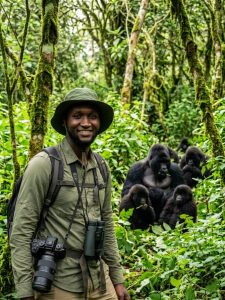
Reaches gorillas: energized, present, cries from joy not exhaustion
-
Remembers: silverback’s eyes, forest sounds, feeling alive
The Honest Truth: Both trekkers saw gorillas. Only one truly enjoyed them. Your fitness doesn’t just determine whether you make it—it determines whether you’re present when you arrive.
The Mental Game – What No Exercise Can Prepare
Gist: Fitness is half the battle. The other half happens between your ears.
The Mental Challenges
-
The “Are We There Yet?” Voice: Your brain will ask this every 15 minutes. Expect it. Don’t believe it.
-
The Comparison Trap: Someone in your group will seem fitter. Ignore them. Your trek is yours.
-
The “I Can’t” Moment: It will come around hour 3. Breathe. Drink water. Eat a snack. Keep going.
-
The Finish Line Rush: When you hear the gorillas, adrenaline surges. Stay calm. Stay safe.
Mental Preparation Tips
-
Visualize the trek before you go—the sounds, the smells, the feeling of your legs
-
Practice “embracing discomfort” during training (when you want to stop, do one more set)
-
Remember why you’re here: this is a privilege, not a punishment
-
Trust your guide—we’ve done this hundreds of times
The Honest Truth: Your mind will quit before your body does. Train your mind to keep going by proving it wrong, over and over, in training.
What About Porters? (The Great Equalizer)
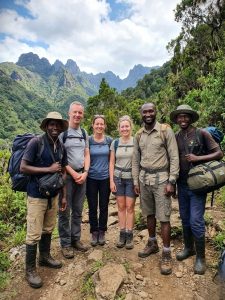
Gist: Porters cost $20. They carry your backpack, offer a steadying hand, and transform your experience. Here’s the honest take on when to hire one.
Hire a Porter If
-
Your self-assessment score is under 15
-
You have any joint concerns (knees, ankles)
-
You’re carrying camera gear or extra weight
-
You want to actually enjoy the scenery instead of focusing on your feet
-
You value supporting local employment
Don’t Hire a Porter If
-
You genuinely enjoy carrying weight and feel stronger with it
-
You’re on an extremely tight budget (but really, $20…)
The Honest Truth: I’ve watched Olympic athletes hire porters because they wanted to save their energy for photography. I’ve watched 70-year-olds skip porters and struggle. Pride has no place in the forest. Hire the porter.
The “I Didn’t Train” Confession – What to Do If You’re Reading This 2 Weeks Before Your Trip
Gist: Okay, you’re here, your trek is in two weeks, and you haven’t done a single lunge. Don’t panic. Here’s your emergency plan.
The 2-Week Crash Course
-
Walk every day with a weighted backpack (start light, add weight)
-
Do step-ups every single day (3 sets of 25, each leg)
-
Stretch your hips and quads (tight muscles = more pain)
-
Accept your reality and choose an easier sector if possible
-
Hire a porter. Non-negotiable.
-
Manage your expectations: You might struggle. That’s okay. Struggle is still experience.
The Honest Truth: Two weeks won’t transform your fitness. But it can transform your awareness. Go in knowing your limits, respecting them, and working with them—not against them.
The Exercises Cheat Sheet – Printable Version
| Exercise | What It Builds | How Often | Key Tip |
|---|---|---|---|
| Step-ups | Quads, climbing strength | 3-4x weekly | Add weight gradually |
| Walking Lunges | Balance, leg strength | 2-3x weekly | Focus on form, not speed |
| Stair Climbing | Cardio, endurance | 2-3x weekly | Wear your trekking backpack |
| Single-Leg Deadlifts | Stability, injury prevention | 2x weekly | Start without weight |
| Farmer’s Carries | Grip strength, posture | 2x weekly | Walk tall, shoulders back |
The Peak: What 5 Years Has Taught Me
Here’s what 5 years has taught me:
Fitness isn’t about proving you’re strong enough. It’s about freeing yourself to be present.
The unprepared trekker spends the whole time inside their own suffering—negotiating with pain, bargaining with distance, praying for it to end. The prepared trekker spends the whole time in the forest—noticing birds, feeling the mist, arriving at the gorillas with enough energy left to actually feel something.
Your training isn’t for the trail. It’s for the moment you lock eyes with a silverback and realize you’re fully there—not distracted, not suffering, not counting minutes until it’s over. Just there. Just present. Just alive.
That’s what fitness buys you. Not survival. Presence.
Your Fitness Checklist – Ready to Start?
-
I’ve taken the self-assessment and know my score: ______
-
I’ve chosen my target sector based on my fitness
-
I’ve committed to the 8-week training plan
-
I’ve started step-ups today
-
I’ve scheduled stair climbing into my week
-
I’ve accepted that I’m hiring a porter (if my score suggests it)
-
I’m ready to book my trek with confidence
The End: Your Invitation
You came here wondering: Am I fit enough? Will I make it? Will I be the one who struggles while everyone else glides?
Now you know the honest truth: Fitness for gorilla trekking is specific, measurable, and trainable. It’s not about who you are today—it’s about what you do between now and your departure.
Start today. Do a step-up. Climb a flight of stairs. Put weight in your backpack and walk. Your future self—standing in mist, watching a silverback emerge—will thank you.
And when you’re ready to book, when you’ve trained and prepared and know exactly what you need—we’ll be here.
At Travel Giants Uganda, we’ve guided hundreds of trekkers through this exact journey. We’ve watched the unprepared struggle and the prepared soar. We know which sectors match which fitness levels. We know which porters have the strongest shoulders and the kindest hearts.
Ready to start your preparation?
Email us at info@travelgiantsuganda.com or DM us on WhatsApp on +256784053143 with:
-
Your self-assessment score (be honest!)
-
Your trek dates (or target window)
-
Any questions about fitness, sectors, or preparation
We’ll help you choose the right sector, book the right permits, and connect you with porters who will carry more than your backpack—they’ll carry your confidence too.
Feel your quads burn on that fifth flight of stairs. Imagine the mist on your face as you emerge into the clearing. Your heart will pound—let it. That’s aliveness.
The forest is waiting. The gorillas are there. And now, you know exactly how to prepare.
Charles Lubega | Senior Guide
5 Years Leading Treks | 200+ Gorilla Encounters | Fitness Assessment Specialist
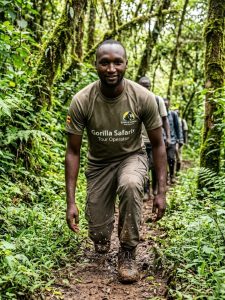
Credentials: Certified Uganda Safari Guide, Uganda Wildlife Authority Licensed, Advanced Wilderness First Aid, Fitness Preparation Specialist for Trekkers
