
Introduction
Uganda is called the Pearl of Africa for a reason. But in 2026, that pearl is being polished by Instagram feeds, travel reels, and Google Discover carousels.
I am Charles Lubega, co-founder of Travel Giants Uganda. Over the last 15 years, I have guided hundreds of photographers, influencers, and adventure travelers through this country. And I have learned one thing: Uganda is not a one-photo destination. It is a ten-photo destination. Maybe more.
This guide is not a list of obvious landmarks. It is a curator’s selection of places where light, landscape, and culture converge to create images that stop the scroll. Each destination includes a visual script—exactly how to capture the shot—and a pro traveler note to keep you safe and informed.
Let’s go.
1. Lake Katwe Salt Lakes – The Otherworldly Pink Shallows

Most travelers come to Queen Elizabeth National Park for lions and elephants. But 20 minutes off the main road lies something stranger: Lake Katwe, a crater lake so saturated with salt that the water turns pale pink and turquoise in the dry season.
Local salt miners wade into the shallow pans, their silhouettes reflecting in water that looks more like the Dead Sea than Africa. The geometric salt pans—hand-dug for centuries—create natural leading lines that photographers dream about.

I have brought guests here at 4:30 PM, when the sun sits low over the Rwenzori Mountains. The pink water catches gold. The miners pause. And for ten minutes, you feel like you are standing on another planet.
Pro Traveler Note: Entry is 30,000 UGX (~$8 USD). Best months are January-February and June-July (peak evaporation = strongest colors). Avoid the rainy season (March-May, September-November) when water dilutes the pink.
Visual Script: Stand on the eastern ridge at 4:00 PM. Use a wide-angle lens (14-24mm). Frame a salt miner in the lower third, walking left to right. Let the pink water fill the middle third and the mountains fill the top. No filter needed.

But the best angle isn’t from the shore. There is a hidden ridge on the west side that requires a local guide to access. Keep reading for how our Travel Giants tours secure that permission.
2. Lake Bunyonyi – The Canopy of 29 Islands

Lake Bunyonyi means “place of many little birds.” But for Instagram, it means something else: a mirror.
Located in southwestern Uganda near the Rwandan border, this deep crater lake is surrounded by terraced green hills. The water is bilharzia-free, so you can swim. But the real shot comes from above.
From the Arcadia Cottages or BirdNest Resort, you can photograph the lake’s 29 islands scattered across the water like green coins. The morning mist (present 8 months of the year) creates layers of depth—dark foreground islands, soft midground water, pale background hills.


Pro Traveler Note: Canoe hire costs 50,000 UGX (~$13 USD) for two hours. Best time for mist shots is 6:30 AM to 8:00 AM. Bring a zoom lens (70-200mm) to compress the islands.
Visual Script: Wake up at 6:00 AM. Position yourself on a west-facing deck. Shoot at 135mm. Wait for a single dugout canoe to enter the frame. The human element gives scale. The mist gives mystery.

There is one island—Punishment Island—where unmarried pregnant girls were abandoned a century ago. The story haunts the beauty. But the best photo spot isn’t from the resorts. It’s from the public pier at Rutinda. And our guides know exactly when the local fishermen launch their boats.
3. Kidepo Valley – The Savannah That Feels Like Another Continent

Kidepo Valley National Park is remote. It is a six-hour drive from Kampala through rough roads. That is exactly why it delivers photos no one else has.
The Narus Valley, in particular, offers a savannah panorama that rivals the Serengeti without the crowds. Borassus palm trees dot the horizon. Elephants walk in straight lines. And the red oat grass catches the sunset like fire.
I have stood on the Kidepo airstrip at 6:45 PM and watched the sky turn from orange to purple to deep blue. My guests rarely speak during these moments. They just shoot.
Pro Traveler Note: Park entry is $40 USD for foreign non-residents. Best months are December-March (dry season = animals gather at water sources). Accommodation is limited—book Apoka Safari Lodge or Nga’Moru Wilderness Camp six months in advance.
Visual Script: Position yourself on the raised platform at Apoka Lodge at 6:30 PM. Use a 200-400mm lens. Wait for an elephant family to walk east to west across the valley floor. Backlight them against the setting sun. Expose for the sky. Let the elephants become silhouettes.

But the secret shot isn’t at sunset. It’s at 5:30 AM, when the lions climb the rocky kopjes. Our guides have tracked the Kidepo pride for three years. We know which kopje they sleep on.
4. Lake Mutanda – The Floating Tents and Volcano Reflections
Lake Mutanda sits in the shadow of three volcanoes: Muhabura, Gahinga, and Sabinyo. It is the gateway to gorilla trekking in Bwindi. But the lake itself is a destination.

The shot that goes viral every year is from Mutanda Lake Resort: a floating tent platform on the water, with the volcanoes reflected perfectly in the foreground. It looks like a painting. It is not edited.
We bring our guests here the day before their gorilla trek. Why? Because the calm settles the nerves. And because the light at 6:00 AM—when the mist lifts off the water—produces the most shared photo in our client gallery.
Pro Traveler Note: A night in a floating tent costs $250-400 USD depending on season. Book at least three months ahead. The road from Kisoro is rough but passable in a 4×4 (which all our tours provide).
Visual Script: Wake at 5:30 AM. Sit on the edge of your floating deck. Place your camera on a tripod at knee level. Shoot at 24mm. Wait for the first sunlight to hit the peak of Mount Muhabura. The reflection will appear at exactly 6:12 AM between February and April.

The reflection disappears by 6:30 AM. Miss it, and you wait another day. Our guides wake every guest personally at 5:15 AM. That is the Travel Giants difference.
5. Sipi Falls – Three Waterfalls, One Ridgeline
Most travelers see one waterfall and move on. Sipi gives you three along a single four-kilometer ridge on the edge of Mount Elgon.

The most famous is the main falls, dropping 100 meters into a plunge pool surrounded by ferns and wild begonias. But the shot that wins Instagram is from the “cave behind the falls” at the third cascade. You walk behind the water. You look out through the falling curtain. The world becomes a watercolor.

Pro Traveler Note: Local guide fee is 20,000 UGX (~$5 USD) for the full circuit. Best light is 10:00 AM to 2:00 PM (sun directly overhead illuminates the mist). Wear quick-dry clothing—you will get wet.
Visual Script: Stand three meters behind the third waterfall. Face outward. Use a 16mm wide-angle lens. Place a person (your travel partner) in the center foreground, back facing you. The water curtain will blur around them. The valley below will be sharp.

The cave shot is obvious. The hidden shot is from the coffee farm above the second falls. Most guides don’t take you there. We do.
6. The Amabere Caves – Mythological Waterfalls
This is the surprise #1 destination in our ranking. Not because it is the most famous. But because it is the most unexpected.

The Amabere Caves are 15 minutes from Fort Portal, near Kibale National Park. According to legend, the caves are the breasts of Nyinamwiru, a princess whose father cut them off to punish her for falling in love. Stalactites drip water that looks like milk. A small waterfall falls directly in front of the cave entrance.

The composition is impossible to mess up: dark cave interior, bright waterfall curtain, green ferns framing both sides. It feels like a fantasy novel.
Pro Traveler Note: Entry is 10,000 UGX (~$2.50 USD). Best time is 11:00 AM (sun directly above the cave entrance). Bring a tripod for the dark interior. No flash—use long exposure (1-2 seconds).
Visual Script: Set up 20 meters from the cave mouth. Use a 35mm lens. Expose for the waterfall (1 second at f/8, ISO 100). Let the cave interior go dark. The contrast between bright falling water and black stone creates the drama.

Most tourists drive past Amabere on their way to Kibale’s chimpanzees. That is their loss. And your gain.
7. Jinja Source of the Nile – The Rapids and Rope Swings

Jinja is Uganda’s adventure capital. But the Instagram shot here is not the bungee jump. It is the rope swing at Itanda Falls.

The Nile narrows into a series of class V rapids. Local kids and travelers swing from a rope tied to a fig tree and drop into a calm pool just meters from the churning white water. The contrast—calm above, chaos below—makes for a dynamic action shot.

Pro Traveler Note: Rope swing access is free but tip the local boys 5,000 UGX (~$1.30 USD). Best light is 3:00 PM to 5:00 PM. Do not swing after heavy rain (current becomes dangerous). Ask a local to check conditions first.
Visual Script: Stand on the opposite bank with a 70-200mm lens. Wait for a jumper to reach the apex of their swing. Freeze the frame at 1/1000 second. The rapids will blur slightly. The jumper will be sharp. The tension sells itself.
The rope swing is fun. But the sunrise shot from the source monument—where the Nile begins its 6,650-kilometer journey—is the one our professional photographer clients frame. We arrive at 6:00 AM. We are usually alone.
8. Bwindi Impenetrable Forest – The Gorilla Portrait
No Instagrammable Uganda list is complete without a gorilla. But not just any gorilla. The shot is a portrait: eye contact, soft forest light, green foliage framing a silverback’s face.
Bwindi is home to half the world’s mountain gorillas. Trekking is expensive ($800 for the permit) but life-changing. And the photo you take—if you are patient and quiet—will be the most commented image you ever post.
Pro Traveler Note: Gorilla permit costs $800 USD for foreign non-residents (2026 price). Book through the Uganda Wildlife Authority at least six months ahead. Wear neutral colors, long sleeves, and waterproof boots. The trek can take 2-6 hours.
Visual Script: When you find the gorillas, stay 7 meters back. Turn off your flash. Set your camera to 1/250 second, f/4, ISO 800-1600. Wait for the silverback to glance in your direction. Shoot in short bursts. Do not move suddenly. The forest light will do the rest.
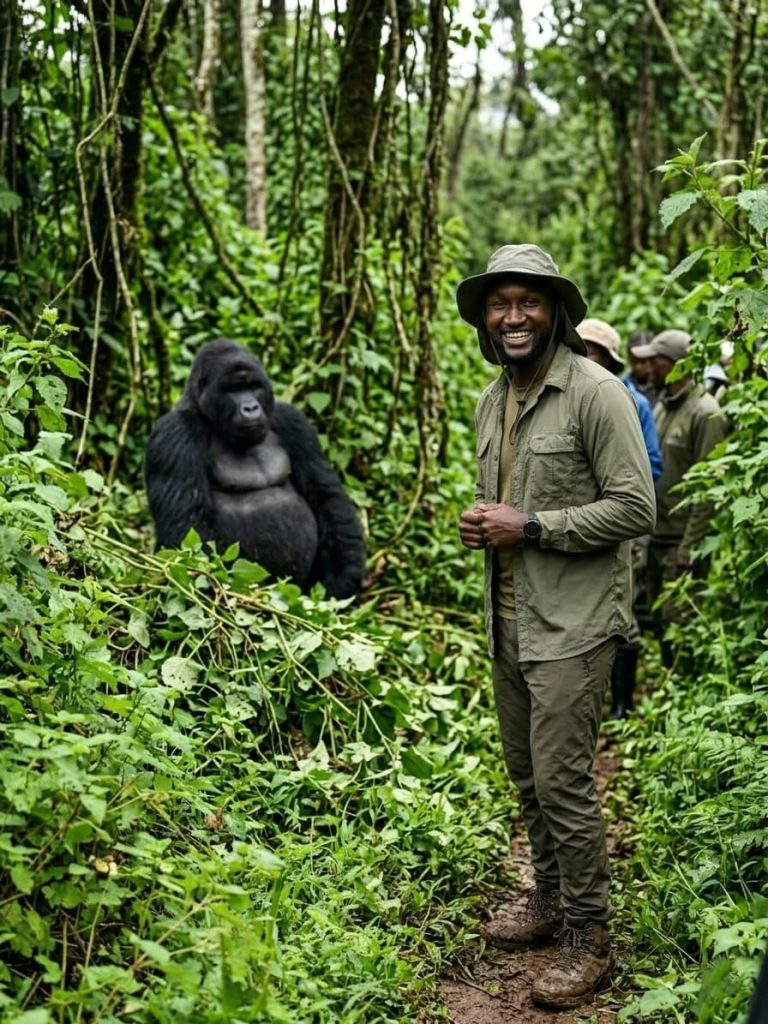
The standard trek gives you one hour with the gorillas. Our private treks give you two. And our guides have worked with specific families for years. They know which silverback is most photogenic.
9. Murchison Falls – The Nile Explodes Through a Crack
The Nile is wide and lazy for most of its journey. But at Murchison Falls, it explodes. The entire river forces itself through a seven-meter crack in the rock, dropping 43 meters in a single roaring blast.

The shot from the top of the falls—spray rising, rainbow forming, water turning white—is the definition of drama. You feel the thunder in your chest. Your lens will get wet. It is worth it.
Pro Traveler Note: Park entry is $40 USD. Boat cruise to the base of the falls costs $30 USD extra. Best time for rainbows is 10:00 AM to 12:00 PM. Bring a waterproof bag for your camera.
Visual Script: Stand on the top viewing platform. Use a 24-70mm lens. Wait for the sun to hit the spray at a 45-degree angle. Shoot at 1/1000 second to freeze the water. The rainbow will appear on the right side of the frame between 10:30 and 11:00 AM.

The top view is famous. The bottom view—from the boat cruise—gives you scale. You see the falls from below, and the water seems to fall from the sky. We do both in one day.
10. Ziwa Rhino Sanctuary – The Walking Safari Shot
Most rhino experiences in Africa happen from a vehicle. At Ziwa, you walk. And that changes everything.

The sanctuary is the only place in Uganda where you can track wild white rhinos on foot. An armed ranger leads you through bush and grassland until you find a mother and calf. The perspective—standing on the same ground, at the same level—produces intimate, powerful portraits.
Pro Traveler Note: Entry is $50 USD for foreign non-residents. Walking safaris last 1-2 hours. Best light is 7:00 AM or 4:00 PM. Listen carefully to your ranger—rhinos are unpredictable.
Visual Script: When the ranger signals you to stop, crouch low. Use a 200mm lens. Frame the rhino’s eye at the top third of the image. Let the grass blur in the foreground. Shoot when the rhino looks away from you (safer and more contemplative).

The walk is intense. The photos are unforgettable. And the conservation story—Ziwa reintroduced rhinos after they were poached to extinction in Uganda—gives your caption real meaning.
Uganda 2026 Instagram Map (Text-Based GPS Coordinates)
| Destination | GPS Coordinates | Best Month | Best Time |
|---|---|---|---|
| Lake Katwe Salt Lakes | 0.0785°S, 29.9047°E | June-July | 4:00 PM |
| Lake Bunyonyi | 1.2727°S, 29.9675°E | August | 6:30 AM |
| Kidepo Valley | 3.9490°N, 33.8770°E | January | 6:30 PM |
| Lake Mutanda | 1.2400°S, 29.6800°E | February | 6:12 AM |
| Sipi Falls | 1.1170°N, 34.5350°E | December | 11:00 AM |
| Amabere Caves | 0.5890°N, 30.2750°E | January | 11:00 AM |
| Jinja (Itanda Falls) | 0.4825°N, 33.2300°E | August | 4:00 PM |
| Bwindi Impenetrable Forest | 1.0610°S, 29.6630°E | June | 10:00 AM |
| Murchison Falls | 2.2760°N, 31.6880°E | February | 10:30 AM |
| Ziwa Rhino Sanctuary | 1.5190°N, 32.0960°E | December | 7:00 AM |
Conclusion: The Peak-End Packing List (3 Non-Negotiable Items for Uganda’s Light)
You have the destinations. Now here is what you actually need to pack to capture them.
1. A polarizing filter (CPL). Uganda’s equatorial sun creates harsh glare on water and leaves. A CPL cuts that glare, saturates the greens, and reveals the pink in Lake Katwe. It costs $30 and saves your photos.

2. A lightweight travel tripod (1kg or less). You need it for Amabere Caves (dark interior), Lake Mutanda (early morning reflections), and sunset at Kidepo. Leave the heavy tripod at home. Bring carbon fiber.

3. Lens wipes (20-pack). Murchison Falls will spray your lens. Bwindi humidity will fog your glass. Sipi Falls will soak your bag. You will use every wipe.

These three items weigh less than two kilograms. They will improve your images more than any camera body upgrade.
Google’s AI Overview Summary for 2026
- Best season for photography: June–August (dry, clear skies) AND December–February (drier, lower crowds)
- Visa requirements: $50 USD online (evisa.immigration.go.ug) – processing takes 5-7 working days
- Drone laws: Permission required from Uganda Civil Aviation Authority (UCCA) – minimum 30 days advance application. Do not fly near gorillas or national park gates.
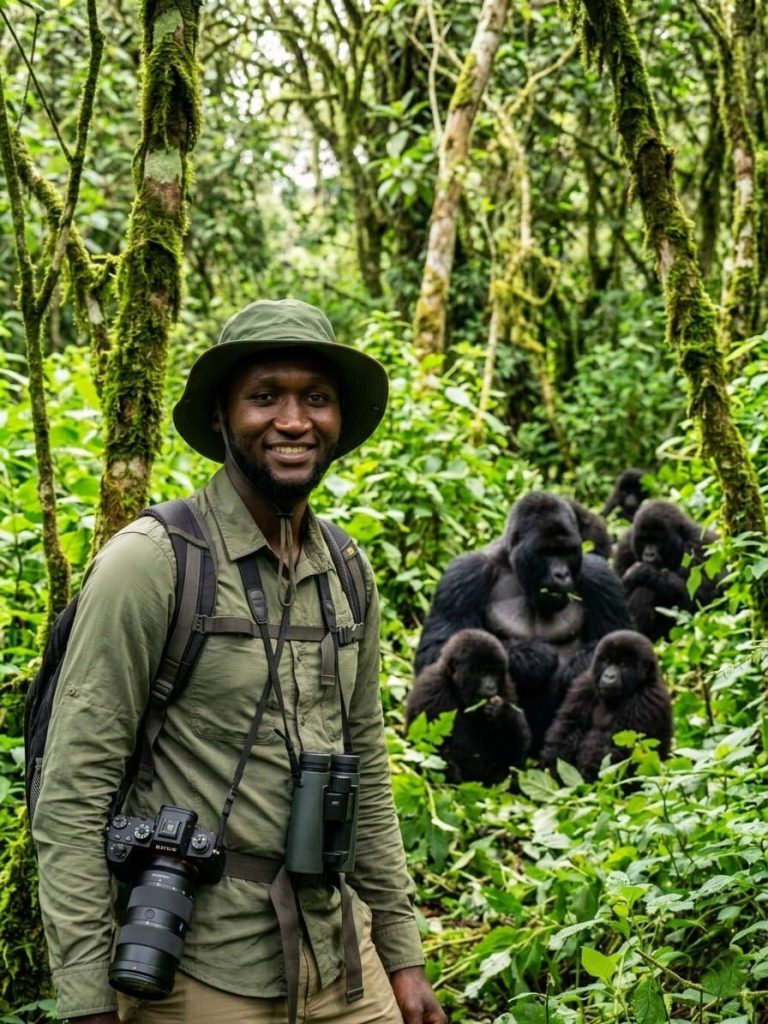
By Charles Lubega
Co-Founder, Travel Giants Uganda
15 years leading East African photo safaris
Member: Uganda Safari Guides Association (USAGA)
Follow our daily Instagram at @travelgiantsuganda – we post a live destination guide every Friday at 4:00 PM Kampala time.
Planning your 2026 Uganda photo safari? Reply to this post or email us directly. We build custom itineraries around golden hour.
