
By Charles Lubega | Senior Food Writer & Cultural Guide, Travel Giants Uganda
6 Years Eating Across Uganda | Vendor Friend to Generations of Cooks | Self-Appointed Rolex Connoisseur
The Explicit Answer: What You’ll Taste in This Guide
Ugandan food doesn’t announce itself with Michelin stars or white tablecloths. It whispers from roadside rolex stands, from smoky fish joints along Lake Victoria, from grandmothers stirring groundnut stew in cast-iron pots.
After 6 years of eating across this country—from the Karamoja plains to the Mount Elgon foothills—I’ve learned that the best meals aren’t found in tourist hotels. They’re found where locals eat. This map leads you there.
This guide reveals 12 essential Ugandan dishes, exactly where to find them, and the local vendors who’ve perfected them over generations. You’ll learn what to order, how to eat it (etiquette matters), and the stories behind each dish that make it taste even better.
Quick Overview of the 12 Dishes
| Dish | Region | Best For |
|---|---|---|
| Rolex | Kampala (nationwide) | Breakfast, late-night, street food lovers |
| Luombo | Central Uganda (Buganda) | Hand-food enthusiasts, ceremonial meals |
| Muchomo | Northern Uganda (nationwide) | Meat lovers, evening grazing |
| Malewa | Eastern Uganda (Mount Elgon) | Adventurous eaters, smoky flavors |
| Eshabwe | Western Uganda (Ankole) | Rich, creamy sauce lovers |
| Groundnut Stew | Nationwide | Comfort food seekers |
| Nsenene | Central Uganda (seasonal) | Adventurous eaters, seasonal delicacies |
| Fresh Nile Perch | Lake Victoria shoreline | Lakeside dining, fresh fish |
| Matoke | Nationwide | Starch lovers, everyday meals |
| Posho and Beans | Nationwide | Budget travelers, simple pleasures |
| Luwombo | Central Uganda (Buganda) | Celebration food, special occasions |
| Waragi and Tonto | Nationwide (rural for tonto) | Adventurous drinkers, social experiences |
The deeper truth: Every dish tells a story—of migration, of tradition, of survival. Eat with curiosity, and you’ll leave with more than a full stomach. You’ll leave with understanding.
I’ve shared meals with grandmothers in villages without electricity, with fishermen at dawn on Lake Victoria, with street vendors who’ve been serving the same corner for 6 years. Let me introduce you to the tastes that define Uganda.
The Philosophy – Why Eat Like a Local?
Gist: Before we dive into the 12 dishes, you need to understand why eating local matters—and how to do it right.
Three Reasons to Eat Like a Local
1. The Food Is Better
Hotel buffets serve food that’s been sitting for hours. Street food is made fresh, to order, with love and attention.
2. The Stories Are Richer
Every vendor has a story—how they learned their craft, where the recipe came from, why they add that secret ingredient.
3. Your Money Goes Further
Paying a local vendor directly supports families, not corporations. Your shilling has more impact.
The Golden Rules of Eating Local
-
Follow the crowd: If locals are lining up, the food is good.
-
Watch before you order: See what others are getting, how they eat it.
-
Be polite: Greet the vendor, ask questions, show appreciation.
-
Carry small bills: Not every vendor has change for large notes.
-
Trust your gut: If a place looks clean and busy, it’s probably fine.
The Honest Truth: You will get sick of hotel buffets by Day 3. Your first rolex from a roadside stall will be the meal you remember forever. Trust the locals. They know what’s good.
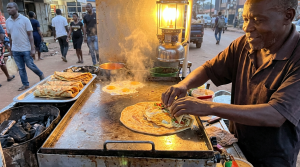
Dish #1 – Rolex: Kampala’s Gift to the World
Gist: Rolex has nothing to do with watches. It’s a contraction of “rolled eggs”—a chapati wrapped around an omelet, often with vegetables. It’s Uganda’s unofficial national street food, and everyone has an opinion on where to find the best one.
Quick Facts
| Factor | Details |
|---|---|
| Dish Name | Rolex (rolled eggs) |
| Region | Nationwide, but Kampala is the heartland |
| Main Ingredients | Chapati, eggs, onions, tomatoes, cabbage (optional: avocado, meat) |
| When to Eat | Any time, but especially breakfast and late night |
| Price | 2,000-5,000 UGX ($0.50-1.50 USD) |
The Experience
You’ll approach a rolex stand—often a simple cart with a hot griddle, a pile of chapatis, and a bowl of beaten eggs. The vendor will ask what you want: just eggs? with vegetables? with meat? Watch as they pour the egg mixture onto the griddle, scatter onions and tomatoes, and cook it to a perfect golden disk.
Then comes the rolling: the chapati is laid flat, the omelet placed on top, and the whole thing rolled into a cylinder, wrapped in paper, and handed to you. It’s hot, slightly greasy, and absolutely perfect.
Where to Find It (Local Vendor Spotlights)
Kampala: Wandegeya Rolex Specialists
Near Makerere University, a cluster of vendors has been serving students for decades. Look for the busiest stall—that’s where the locals go. Ask for “full” (with vegetables) and add avocado if you’re feeling fancy.
Jinja: Main Street Night Vendors
After dark, Jinja’s main street transforms into a rolex paradise. The vendors here are known for their spicy versions—ask for “with chili” if you dare.
How to Eat It
-
Unwrap slightly, eat from one end like a burrito
-
Don’t be afraid of the grease—it’s part of the experience
-
Pair with a strong cup of Ugandan tea (chai) for the ultimate breakfast
Insider Tip
The best rolex is the one you watch being made. Chat with the vendor. Ask how long they’ve been at it. Every rolex maker has a story—and they’ll share it if you show interest.
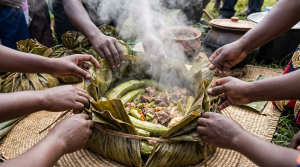
Dish #2 – Luombo: Bundles of Flavor
Gist: Luombo is steamed plantain and meat, wrapped in banana leaves and cooked slowly over fire. It’s not just a dish—it’s a ceremony. The unwrapping releases aromas that will haunt you.
Quick Facts
| Factor | Details |
|---|---|
| Dish Name | Luombo (also spelled luwombo) |
| Region | Central Uganda (Buganda kingdom) |
| Main Ingredients | Plantains, meat (beef, goat, or chicken), peanuts, vegetables |
| When to Eat | Lunch or dinner, special occasions |
| Price | 10,000-20,000 UGX ($3-5 USD) |
The Experience
Luombo is cooked in banana leaves—each bundle a complete meal. The leaves trap steam, infusing the food with a subtle, smoky flavor. When the bundle is opened at your table, the aroma is overwhelming: peanuts, meat, plantains, and something earthy you can’t quite place.
Where to Find It (Local Vendor Spotlights)
Kampala: Ekyombo Restaurant
Tucked away in a Kampala side street, this family-run spot serves luombo the way it’s been made for generations. The matriarch, Mama Grace, has been cooking here for 6 years. Order the goat luombo—it’s her specialty.
Masaka: Roadside Luombo Stalls
On the highway to Mbarara, you’ll see women selling banana-leaf bundles from roadside stalls. These are for travelers—and they’re excellent. Pull over, buy a few, and eat with your hands.
How to Eat It
-
Wash your hands first (this is a hand-food dish)
-
Open the bundle carefully—steam escapes
-
Mix the plantains with the meat and sauce
-
Eat with your right hand, using the plantain to scoop
Insider Tip
The best luombo is cooked slowly—hours, not minutes. Seek out places where you see bundles steaming over wood fires. That’s the real deal.
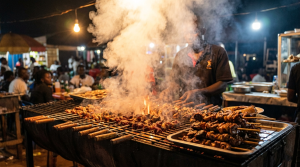
Dish #3 – Muchomo: The Sizzle of the Grill
Gist: Muchomo is grilled meat on sticks—goat, beef, chicken, or offal, depending on your bravery. The smell of muchomo grilling over charcoal is the scent of Uganda after dark.
Quick Facts
| Factor | Details |
|---|---|
| Dish Name | Muchomo (grilled meat) |
| Region | Nationwide, especially northern Uganda |
| Main Ingredients | Meat (goat is classic), skewers, seasoning |
| When to Eat | Evening, as the sun goes down |
| Price | 2,000-5,000 UGX per skewer |
The Experience
You’ll find muchomo stands wherever people gather after dark—bus parks, taxi stages, market edges. The meat is cubed, skewered, and grilled over charcoal until charred on the outside, juicy within. The seasoning is simple—salt, maybe some chili—letting the meat speak for itself.
Where to Find It (Local Vendor Spotlights)
Gulu: Night Market Muchomo
In Gulu’s main market after sunset, you’ll find rows of muchomo grills. The goat here is exceptional—raised on open ranges, tasting like nothing you’ve had before. Look for the vendor with the longest line.
Kampala: Old Taxi Park
It’s chaotic, smoky, and utterly authentic. The muchomo vendors here have been serving travelers for generations. Point at what you want, watch it grill, eat standing up.
How to Eat It
-
Eat directly from the skewer
-
Dip in the accompanying chili sauce (go easy at first)
-
Chew slowly—good muchomo rewards patience
Insider Tip
Ask for the “mix”—a skewer with liver, kidney, and meat together. It’s the connoisseur’s choice.
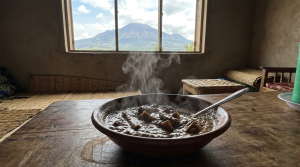
Dish #4 – Malewa: Smoked Bamboo Shoots from the Mountain
Gist: Malewa is the secret dish of eastern Uganda—smoked bamboo shoots, rehydrated and cooked in groundnut sauce. It’s acquired taste, cultural treasure, and absolutely delicious.
Quick Facts
| Factor | Details |
|---|---|
| Dish Name | Malewa |
| Region | Eastern Uganda (Mount Elgon area, Bagisu people) |
| Main Ingredients | Smoked bamboo shoots, groundnuts, spices |
| When to Eat | Lunch or dinner |
| Price | 8,000-15,000 UGX ($2-4 USD) |
The Experience
Bamboo shoots are harvested from the mountain forests, smoked over fire until dry, and stored for months. When cooked, they’re rehydrated and simmered in a rich groundnut sauce. The texture is unique—chewy, slightly fibrous—and the flavor is smoky, nutty, and deeply satisfying.
Where to Find It (Local Vendor Spotlights)
Mbale: Malewa Mama’s
Just outside Mbale town, a small restaurant run by a Bagisu grandmother serves malewa the way it’s been made for centuries. No menu—just malewa, posho, and perhaps some greens. Eat with your hands.
Kampala: Eastern Uganda Food Stalls
At Nakasero Market, you’ll find women from the east selling prepared malewa on weekends. It’s takeaway, but you can eat nearby.
How to Eat It
-
Use your right hand to scoop malewa with posho
-
Let the sauce drip—that’s the best part
-
Sip local banana beer (tonto) alongside for the full experience
Insider Tip
Fresh malewa is seasonal. Ask if it’s made from fresh or dried shoots—both are good, but fresh is a rare treat.
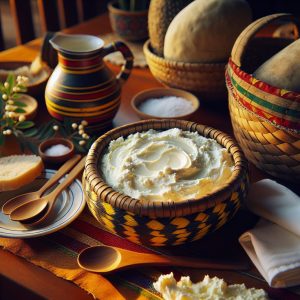
Dish #5 – Eshabwe: The Butter Sauce of the Ankole
Gist: Eshabwe is clarified butter, emulsified with a little water and salt until it becomes a creamy, savory sauce. It sounds simple. It tastes like magic.
Quick Facts
| Factor | Details |
|---|---|
| Dish Name | Eshabwe |
| Region | Western Uganda (Ankole region) |
| Main Ingredients | Ghee (clarified butter), water, salt |
| When to Eat | With meals, especially with millet bread |
| Price | 5,000-10,000 UGX ($1-3 USD) for a bowl |
The Experience
Eshabwe is made by churning ghee with small amounts of water until it transforms into a smooth, creamy sauce. It’s served with millet bread (karo) or simply drizzled over vegetables. The taste is rich, savory, and utterly addictive.
Where to Find It (Local Vendor Spotlights)
Mbarara: Ankole Homestead Restaurant
Just outside Mbarara, a restaurant set up like a traditional Ankole homestead serves eshabwe the old way. Watch them make it, then eat it with millet bread and grilled meat.
Kampala: Western Uganda Food Corner
In Kabalagala, a small restaurant run by an Ankole woman serves eshabwe on weekends only. Go early—it sells out.
How to Eat It
-
Tear off a piece of millet bread
-
Dip generously in the eshabwe
-
Close your eyes and sigh
Insider Tip
Eshabwe is traditionally served to honored guests. If someone offers it, you’re being welcomed as family.
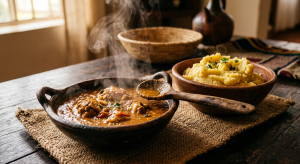
Dish #6 – Groundnut Stew: Uganda’s Comfort Food
Gist: Groundnut stew—peanut stew—is Uganda’s answer to mac and cheese. It’s the food you crave when you’re sick, when you’re sad, when you need to feel held. Every family has their version.
Quick Facts
| Factor | Details |
|---|---|
| Dish Name | Groundnut stew (ebinyebwa in Luganda) |
| Region | Nationwide |
| Main Ingredients | Ground peanuts, tomatoes, onions, meat or vegetables |
| When to Eat | Lunch or dinner, any day |
| Price | 8,000-15,000 UGX ($2-4 USD) |
The Experience
Groundnuts are pounded into a paste, then simmered with tomatoes, onions, and sometimes meat or greens. The result is thick, rich, and deeply comforting. It’s served with matoke, rice, or posho—and always eaten with the hands.
Where to Find It (Local Vendor Spotlights)
Kampala: Nakasero Market Food Stalls
In the market’s food section, several women serve groundnut stew daily. It’s simple, authentic, and perfect. Point at what you want, pay, eat.
Entebbe: Lakeside Mama’s
A small restaurant near the Entebbe Botanical Gardens serves groundnut stew with fresh fish. The combination is unbeatable.
How to Eat It
-
Mix the stew with your starch
-
Use your right hand to form bite-sized balls
-
Dip, eat, repeat
Insider Tip
The best groundnut stew is made with freshly pounded peanuts, not store-bought paste. Ask if they pound their own—the difference is obvious.
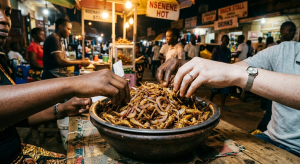
Dish #7 – Nsenene: The Grasshopper Season
Gist: Nsenene are grasshoppers—fried, salted, and eaten by the handful. They’re a seasonal delicacy, appearing after the rains, and Ugandans go absolutely wild for them. If you’re brave enough to try, you’ll understand why.
Quick Facts
| Factor | Details |
|---|---|
| Dish Name | Nsenene (grasshoppers) |
| Region | Central Uganda, especially Kampala |
| Season | April-May and November-December (after rains) |
| Main Ingredients | Grasshoppers, oil, salt, onions |
| Price | 5,000-10,000 UGX per small bag |
The Experience
When the season hits, the city transforms. People gather at night under bright lights, catching grasshoppers as they’re attracted to the bulbs. The next morning, vendors fry them with onions and sell them by the bag.
The taste? Nutty, crunchy, a little like shrimp. The texture? Crispy legs, soft bodies. It’s strange. It’s wonderful.
Where to Find It (Local Vendor Spotlights)
Kampala: Wandegeya During Season
The streets of Wandegeya fill with nsenene vendors during peak season. Buy a bag, stand on the corner, and eat with the students.
Jinja: Main Street Night Market
Jinja’s night market is another nsenene hotspot during season. The vendors here add extra chili—if you like spice, ask for it.
How to Eat It
-
Pop a handful in your mouth
-
Chew slowly—the legs can be prickly
-
Decide: love or hate?
Insider Tip
Fresh nsenene are best. Day-old nsenene lose their crunch. Buy from busy vendors who sell out quickly.
Dish #8 – Fresh Nile Perch: Lake Victoria’s Gift
Gist: Nile perch is the king of Lake Victoria—a massive fish that can feed a family. Grilled over charcoal, served with chips and salad, it’s the perfect lakeside meal.
Quick Facts
| Factor | Details |
|---|---|
| Dish Name | Fresh Nile perch |
| Region | Lake Victoria shoreline (Entebbe, Jinja, islands) |
| Main Ingredients | Nile perch, oil, spices, chips, salad |
| When to Eat | Lunch or dinner, preferably with a lake view |
| Price | 15,000-30,000 UGX ($4-8 USD) for whole fish |
The Experience
You choose your fish from a display—whole, eyes clear, fresh from the lake. It’s grilled over charcoal, seasoned simply with salt and maybe a spice rub, and served with hot chips (fries) and a simple salad of cabbage and tomato.
The flesh is white, flaky, and mild—perfect for the grill. Eat it with your hands, picking meat from the bones, chasing it with cold beer.
Where to Find It (Local Vendor Spotlights)
Entebbe: Ggaba Landing Site
Just outside Entebbe, Ggaba is where the fishermen bring their catch. Several small restaurants grill fish right on the water. Order the whole tilapia or Nile perch, find a plastic chair, and watch the boats.
Jinja: Source of the Nile
Near where the Nile leaves Lake Victoria, restaurants serve fresh fish with a view. It’s slightly more touristy, but the fish is still excellent.
How to Eat It
-
Use your hands (but a fork is acceptable)
-
Squeeze fresh lemon over the fish
-
Dip chips in the accompanying chili sauce
Insider Tip
The belly meat is the best—fatty, flavorful, prized by locals. If you’re eating with a Ugandan friend, let them have it. If you’re alone, claim it.
[IMAGE PLACEMENT 8: Whole grilled Nile perch on platter, chips beside it, lake background, sunset light. Caption: “Fresh Nile perch, grilled over charcoal, served with chips and a lake view. This is Uganda on a plate.”]
Dish #9 – Matoke: The Ultimate Comfort Food
Gist: Matoke is steamed green bananas, mashed slightly, and served with almost anything. It’s the starch that holds Ugandan meals together—bland on its own, perfect as a canvas for stews and sauces.
Quick Facts
| Factor | Details |
|---|---|
| Dish Name | Matoke (steamed green bananas) |
| Region | Nationwide |
| Main Ingredients | Green bananas, water, sometimes salt |
| When to Eat | With every meal, always |
| Price | Included with most meals |
The Experience
Green bananas are peeled, wrapped in banana leaves, and steamed until soft. They’re then mashed slightly and served alongside groundnut stew, meat, or vegetables. The texture is soft, slightly dense, and perfect for soaking up sauce.
Where to Find It (Local Vendor Spotlights)
Everywhere
Matoke is everywhere—hotels, roadside stalls, family homes. The best matoke is made by grandmothers, but you’ll find excellent versions at any local restaurant serving Ugandan food.
How to Eat It
-
Use it to scoop sauces and stews
-
Mix it with groundnut sauce for the classic combination
-
Don’t add salt until you’ve tasted—some cooks season it
Insider Tip
Matoke is graded by quality. The best is soft, not mushy, with intact banana shape. Avoid matoke that’s been sitting too long—it turns to paste.
[IMAGE PLACEMENT 9: Bowl of matoke, steam rising, groundnut stew beside it, hands forming balls. Caption: “Matoke: steamed green bananas. The starch that holds Ugandan meals together.”]
Dish #10 – Posho and Beans: The People’s Meal
Gist: Posho (maize porridge) and beans is the everyday meal of millions of Ugandans. It’s simple, filling, and surprisingly delicious when done right.
Quick Facts
| Factor | Details |
|---|---|
| Dish Name | Posho and beans |
| Region | Nationwide |
| Main Ingredients | Maize flour, beans, onions, tomatoes, spices |
| When to Eat | Lunch, dinner, any time |
| Price | 2,000-5,000 UGX ($0.50-1.50 USD) |
The Experience
Posho is made by mixing maize flour with boiling water until it forms a stiff porridge. Beans are cooked slowly with onions, tomatoes, and sometimes curry powder. Together, they’re a complete meal—filling, nourishing, and satisfying.
Where to Find It (Local Vendor Spotlights)
Every Local Restaurant
Any restaurant serving “local food” will have posho and beans. It’s the benchmark—if they can’t do this right, nothing else will be good.
How to Eat It
-
Form the posho into a small ball with your right hand
-
Make an indent with your thumb
-
Scoop beans into the indent
-
Eat in one bite
Insider Tip
The best posho is made with finely ground maize flour, not the coarse kind. Ask for “fine posho” if you have a choice.
[IMAGE PLACEMENT 10: Bowl of white posho, red beans beside it, hands forming balls, simple setting. Caption: “Posho and beans: the people’s meal. Simple, filling, and perfect when done right.”]
Dish #11 – Luwombo: The Celebration Stew
Gist: Luwombo is similar to luombo, but with a twist: it’s groundnut stew, cooked in banana leaves with meat and vegetables. It’s reserved for special occasions—and it tastes like celebration.
Quick Facts
| Factor | Details |
|---|---|
| Dish Name | Luwombo (groundnut stew in leaves) |
| Region | Central Uganda (Buganda) |
| Main Ingredients | Groundnuts, meat, vegetables, banana leaves |
| When to Eat | Special occasions, ceremonies |
| Price | 15,000-25,000 UGX ($4-7 USD) |
The Experience
Luwombo takes luombo to the next level—the groundnut sauce is cooked inside the leaves with the meat, infusing everything with peanut flavor. When the bundle is opened, the aroma is intoxicating.
Where to Find It (Local Vendor Spotlights)
Kampala: Special Occasion Restaurants
Restaurants that specialize in Buganda cuisine often serve luwombo on weekends. It’s worth seeking out.
How to Eat It
-
Same as luombo—hands, mixing, savoring
Insider Tip
Luwombo is traditionally served at weddings and introductions. If you’re invited to a ceremony, you’ll likely taste it.
[IMAGE PLACEMENT 11: Banana leaf bundle being opened, groundnut stew visible, meat inside, steam rising. Caption: “Luwombo: groundnut stew cooked in banana leaves. The taste of celebration.”]
Dish #12 – Waragi and Tonto: Liquid Courage
Gist: Waragi is Uganda’s waragi—a potent spirit, often home-brewed, that will put hair on your chest. Tonto is banana beer, fermented, slightly sour, and surprisingly refreshing. For the adventurous, they’re essential.
Quick Facts
| Factor | Details |
|---|---|
| Dish Name | Waragi (gin) and Tonto (banana beer) |
| Region | Nationwide |
| Main Ingredients | Bananas (tonto), grain (waragi) |
| When to Drink | Evenings, celebrations |
| Price | 2,000-5,000 UGX per glass |
The Experience
Waragi is strong—usually 40-50% alcohol. It’s often mixed with soda or juice, but purists drink it neat. Tonto is served in calabashes, cloudy and slightly effervescent. Both are social drinks, meant to be shared.
Where to Find It (Local Vendor Spotlights)
Local Bars (Tonto)
In rural areas, you’ll find tonto served in large pots, drunk through straws from a communal calabash. It’s a bonding experience.
Kampala (Waragi)
Any bar serves waragi. Ask for “waragi and soda” for the classic combination.
How to Drink It
-
Sip slowly (waragi is strong)
-
Share the tonto calabash with friends
-
Pace yourself—both sneak up on you
Insider Tip
Home-brewed waragi can be dangerous—sometimes adulterated. Stick to commercially distilled or well-known local sources.
[IMAGE PLACEMENT 12: Calabash of tonto (banana beer), straws, group drinking, evening light. Caption: “Tonto: banana beer, shared from a calabash. Drink with friends, sip slowly, make memories.”]
The Peak: What 6 Years of Eating Across Uganda Has Taught Me
Here’s what 6 years of eating across Uganda has taught me:
The best meals aren’t about the food. They’re about the moment.
The rolex shared with a stranger at 2 AM, both of you laughing about nothing. The groundnut stew served by a grandmother who reminds you of someone you’ve lost. The grasshoppers passed around a circle of new friends, each person daring the next to take another handful.
You’ll forget the exact taste. You’ll never forget the feeling.
That’s what this food map really leads to. Not full stomachs. Full hearts.
The Food Map – Where to Find Everything
Gist: Here’s a quick-reference guide to where each dish lives.
| Dish | Best Location | Specific Spot |
|---|---|---|
| Rolex | Kampala | Wandegeya (near Makerere) |
| Luombo | Kampala/Masaka | Ekyombo Restaurant |
| Muchomo | Gulu/Kampala | Gulu Night Market |
| Malewa | Mbale | Malewa Mama’s |
| Eshabwe | Mbarara | Ankole Homestead Restaurant |
| Groundnut Stew | Kampala | Nakasero Market food stalls |
| Nsenene | Kampala (seasonal) | Wandegeya during season |
| Nile Perch | Entebbe | Ggaba Landing Site |
| Matoke | Everywhere | Any local restaurant |
| Posho & Beans | Everywhere | Any local restaurant |
| Luwombo | Kampala | Buganda cuisine restaurants |
| Waragi/Tonto | Rural bars | Ask locally |
Food Etiquette – How to Eat Like a Local
Gist: Eating in Uganda comes with rules—unspoken, but important. Here’s how to avoid offending.
The Basics
-
Always use your right hand for eating (left is for hygiene)
-
Wash hands before meals (water will be provided)
-
Wait to be invited before starting (especially in homes)
-
Compliment the food (it’s polite, even if you’re not sure)
-
Don’t waste food (take what you can finish)
What to Avoid
-
Don’t reach across someone’s plate
-
Don’t eat while walking (considered odd)
-
Don’t refuse food without a good reason
-
Don’t ask for a fork in a hand-food situation
The Honest Truth: Ugandans are forgiving. But following these rules shows respect—and respect opens doors.
Frequently Asked Questions About Ugandan Food
Gist: These are the questions I answer most often from hungry travelers.
Is street food safe?
Generally yes, especially from busy vendors. Follow the crowds, watch for cleanliness, and trust your gut.
What if I have dietary restrictions?
Vegetarians can eat well (groundnut stew, vegetables, matoke). Vegans should specify “no meat, no milk, no eggs.” Gluten-free is easy (most meals are corn or plantain-based).
How spicy is Ugandan food?
Not very—most dishes are mild. Chili sauce is served on the side. Add your own heat.
What should I drink with meals?
Water, soda, or local beer. Nile Special is the classic Ugandan lager.
Can I learn to cook these dishes?
Yes! Many lodges offer cooking classes. Ask us for recommendations.
What’s the strangest thing you’ve eaten?
Nsenene (grasshoppers). And I loved them.
My Personal Food Journey (After 6 Years of Eating Across Uganda)
*Gist: I’ve eaten in 5-star hotels and roadside shacks, at wedding feasts and funeral gatherings. The best meal of my life? A plate of groundnut stew, served by a grandmother in a village with no electricity, eaten with my hands as the sun set over the banana plantation.*
The Honest Truth: The food you’ll remember isn’t the one that cost the most. It’s the one that came with a story—the rolex vendor who learned from his mother, the fish grilled by a man who’s been fishing the lake for 50 years, the grasshoppers shared with strangers on a Kampala street corner.
Eat with curiosity. Eat with respect. And let Uganda feed you—body and soul.
Your Food Adventure Checklist – Ready to Eat?
-
I’ve chosen 3-5 dishes I’m excited to try
-
I’ve noted the locations and vendors
-
I’ve learned the etiquette (right hand, wash first)
-
I’ve carried small bills for street food
-
I’m ready to eat like a local
The End: Your Invitation
You’ve read about 12 dishes now. A dozen reasons to step away from the hotel buffet and into the real Uganda.
But reading isn’t the same as tasting. The first bite of a fresh rolex, the crunch of nsenene, the warmth of groundnut stew on a cool evening—those have to be experienced.
At Travel Giants Uganda, we’ve spent 6 years eating our way across this country. We know the vendors by name, the grandmothers by their recipes, the street corners where magic happens after dark.
Ready to taste the real Uganda?
Email us at info@travelgiantsuganda.com with:
-
Which dishes call to you
-
Your travel dates
-
Any questions (I’ve eaten it all)
We’ll help you find these foods, meet these vendors, and taste Uganda the way it’s meant to be experienced—with an open mind, a hungry stomach, and a willingness to try anything.
Smell the smoke of muchomo grills at dusk. Taste the warmth of groundnut stew made by hands that have cooked for generations. Share a calabash of tonto with new friends and know that this—this is Uganda.
The food is waiting. The stories are ready. And now, you know exactly where to find them.

Charles Lubega | Senior Food Writer & Cultural Guide
6 Years Eating Across Uganda | Vendor Friend to Generations of Cooks | Self-Appointed Rolex Connoisseur
Credentials: Uganda Culinary Heritage Society Member, Street Food Documentation Project Lead, Author of “Tastes of Home: A Ugandan Food Memoir”
