
By Lubega Charles | Senior Guide, Travel Giants Uganda
5 Years Leading Treks | 200+ Gorilla Encounters | Bwindi & Mgahinga Specialist
The Explicit Answer: What You’ll Learn in This Guide
After 5 years and 200+ treks guiding visitors from around the world through Bwindi and Mgahinga, I’ve witnessed nearly every mistake first-time trekkers can make—and I’ve made a few myself.
This guide reveals the 7 most common mistakes I’ve seen, exactly how they unfold, and most importantly—how you can avoid them completely.
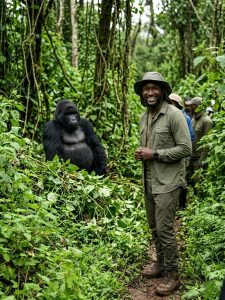
The 7 mistakes in brief:
-
Booking flights before permits
-
Ignoring fitness requirements
-
Skimping on gear
-
Forgetting buffer days
-
Not hiring a porter
-
Underestimating the emotional impact
-
Choosing the wrong park or sector
These mistakes aren’t just about logistics—they’re about protecting the experience you’ve dreamed of. Read this guide, avoid these pitfalls, and your gorilla trek will be everything you imagined.
I’m sharing these lessons not as a guru preaching from a mountaintop, but as a guide who’s walked beside hundreds of first-timers, watched them struggle, celebrated their triumphs, and learned something from every single journey.
Mistake #1: Booking Flights Before Permits – The Heartbreak of “Sold Out”
Gist: I’ve had clients arrive in Uganda with flights booked, hotels confirmed, and excitement peaking—only to discover their preferred trek dates have no permits. The disappointment is devastating. Here’s how to ensure it never happens to you.
The Story
Last year, a couple from London emailed me in a panic. They’d booked their flights during a “sale”—$800 round-trip, non-refundable. Then they tried to secure December permits. Everything was sold out. They called 12 operators. Nothing.
They ended up shifting their dates by two weeks, rebooking flights at triple the cost, and losing money on their original bookings. The stress nearly ruined their trip before it started.
When they finally arrived, the wife told me: “I couldn’t even enjoy the planning. Every time I thought about the trip, I just felt anxious about whether we’d actually get permits.”
Why It Happens
-
Flights feel urgent. Sales end. Seats disappear. The “book now” pressure is real.
-
Permits feel abstract. You can’t see them selling out online the way you watch flight prices climb.
-
Optimism bias. Travelers assume permits will be available when they’re ready. “It’s never happened to me before.”
How to Avoid It
-
Permits first, flights second. Always. Without exception. This is non-negotiable.
-
If you must book flights early, choose refundable or changeable options—even if they cost more.
-
Work with an operator who can check real-time availability before you commit.
-
Have 2-3 date options before you start the permit process. Flexibility is your friend.
The Pro Tip
Uganda Wildlife Authority releases permits on a rolling basis. If your first-choice dates are sold out, ask us about waitlists or alternative sectors. In 2025, we secured permits for 6 clients who thought all was lost—because we knew about a cancellation in Rushaga sector.
Never give up until you’ve asked a local operator. The public inventory might show “sold out,” but relationships with rangers, knowledge of upcoming cancellations, and access to allocations can sometimes work miracles.
Mistake #2: Ignoring Fitness Requirements – When Your Legs Say No
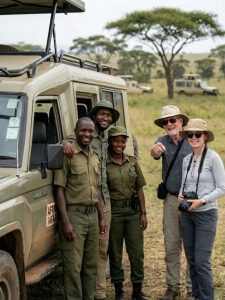
Gist: Gorilla trekking isn’t a walk in the park—it’s a hike in one of the world’s most rugged terrains. I’ve watched fit-looking people struggle and self-described “out of shape” trekkers thrive. The difference? Preparation and honest self-assessment.
The Story
A client named Sarah, a marathon runner, booked Nkuringo sector—the most challenging in Bwindi. She assumed her running fitness would carry her.
But trekking involves different muscles—quads for steep descents, core for balance on uneven ground, grip strength for hauling yourself up slopes using vegetation. Two hours in, her legs were shaking. She made it to the gorillas, but the joy was overshadowed by exhaustion.
She told me later, “I wish I’d trained differently. I thought running was enough. Now I know better.”
Why It Happens
-
People confuse cardio fitness with trekking fitness. They’re related but not the same.
-
Brochures and marketing understate difficulty. Everyone wants to sell treks.
-
Ego. No one wants to admit they might struggle. We all want to believe we’re capable.
How to Avoid It
-
Be brutally honest about your fitness level. Not your ideal fitness level. Your actual one.
-
Choose your sector accordingly:
-
Rushaga: Easier terrain, good for most fitness levels
-
Buhoma: Moderate, well-established trails
-
Ruhija: Challenging, higher altitude
-
Nkuringo: Very challenging, steep descents and climbs
-
Mgahinga: Consistently moderate-challenging with volcanic terrain
-
-
Train specifically: Stairs, hiking with weight, squats, lunges, step-ups. Three months of stair climbing transforms your trek.
-
Hire a porter even if you think you don’t need one. They’re $20 and worth every cent.
The Pro Tip
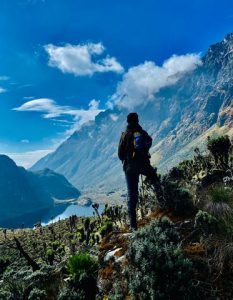
I’ve created a simple self-test: Can you climb 50 flights of stairs without stopping?
If yes, you can handle moderate sectors. If no, choose Rushaga and hire a porter. Your legs will thank you, and you’ll actually enjoy the experience rather than just surviving it.
Mistake #3: Skimping on Gear – The $5 Raincoat That Cost $500 in Joy
Gist: Bwindi’s nickname isn’t “Impenetrable” for nothing. It rains. It’s muddy. It’s slippery. I’ve watched clients arrive with cheap raincoats that tear, hiking boots with zero grip, and backpacks that chafe. The forest humbles unprepared gear quickly.
The Story
A gentleman from Texas showed up with brand-new hiking boots—still stiff, never broken in. By hour two, he had blisters on both heels. By hour three, he was bleeding through his socks.
He finished the trek, but every step was agony. He barely remembers seeing the gorillas because all he felt was pain. A $100 pair of broken-in boots would have saved his $800 permit experience.
Why It Happens
-
Travelers underestimate the terrain. Photos don’t show the mud, the roots, the steep slopes.
-
People buy gear last-minute without testing it. Amazon delivers, suitcase packs, regret follows.
-
Budget prioritization: Spend on the permit, save on gear. This is backward thinking.
How to Avoid It
Footwear (non-negotiable):
-
Waterproof hiking boots with ankle support. Not trail runners. Not trainers. Boots.
-
Broken in for at least 2 weeks before your trip. Wear them everywhere.
-
Thick hiking socks. Bring spares. Change them after the trek.
Clothing:
-
Quick-dry pants (not jeans—jeans in rain are misery incarnate)
-
Long-sleeved moisture-wicking shirt (protection from stinging nettles)
-
Waterproof rain jacket and pants (not a poncho—pants matter more than you know)
-
Gardening gloves (for grabbing vegetation during steep sections)
-
Gaiters (keep mud out of boots, and there will be mud)
Gear:
-
Small backpack with rain cover
-
Water bottles or hydration bladder
-
Camera with extra batteries (cold drains batteries fast)
-
Snacks: energy bars, chocolate, nuts
The Pro Tip
You can rent gear in Uganda—boots, gaiters, jackets, even walking sticks. But I don’t recommend renting footwear. Your feet are your foundation. Bring your own, broken in, proven.
Everything else can be rented if needed, but test it before you leave the rental shop. Walk around. Make sure it fits. Don’t assume.
Mistake #4: Not Building Buffer Days – When the Forest Says “Not Today”
Gist: Gorillas are wild animals. They move. Weather happens. Treks get canceled. I’ve seen clients book their trek on their last full day in Uganda—and when circumstances forced a cancellation, they flew home without ever seeing a silverback.
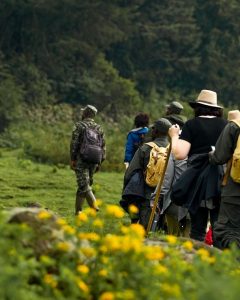
The Story
A family from Australia scheduled their trek for December 28th—their final full day before flying home on the 29th. The night before, heavy rains made the trail impassable. Uganda Wildlife Authority canceled all treks in their sector.
They had no buffer days. No flexibility. They flew home heartbroken.
They’ve since rebooked for 2026, but they lost $2,400 in permits and learned a brutal lesson about the cost of tight schedules.
Why It Happens
-
Limited vacation time forces tight itineraries. I understand this deeply.
-
Optimism bias whispers: “It won’t happen to me.”
-
Travelers don’t realize that cancellations, while rare (under 2% of treks), do occur.
How to Avoid It
-
Build 2-3 buffer days after your scheduled trek date. This is your insurance policy.
-
Trek earlier in your trip, not later. If something goes wrong, you have time to reschedule.
-
If your schedule is truly tight, invest in travel insurance that covers trek cancellation.
-
Ask about your sector’s historical cancellation rate. Some sectors are more weather-reliable than others.
The Pro Tip
April and May are the rainiest months—cancellations are slightly more common. If you’re traveling then, build 3 buffer days.
If you’re in peak dry season (June-September, December-February), 2 buffer days is usually safe.
And always, always have a backup activity planned for buffer days—community visits, forest walks, canopy walks, or simply enjoying your lodge with a book and a view. It’s not a waste; it’s insurance. And sometimes, those unplanned days become the ones you remember most.
Mistake #5: Not Hiring a Porter – The $20 That Transforms Your Trek
Gist: Porters cost $20. That’s it. Twenty dollars. Yet I’ve watched clients struggle up hills, gasping for breath, when for the price of a nice dinner they could have floated through the experience. Hiring a porter isn’t admitting weakness—it’s investing in your enjoyment.
The Story
A retired teacher from Canada, 68 years old, insisted she didn’t need a porter. “I’ve hiked the Rockies,” she said.
Two hours in, she was exhausted, her backpack feeling heavier with each step. Her guide quietly suggested a porter again. She finally agreed.
A young man named Joseph took her pack, offered his arm on steep sections, and pointed out birds and plants along the way. He showed her where to step to avoid mud, held branches back so they wouldn’t snap in her face, and shared stories about growing up near the forest.
She finished smiling, tipped Joseph $50, and told me, “That was the best $20 I’ve ever spent. I wish I’d hired him at the start.”
Why People Don’t Hire Porters
-
Pride. “I can carry my own weight” is a common refrain. The forest doesn’t care about your pride.
-
Misunderstanding the role. Porters do so much more than carry bags.
-
Budget blindness. Travelers focus on big costs (flights, permits, lodges) and miss the small ones that transform experience.
What Porters Actually Do
-
Carry your backpack (5-10kg instantly gone from your shoulders)
-
Offer a steadying hand on steep, slippery sections
-
Point out wildlife, plants, and tracks you’d walk right past
-
Share local knowledge and stories that enrich your understanding
-
Provide encouragement and company when you’re flagging
-
Know the trails intimately—they’ve walked them hundreds of times
-
Support local employment in communities near the park
The Deeper Truth
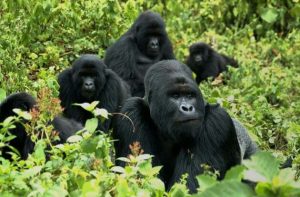
Porters are often former poachers who now protect the very gorillas they once hunted.
Your $20 doesn’t just lighten your load—it funds conservation, supports families, and transforms lives. I’ve watched porters cry when clients thanked them at the end of treks. I’ve seen men who once set snares now weep with pride at protecting the animals they tried to kill.
Hire a porter. Always.
Mistake #6: Underestimating the Emotional Impact – What Nobody Tells You
Gist: Every client prepares for the physical challenge. Almost none prepare for the emotional one. I’ve watched grown men weep. I’ve seen silence fall over groups of strangers. I’ve held space for joy, awe, and the kind of crying that comes from somewhere deeper than words.
The Story
A lawyer from New York—tough, composed, “I don’t cry at movies”—spent the first hour of his trek making jokes, checking his phone when reception appeared, treating it like a bucket list checkbox.
Then we found the gorillas.
A silverback emerged from the foliage, walked within 10 feet of him, and sat down. He looked at the gorilla. The gorilla looked at him.
For five full minutes, no one spoke or moved. The forest held its breath.
When we finally walked away, he had tears streaming down his face. He didn’t speak for an hour. Later, he said, “I didn’t know a wild animal could look at me like that. Like he knew me. Like I’d come home to somewhere I’d never been.”
Why This Happens
-
Gorillas share 98% of human DNA. Their eyes feel familiar. Ancient. Known.
-
The silence of the forest amplifies every moment. No phones. No traffic. No distractions.
-
Years of dreaming converge into minutes of reality. The buildup alone creates emotional pressure.
-
There’s no preparation for being seen by a wild being who owes you nothing and gives you everything.
How to Prepare (Emotionally)
-
Expect to be moved. Don’t fight it. Don’t apologize for it.
-
Give yourself permission to feel whatever arises—joy, awe, sadness, connection, grief, wonder.
-
Put the camera down for at least a few minutes. Be present. The photos will be there. The moment won’t.
-
Talk about it afterward. Process with your group, your guide, your journal. Don’t hold it in.
The Pro Tip
I tell every client: The first five minutes, take photos. Get the shots. Then put the camera away.
Just watch. Just be. The photos will be there. The moment won’t.
Years later, you won’t remember the photos you took—you’ll remember how you felt. Protect that feeling.
Mistake #7: Choosing the Wrong Park or Sector – When “Good Enough” Isn’t
Gist: Bwindi has four sectors. Mgahinga has one. Each offers a completely different experience. I’ve watched clients book the wrong one—and only realize it when they’re struggling up a slope they could have avoided, or missing volcano views they’d dreamed of.
The Story
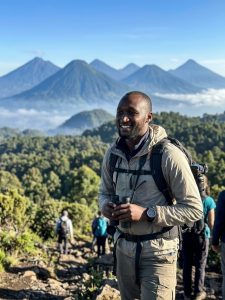
A photographer from Germany booked Mgahinga because he’d seen stunning volcano-backdrop shots online. But he booked during rainy season, arrived to clouds and mist, and never saw the Virungas.
The gorillas were there—beautiful, moving, unforgettable. But he kept looking up, waiting for the view in his imagination.
He told me, “I should have come in dry season, or chosen Bwindi for forest intimacy. I was so focused on the volcano shots that I missed the beauty in front of me.”
He learned the hard way that timing and expectations matter.
Why This Happens
-
Travelers don’t understand the differences between sectors. They all look similar in photos.
-
Marketing shows perfect conditions year-round. Reality has seasons.
-
People book based on price or availability, not experience fit.
How to Avoid It
-
Study the sector differences. Read our Bwindi vs. Mgahinga comparison guide carefully.
-
Match sector to your priorities:
| If You Want… | Choose… |
|---|---|
| Easiest trekking, most family options | Bwindi – Rushaga |
| Classic forest experience, luxury lodges | Bwindi – Buhoma |
| Challenging trek, fewer crowds, dramatic views | Bwindi – Nkuringo |
| Volcano scenery, golden monkeys, exclusivity | Mgahinga |
| Research-focused, remote feel | Bwindi – Ruhija |
-
Ask about seasonal conditions. When are volcano views clearest? When is mud worst? When do specific sectors shine?
-
Consult an expert who’s trekked all sectors in all seasons. That’s what we’re here for.
The Pro Tip
Before you book, ask yourself one question: “What do I want to feel during this trek?”
Forest intimacy? Volcano grandeur? Physical challenge? Easy enjoyment? The answer will tell you which sector to choose.
If you’re still unsure, ask us. We’ve trekked them all. We’ll match you to the right one.
The Mistake I Made – Humble Beginnings
Gist: I wasn’t always a guide. My first trek, I made mistakes too. Here’s what I learned the hard way.
My Story
On my first trek as a trainee guide, I wore new boots. Brand new. Never broken in. I was young, eager, and stupid.
By the time we reached the gorillas, I had blisters the size of golf balls on both heels. I spent the encounter focused on my feet, not the silverback. I took photos, but I don’t remember seeing him. I remember pain.
My mentor pulled me aside afterward and said, “You’ll never do that again, will you?”
I haven’t. Now I check every client’s footwear before we leave. I share this story openly. I want you to learn from my stupidity, not your own.
The One Mistake That’s Actually Okay to Make
Gist: Not all mistakes are bad. Some lead to unexpected gifts. Here’s the one mistake I secretly hope you’ll make.
The Reframe
Getting lost in the moment. Forgetting to take photos. Crying when you didn’t expect to. Talking too much or going silent. Reaching out a hand and pulling it back. Laughing at nothing. Sobbing at everything.
These aren’t mistakes—they’re signs that the experience is reaching you.
If you “mess up” by being fully present, by letting the forest change you, by leaving part of yourself in those mountains—that’s the best mistake you can make.
The only real mistake is arriving with your heart closed.
The Peak: What 5 Years Has Taught Me
Here’s what 5 years and 200 treks has taught me:
The mistake isn’t feeling too much. The mistake is feeling too little.
Travelers who protect themselves from emotion—who stay behind cameras, who crack jokes to deflect, who treat it like a checklist—often leave wondering why they feel empty.
The ones who let the forest in, who cry when moved, who sit in silence with a silverback, who reach out and touch something ancient inside themselves—they’re the ones who come back changed.
The mistake isn’t vulnerability. The mistake is armor.
The forest will find the cracks in your armor anyway. Better to arrive without it.
Your Pre-Trek Checklist – Ready to Avoid Every Mistake?
Work through this checklist. When every box is checked, you’re ready.
-
I have secured my permits before booking flights
-
I have honestly assessed my fitness and chosen sector accordingly
-
My hiking boots are broken in (2+ weeks of wear)
-
I have proper gear: waterproof jacket and pants, gaiters, gloves, quick-dry clothing
-
I have built 2-3 buffer days after my trek date
-
I have budgeted for a porter ($20 + tip)
-
I have prepared emotionally to be present, not just photograph
-
I have studied sector options and chosen the right fit
-
I have travel insurance that covers trek cancellation
-
I have contacted Travel Giants Uganda to check real-time availability
The End: Your Invitation
Five years. Two hundred treks. Thousands of clients.
And still, every time I step into the forest, I learn something new. The gorillas teach me. The porters teach me. The clients teach me. The mistakes teach me.
The mistakes I’ve shared with you aren’t warnings to scare you—they’re gifts from everyone who came before you. They’re the lessons carved into trails, whispered by porters, written in the expressions of clients who wished they’d known.
Now you know.
You know to book permits first. To train honestly. To gear properly. To hire a porter. To leave buffer days. To prepare your heart. To choose the right sector.
The only thing left is to come.
At Travel Giants Uganda, we’ve guided hundreds of first-timers through these exact concerns. We’ve held hands through anxiety and celebrated through tears. We know the rangers, the porters, the trails, the gorillas—by name, by story, by heart.
Ready to avoid every mistake on this list?
Email us at info@travelgiantsuganda.com or DM us on +256784053143 with:
-
Your questions
-
Your preferred dates
-
Your dreams for this journey
We’ll guide you through permits, help you choose the right sector, answer every anxious question, and ensure your first trek becomes the story you tell for the rest of your life.
The forest is waiting. The gorillas are there. And now, you’re ready.
Feel the mist on your face as you step into the ancient forest. Hear the guide whisper “there” as the silverback emerges. Your heart will pound. Let it. Your eyes will fill. Let them. You’re exactly where you’re supposed to be.
Charles Lubega | Senior Guide
5 Years Leading Treks | 200+ Gorilla Encounters | Bwindi & Mgahinga Specialist*
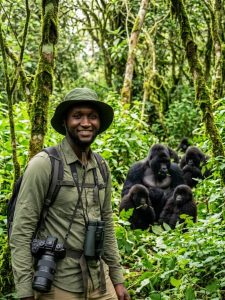
Credentials: Certified Uganda Safari Guide, Uganda Wildlife Authority Licensed, Advanced Wilderness First Aid, Specialized in First-Time Trekker Guidance
