
By Charles Lubega | Senior Gorilla Trekking Safari Tourist Guide, Travel Giants Uganda
15 Years | Thousands of Gorilla Trekking Permits Booked | Uganda & Rwanda Gorilla Trekking Safari Specialist
The Explicit Answer: What You’ll Learn in This Guide
I’ve watched trekkers arrive in hiking boots that weren’t broken in—and watched them limp back with blisters. I’ve watched others wear jeans in the rain—and watched them shiver for hours.
After 15 years and over 500 treks, I know exactly what works and what doesn’t. This isn’t a generic safari packing list. This is the gorilla trekking gear guide, tested in the mud and rain of Bwindi and the bamboo forests of Volcanoes National Park.
This guide delivers a complete, item-by-item packing checklist for gorilla trekking in Uganda and Rwanda. You’ll learn what to wear (and what not to), the one item that separates prepared trekkers from miserable ones, how to pack for both countries, and insider tips from someone who’s tested every item in the field.
Quick Overview of Categories
| Category | Key Items |
|---|---|
| Clothing | Quick-dry fabrics, layers, rain protection, gardening gloves |
| Footwear | Waterproof boots (broken in), gaiters, merino wool socks |
| Gear | Daypack, headlamp, binoculars, power bank, dry bags |
| Photography | Zoom lens (100-400mm), extra batteries, bean bag, cleaning kit |
| Health & Safety | Medical kit, insect repellent, sunscreen, anti-diarrheal |
| Documents | Permit (printed), passport, yellow card, visa, insurance |
The deeper truth: The right gear doesn’t just make you comfortable—it makes you present. When you’re not shivering, or nursing blisters, or wiping mud from your eyes, you’re free to be with the gorillas. That’s what this list buys you.
I’ve tested every item on this list—sometimes the hard way, so you don’t have to. Let me help you pack right.
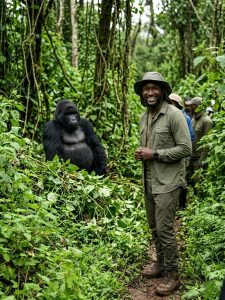
[IMAGE PLACEMENT 1: Hero shot of properly dressed trekker in forest (boots, gaiters, rain jacket, daypack, gloves). Caption: “The right gear doesn’t just make you comfortable—it makes you present. Here’s what actually works.”]
The Golden Rules of Gorilla Trekking Packing
Gist: Before we get to the list, here are the principles that guide every packing decision I make—and should guide yours.
Rule #1: Cotton Kills (Literally)
Cotton absorbs sweat and rain, stays wet, and chills you. On a gorilla trek, this is misery. Synthetics (polyester, nylon, merino wool) wick moisture, dry fast, and regulate temperature. Pack smart fabrics.
Rule #2: Layers, Not Bulk
Temperatures swing dramatically. Morning game drives or trek starts at 5:00 AM can be cold (10-15°C/50-59°F). By noon, it’s warm (20-25°C/68-77°F). You need layers you can add and remove, not one bulky jacket you’re stuck with.
Rule #3: Test Everything Before You Go
New boots cause blisters. New backpacks chafe. New rain jackets leak. Break in everything before you leave home. The forest is not the place for surprises.
Rule #4: Pack for the Worst, Hope for the Best
Bwindi’s nickname is “Impenetrable” for a reason. It rains. Even in dry season. Pack rain gear. Pack extra socks. Pack optimism—but prepare for mud.
Rule #5: Carry-On Only (For Your Camera Gear)
Never check your camera gear, permits, medications, or a change of clothes. Checked bags get lost. Your trek doesn’t wait.
The Honest Truth: I’ve seen trekkers ruin their experience with bad gear choices. Every item on this list exists because someone suffered without it. Learn from them.
Clothing – What to Wear (From Head to Toe)
Gist: Here’s exactly what to wear, tested across hundreds of treks in both countries.
Head
| Item | Why | Tip |
|---|---|---|
| Wide-brimmed hat | Sun protection for face and neck | Baseball caps leave ears exposed |
| Buff or gaiter | Dust mask, sun protection, warmth, sweatband | One item, a dozen uses |
| Sunglasses with strap | UV protection (high altitude), won’t fall off | Essential for clear days |
Upper Body
| Item | Why | Tip |
|---|---|---|
| Base layer (merino or synthetic) | Moisture-wicking, odor-resistant | No cotton |
| Mid layer (fleece) | Insulation for cold mornings | Easy to remove |
| Long-sleeved shirt (quick-dry) | Protection from nettles and sun | 2-3 shirts, rotate |
| Waterproof rain jacket | Non-negotiable—it rains | Breathable, packable |
Lower Body
| Item | Why | Tip |
|---|---|---|
| Quick-dry hiking pants | Protect legs from nettles, dry fast | No jeans—when wet, they’re misery |
| Waterproof rain pants | Keeps you dry in downpours | Essential for Uganda’s Bwindi |
Feet
| Item | Why | Tip |
|---|---|---|
| Sturdy hiking boots (waterproof) | Ankle support, grip on mud | Break in for 2+ weeks before trip |
| Gaiters | Keep mud and water out of boots | Essential for Uganda |
| Merino wool socks (3-4 pairs) | Warm when wet, odor-resistant | Change socks after trek |
| Camp shoes/sandals | For evenings at the lodge | Lightweight, comfortable |
Hands
| Item | Why | Tip |
|---|---|---|
| Gardening gloves (rubber grip) | Grab vegetation without getting scratched or stung | $5, lifesaver—essential for Uganda |
[IMAGE PLACEMENT 2: Flat lay of clothing items: base layer, fleece, rain jacket, pants, hat, gloves, socks. Caption: “Layer up. Quick-dry fabrics. Rain protection. Gardening gloves. This is what works.”]
The Insider Tip: The single most underrated item? Gardening gloves. Every trekker who brings them thanks me. Every trekker who doesn’t wishes they had.
Footwear – The Foundation of Your Trek
Gist: Your feet are your foundation. Skimp on footwear, and you’ll remember every step for the wrong reasons.
Hiking Boots – The Non-Negotiable
| Feature | Why It Matters |
|---|---|
| Waterproof | Bwindi is muddy and wet, even in dry season |
| Ankle support | Uneven, root-covered terrain requires stability |
| Broken in (2+ weeks) | New boots = blisters. Blisters = misery. |
| Good tread | Mud and steep slopes require grip |
Boots to Avoid
-
Trail runners (not enough ankle support, not waterproof enough)
-
New boots of any kind (break them in first)
-
Fashion boots (wrong soles, not functional)
Gaiters – The Unsung Hero
Gaiters cover the gap between your boots and pants. They keep mud, water, and debris out of your boots. In Bwindi’s mud, they’re not optional—they’re essential. In Rwanda, still helpful but less critical.
Socks – Merino Wool Only
Merino wool is nature’s miracle fabric—warm when wet, odor-resistant, comfortable. Your feet will live in these. Bring 3-4 pairs. Change them after the trek (your feet will thank you).
Camp Shoes
After the trek, you’ll want something comfortable for the lodge. Lightweight sandals or trainers work perfectly.
[IMAGE PLACEMENT 3: Boots, gaiters, merino socks arranged together. Caption: “Your feet are your foundation. Waterproof boots, gaiters, and merino wool socks—non-negotiable.”]
The Honest Truth: I’ve watched trekkers cry from blisters caused by new boots. I’ve seen $800 permits wasted because feet couldn’t continue. Break in your boots. Wear gaiters. Bring merino socks. Your feet will carry you to the gorillas—treat them right.
The Peak: What 15 Years Has Taught Me About Packing
Here’s what 15 years and 500 treks has taught me about packing for gorilla trekking:
The right gear doesn’t just make you comfortable—it makes you present.
I’ve watched trekkers arrive with $500 boots that weren’t broken in—and watched them limp back in pain.
I’ve watched others wear jeans in the rain—and watched them shiver for hours.
I’ve watched people with brand new rain jackets that leaked—and watched them suffer.
When you’re not shivering, or nursing blisters, or wiping mud from your eyes, you’re free to be with the gorillas. You’re not distracted by your own suffering. You’re watching a silverback eat bamboo ten feet away. You’re seeing a mother groom her infant. You’re present.
That’s what this packing list buys you. Not just comfort. Presence.
So here’s my advice:
-
Break in your boots. Wear them everywhere for two weeks.
-
Pack rain gear that actually works.
-
Bring gardening gloves—trust me.
-
Hire a porter.
-
And then forget about your gear. The gorillas are waiting.
Gear – The Tools That Transform Your Trek
Gist: Beyond clothing, these items make the difference between surviving and thriving.
The Essential Gear Checklist
| Item | Why | Tip |
|---|---|---|
| Daypack (20-30L) | Carry water, snacks, camera, extra layers | With rain cover |
| Water bottles or hydration bladder | 2-3 liters minimum | Staying hydrated is critical |
| Headlamp or flashlight | Early mornings, dark lodge paths | Extra batteries |
| Binoculars (8×42 or 10×42) | Spot wildlife, see gorilla details | Practice using before trip |
| Power bank | Charging cameras and phones; lodges may have limited power | 20,000mAh minimum |
| Dry bags or Ziplocs (assorted sizes) | Protect electronics and documents from rain | Lightweight, cheap insurance |
| Trekking poles | Saves knees on descents, improves balance | Some lodges provide |
| Small notebook and pen | Journal your experience, note bird sightings | Your phone may die |
The $20 Lifesaver – A Porter
Not gear, but essential. A porter carries your daypack, offers a steady hand on steep sections, and transforms your trek. Budget for it. Hire them at the park entrance.
[IMAGE PLACEMENT 4: Gear flat lay: daypack, water bottles, headlamp, binoculars, power bank, dry bags, trekking poles. Caption: “The gear that transforms your trek. Pack smart, pack light.”]
The Insider Tip: Pack your daypack light. You’ll carry it (or your porter will). Everything you don’t need stays at the lodge. Less weight = more enjoyment.
Photography Gear – Capturing the Moment
Gist: You don’t need to be a professional photographer to want good photos. Here’s what you actually need.
Camera Gear for Gorilla Trekking
| Item | Why | Tip |
|---|---|---|
| Camera with zoom lens (100-400mm minimum) | Gorillas stay 7+ meters away; you need reach | Rent if you don’t own |
| Extra batteries (3+) | Cold drains batteries fast | Keep spares warm (in pocket) |
| Memory cards (128GB+ total) | You’ll shoot more than you expect | Multiple smaller cards safer than one giant |
| Lens cleaning kit | Dust, rain, mud—your lens will get dirty | Rocket blower + microfiber cloth |
| Bean bag (for vehicle/resting lens) | Stabilizes your camera on vehicle window or rock | DIY: fill bag with rice/beans |
| Rain cover for camera | Sudden showers happen | Plastic bag works in a pinch |
Camera Settings Tips
-
Mode: Aperture Priority (f/5.6-8) or Shutter Priority
-
Shutter speed: 1/250 minimum (gorillas move slower than birds, but still move)
-
ISO: Don’t be afraid of 3200-6400 in low light
-
Focus: Continuous AF, single point or eye AF if available
Smartphone Photography
Modern smartphones take excellent photos. But for gorillas at distance, you need optical zoom. A smartphone’s digital zoom will disappoint. Bring a real camera or rent one.
[IMAGE PLACEMENT 5: Camera with zoom lens, extra batteries, memory cards, cleaning kit, bean bag. Caption: “Photography gear: zoom lens, extra batteries, cleaning kit, and a bean bag for stability.”]
The Insider Tip: The first 5 minutes with the gorillas are golden. They’re curious, active, and often in good light. Shoot fast, then put the camera down and just watch. The photos will be there. The moment won’t.
Health & Safety – What to Pack for Your Body
Gist: These aren’t optional. They’re the difference between a great trip and a trip to the hospital.
Medical Kit Essentials
| Category | Items |
|---|---|
| Prescriptions | Enough medication for trip + extra week (in original containers) |
| Pain relief | Ibuprofen, paracetamol (for sore muscles after trek) |
| Anti-malarials | Start before you go; consult your doctor |
| Anti-diarrheal | Trust me, you want this |
| Antihistamines | For allergic reactions (insects, plants, food) |
| Rehydration salts | Dehydration at altitude is real |
| Antiseptic cream | For cuts and scratches |
| Plasters/Band-Aids | Blister care (moleskin is best) |
| Insect repellent | DEET or Picaridin (30%+ for effective protection) |
| Sunscreen (high SPF) | Sun at altitude burns fast |
| Lip balm with SPF | Sun and wind chap lips |
Other Health Essentials
-
Hand sanitizer (bathrooms and hand-washing may be limited)
-
Wet wipes (for quick clean-ups)
-
Tissues/toilet paper (bathrooms may not be stocked)
[IMAGE PLACEMENT 6: Medical kit laid out: pills, blister care, insect repellent, sunscreen, hand sanitizer. Caption: “Your medical kit should fit in a small pouch and cover every common trekking ailment.”]
The Honest Truth: Lodges have basic first aid. They don’t have your specific needs. Carry your own. And don’t forget the anti-diarrheal. I’ve seen too many trekkers wish they had it.
Documents & Money – The Non-Negotiables
Gist: Without these, you don’t trek. Here’s what you must bring.
Essential Documents
| Document | Why |
|---|---|
| Passport | Must match your permit name; 6+ months validity |
| Printed gorilla permit | Digital copies sometimes fail; print two copies |
| Yellow fever certificate (physical card) | Required for entry; digital copies often rejected |
| Visa | Uganda e-visa or East African Tourist Visa |
| Travel insurance documents | Proof of coverage (medical evacuation critical) |
| Flight confirmations | Proof of onward travel |
Money Matters
| Item | Why |
|---|---|
| USD (crisp bills, post-2013) | For permits, tips, emergencies |
| Local currency (UGX or RWF) | For small purchases, markets |
| Credit cards | For lodges, larger payments (check fees) |
| Small bills (1,5, $10) | For tips (guides, porters, drivers) |
Digital Backups
-
Photos of all documents on your phone and email
-
Share itinerary with someone at home
-
Offline maps (Google Maps offline for Uganda/Rwanda)
[IMAGE PLACEMENT 7: Flat lay of documents: passport, printed permit, yellow card, visa, insurance, cash. Caption: “Your entry kit: passport, permit, yellow card, visa, insurance, cash. Keep them together. Keep them safe.”]
The Insider Tip: Photograph your passport, yellow card, and permit. Email them to yourself. If you lose the originals, you have proof at your embassy.
What NOT to Pack (The Wasted Space List)
Gist: After 15 years, I’ve also learned what not to bring. Here’s what almost always stays untouched.
Leave These at Home
| Item | Why It’s Wasted Space |
|---|---|
| Jeans | Heavy when wet, cold, miserable |
| Cotton anything | Absorbs moisture, doesn’t dry |
| White or bright clothing | Spooks animals, stands out in photos |
| Fancy jewelry or watches | Attracts theft, gets damaged, pointless in the bush |
| High heels or dressy clothes | You’ll never wear them |
| More than 4 outfits | Laundry exists; pack light |
| Heavy books | Kindle or one paperback max |
| Laptop (unless essential) | You’re on safari—disconnect |
| Multiple pairs of shoes | Boots + camp shoes = enough |
| Expensive designer anything | Mud and wildlife don’t care about labels |
| Drone | Banned in national parks |
| Flash photography equipment | Not allowed (and useless in forest) |
[IMAGE PLACEMENT 8: “What NOT to pack” visual with crossed-out items: jeans, white clothes, heels, laptop, drone. Caption: “Leave these at home. They’re heavy, useless, or banned.”]
The Honest Truth: Every item you don’t pack is weight you don’t carry, space you don’t fill, and stress you don’t feel. Pack light. Pack right.
Packing by Country – Uganda vs. Rwanda Differences
Gist: Your packing list should shift slightly depending on which country you’re trekking.
Uganda (Bwindi) – More Mud, More Rain
| Item | Priority |
|---|---|
| Gaiters | Essential (mud is relentless) |
| Gardening gloves | Essential (you’ll grab vegetation) |
| Waterproof rain pants | Essential (rain is frequent) |
| Sturdy boots with good tread | Essential (terrain is steep and slippery) |
Rwanda (Volcanoes NP) – Drier, Different Terrain
| Item | Priority |
|---|---|
| Gaiters | Helpful but not essential |
| Gardening gloves | Helpful (bamboo can be sharp) |
| Waterproof rain pants | Recommended (rain still possible) |
| Layers for altitude | More important (higher elevation, cooler) |
Both Countries – The Universal Essentials
-
Broken-in waterproof boots
-
Quick-dry clothing (no cotton)
-
Rain jacket
-
Daypack with rain cover
-
Binoculars
-
Camera with zoom
-
Porter budget ($20)
The Insider Tip: If you’re doing both countries, pack for Uganda’s conditions. Rwanda is easier on gear. If your gear works in Bwindi, it’ll work anywhere.
The Complete Printable Checklist
Gist: Here’s your complete, printable checklist. Print it. Check it. Pack it.
Clothing
-
Wide-brimmed hat with chin strap
-
Buff or gaiter
-
Sunglasses with strap
-
Base layer (merino/synthetic) (2-3)
-
Mid layer (fleece) (1)
-
Long-sleeved quick-dry shirts (2-3)
-
Waterproof rain jacket (1)
-
Quick-dry hiking pants (2 pairs)
-
Waterproof rain pants (1)
-
Sturdy waterproof hiking boots (broken in)
-
Gaiters (essential for Uganda)
-
Merino wool socks (3-4 pairs)
-
Camp shoes/sandals (1 pair)
-
Gardening gloves (essential for Uganda)
-
Underwear (quick-dry) (4-5 pairs)
Gear
-
Daypack (20-30L) with rain cover
-
Water bottles or hydration bladder (2-3L)
-
Headlamp or flashlight (extra batteries)
-
Binoculars (8×42 or 10×42)
-
Power bank (20,000mAh+)
-
Dry bags or Ziplocs (assorted sizes)
-
Trekking poles (optional but helpful)
-
Small notebook and pen
Photography
-
Camera with zoom lens (100-400mm minimum)
-
Extra batteries (3+)
-
Memory cards (128GB+ total)
-
Lens cleaning kit (blower, pen, cloths)
-
Bean bag (for stabilization)
-
Rain cover for camera
Health & Safety
-
Prescription medications (enough + extra)
-
Pain relievers (ibuprofen, paracetamol)
-
Anti-malarials
-
Anti-diarrheal
-
Antihistamines
-
Rehydration salts
-
Antiseptic cream
-
Plasters/Band-Aids + moleskin (blister care)
-
Insect repellent (DEET or Picaridin)
-
Sunscreen (high SPF)
-
Lip balm with SPF
-
Hand sanitizer
-
Wet wipes
-
Tissues/toilet paper
Documents & Money
-
Passport (6+ months validity)
-
Printed gorilla permit (2 copies)
-
Yellow fever certificate (physical card)
-
Visa (Uganda e-visa or East African Tourist Visa)
-
Travel insurance documents
-
Flight confirmations
-
USD (crisp bills, post-2013, small denominations)
-
Local currency (UGX or RWF)
-
Credit cards (notify bank of travel)
-
Digital backups (photos of all documents)
Porter & Tips
-
$20 cash for porter
-
$20-30/day for guide tips
-
$10-15/day for porter tips
Frequently Asked Questions About Packing
Gist: These are the questions I answer most often from anxious packers.
Do I really need hiking boots for gorilla trekking?
Yes. Waterproof hiking boots with ankle support are non-negotiable. Sneakers will fail in Bwindi’s mud and won’t protect your ankles on uneven terrain.
Can I rent gear in Uganda or Rwanda?
Yes—boots, gaiters, walking sticks, even binoculars. But I recommend bringing your own broken-in boots. Everything else can be rented if needed, but test it before you leave the rental shop.
What about laundry on safari?
Most lodges offer laundry service (usually $5-10 per load). It’s safe, efficient, and means you can pack half as much.
How do I protect my camera from rain and dust?
Use a rain cover or dry bag between shots. Clean lenses daily with proper kit. Change lenses inside the vehicle with doors closed. Accept that some dust will happen—it’s part of safari.
What’s the one item you never forget?
Gardening gloves for Bwindi. Every single time.
Should I bring cash or cards?
Both. USD (crisp, post-2013) for permits and tips. Credit cards for lodges and larger payments. Local currency for small purchases.
What about valuables?
Leave expensive jewelry at home. Use lodge safes for passports, extra cash, and electronics when not in use.
How do I pack for both gorilla trekking and safari?
Same gear works for both. Add neutral-colored clothing (khaki, olive, beige) for game drives. The boots and quick-dry layers work everywhere.
Your Packing Checklist – Ready to Go?
-
I’ve reviewed the complete checklist
-
I’ve broken in my hiking boots (2+ weeks of wear)
-
I’ve tested all my gear (rain jacket, daypack, camera)
-
I’ve packed for rain (rain jacket, rain pants, dry bags)
-
I’ve packed gardening gloves (essential for Uganda)
-
I’ve gathered all documents (passport, permit, yellow card, visa)
-
I’ve budgeted for a porter ($20)
-
I’ve packed light (if you think you’ve overpacked, remove 20%)
The End: Your Invitation
You’ve read the checklist now. Item by item, category by category—everything you need to pack for the trek of a lifetime.
But reading isn’t the same as packing. And packing isn’t the same as being there—dry, comfortable, present, watching a silverback instead of shivering.
At Travel Giants Uganda, we’ve guided over 500 trekkers through this exact preparation. We’ve seen the relief on their faces when they realize they packed right. We’ve watched them enjoy the moment instead of enduring it.
Ready to pack with confidence?
Email us at bookings@travelgiantsuganda.com with:
-
Your trek dates
-
Your destination (Uganda, Rwanda, or both)
-
Any questions (I’ve answered them all)
We’ll help you refine your packing list, answer your gear questions, and ensure that when you step into that forest, you’re ready for everything—and distracted by nothing.
Feel the relief of dry socks after a muddy trek. Hear the quiet click of your camera as you nail the shot—because your lens is clean and your batteries are charged. Know the comfort of a warm layer when the morning air bites.
The gorillas are waiting. The forest is ready. And now, you know exactly what to pack.
By Charles Lubega | Senior Gorilla Trekking Safari Tourist Guide, Travel Giants Uganda
15 Years | Thousands of Gorilla Trekking Permits Booked | Uganda & Rwanda Gorilla Trekking Safari Specialist
Credentials: Certified Uganda & Rwanda Gorilla Trekking Guide, Gear Testing Specialist, Member of Uganda Wildlife Authority Guide Association
