
The Complete 2026 Gorilla Trekking Permit Guide: Costs, Availability, and How to Secure Yours 6 Months in Advance
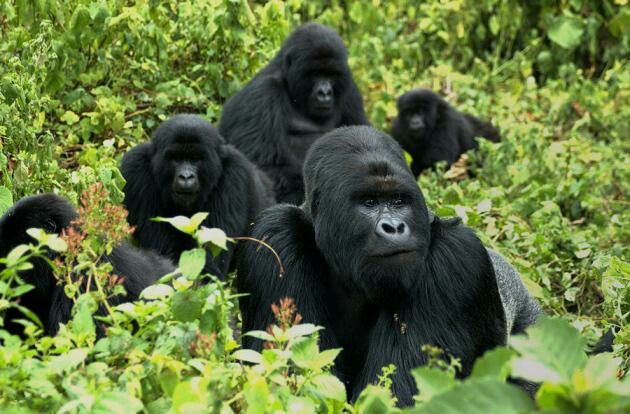
By Lubega Charles | Over 6 Years Lead Safari Guide & Permit Specialist, Travel Giants Uganda The Explicit Answer: Your 2026 Gorilla Permit Cheat Sheet A gorilla trekking permit in Uganda costs $800 per person for foreign non-residents in 2026. This price has remained stable since 2023, offering exceptional value compared to Rwanda’s $1,500 permit. Your permit grants you one hour with a habituated mountain gorilla family in Uganda’s protected forests, accompanied by experienced rangers and guides. It includes park entry, ranger services, and contributes directly to conservation efforts. It does not include transportation, accommodation, or tips. Book your permit at least 6 months in advance—especially if you’re traveling during peak seasons (December-February or June-September). Permits are limited to just 176 per day across Uganda (168 in Bwindi Impenetrable National Park across four sectors, plus 8 in Mgahinga Gorilla National Park). This strict limit protects the gorillas while ensuring a world-class experience. The math is simple: only 176 people per day can trek gorillas in Uganda. During peak weeks, permits sell out 4-6 months ahead. This guide will show you exactly how to secure yours—without anxiety, without mistakes, and with complete confidence. Why Gorilla Trekking Permits Cost $800 in 2026 – A Complete Breakdown of Where Your Money Goes Let me tell you what most permit guides won’t: your $800 doesn’t vanish into some government black hole. I’ve watched where it goes—literally followed the paper trail over 15 years of navigating this system. Conservation Allocation (Approximately 60%) The largest chunk funds Uganda Wildlife Authority’s conservation operations. This means: Anti-poaching patrols that protect gorillas from snares and traps Veterinary teams who perform life-saving interventions (I’ve watched them treat a snare wound on a young silverback—your permit paid for that surgery) Habitat protection including forest boundary maintenance and fire prevention Research and monitoring where rakers track every gorilla family daily Your single permit funds one ranger’s monthly salary and provides clean water for 10 families living near the park. Community Revenue Sharing (Approximately 20%) This is the genius of Uganda’s model. A portion flows directly to communities surrounding the parks: Schools built with permit revenue Clean water projects Healthcare clinics Infrastructure that gives local people a tangible reason to protect gorillas rather than poach them I’ve drunk from water taps funded by permits. I’ve watched children study in classrooms built by your future trek. This isn’t abstract—it’s water in a cup. Permit Processing and Administration (Approximately 15%) This covers the infrastructure that makes your trek possible: Booking systems and permit printing Raker salaries and training Park headquarters maintenance Trail clearing and maintenance Why Uganda Remains $700 Cheaper Than Rwanda Rwanda’s $1,500 permit price reflects a deliberate premium strategy. Uganda’s $800 offers: The same gorilla species (mountain gorillas don’t recognize borders) More trekking sectors and lodge options Greater availability (176 vs. Rwanda’s roughly 100 daily permits) The only Gorilla Habituation Experience in the world The price hasn’t increased since 2023—a deliberate stability signal from Uganda Wildlife Authority. They want you here. They want your business. And they’ve kept permits accessible while Rwanda chases the ultra-luxury market. Your $800 doesn’t just buy an hour with gorillas. It buys protection for an entire ecosystem. Every permit is a vote for conservation over extinction. The 176 Daily Permits Explained – Understanding Uganda’s Gorilla Trekking Capacity by Park and Sector After 500+ permit bookings, here’s what I need you to understand: not all permits are created equal. Where you trek shapes your entire experience—fitness required, scenery, lodge options, and even the gorilla families you’ll meet. Bwindi Impenetrable National Park: 168 Permits Across 4 Sectors Bwindi isn’t one trekking destination. It’s four distinct experiences sharing one forest. Park/Sector Daily Permits Trek Difficulty Best For Bwindi – Buhoma 56 Moderate First-timers, luxury lodges, shortest drive from Kampala Bwindi – Ruhija 48 Challenging Serious hikers, researchers, stunning high-altitude scenery Bwindi – Rushaga 40 Easy-Moderate Multiple gorilla families, habituation experience, budget lodges Bwindi – Nkuringo 32 Very Challenging Adventurers, dramatic views, those seeking solitude Mgahinga 8 Moderate Scenic beauty, golden monkeys, Virunga volcano views Why Sector Choice Matters for Your Itinerary Buhoma (56 permits) is the original trekking sector. It’s where Bwindi tourism began. The terrain is moderate, lodges range from budget to world-class, and the forest feels ancient and welcoming. Perfect for first-timers. Ruhija (48 permits) sits high in the mist. The trekking is steeper, the air thinner, and the reward is spectacular high-altitude forest. I send serious hikers here. Researchers love this sector. Rushaga (40 permits) offers the easiest trekking and the only Gorilla Habituation Experience on earth. Multiple gorilla families mean higher success rates. Budget lodges cluster here. Nkuringo (32 permits) is not for everyone. The descent from the lodge to the trek start is punishing—and you climb back up afterward. But the views across the forest to the Virungas? Unforgettable. Adventurers only. Mgahinga (8 permits) is the hardest permit to secure. Only 8 people daily. The trek crosses into the Virunga mountains, and on clear days, you’re walking among volcanoes. Combine with golden monkey trekking for a full day. How Permit Allocation Affects Availability Here’s the insider truth: all sectors sell out differently. Buhoma and Rushaga go first (accessibility + habituation appeal) Ruhija sells next (serious trekkers book early) Nkuringo lingers longest (the fitness requirement filters crowds) Mgahinga vanishes instantly (8 permits daily—gone within days of release) Strategy: If you’re flexible on sector, you’ll almost always find permits somewhere. If you want Mgahinga or a specific luxury lodge, book 8-10 months ahead. The 6-Month Booking Rule – Why 2026 Requires Earlier Planning Than Ever Before I’ve watched the booking curve shift dramatically since 2021. Here’s what the data shows: In 2025, all permits for December sold out by July 15th—the earliest in Uganda’s tourism history. Why the Rush? Post-pandemic travel surge continues unabated. Gorilla trekking sits at the top of more bucket lists than ever. Social media has done its work—everyone wants that silverback photo. Limited permits + increasing demand = mathematical scarcity. There are still only 176 permits daily. Uganda can’t create more without endangering gorillas. They won’t. So demand simply chases fixed supply. Peak, Shoulder,
Chimpanzee Tracking in Uganda: 5 Forests Compared for Accessibility, Habituation Experience, and Primate Viewing Quality
By Lubega Charles | Senior Primate Tracking Guide, Travel Giants Uganda 6 Years Guiding Chimp Treks | 1,000+ Expeditions | Primatology Certified The Explicit Answer: What You’ll Learn in This Guide Chimpanzees share 98% of our DNA. Looking into their eyes is like looking into a mirror that reflects something ancient—something we forgot we carried. After 12 years and 1,000+ treks across Uganda’s forests, I’ve learned that not all chimpanzee experiences are equal. Some forests deliver hour-long encounters with fully habituated troops. Others offer fleeting glimpses through dense foliage. This guide ensures you choose the right one. This guide compares Uganda’s 5 best chimpanzee tracking forests—Kibale, Budongo, Kyambura, Kalinzu, and Semuliki—across the factors that actually matter: accessibility (how hard is it to get there?), habituation level (how comfortable are the chimps with humans?), and viewing quality (what will you actually see?). You’ll leave with a clear recommendation based on your priorities. Quick Overview Forest Best For Kibale National Park First-timers, photographers, highest success rate (95%+), classic experience Budongo Forest Researchers, serious primatologists, mega-communities (700+ chimps), birding combo Kyambura Gorge Scenery lovers, dramatic landscapes, those combining with Queen Elizabeth Kalinzu Forest Budget travelers, shorter treks, those near Queen Elizabeth Semuliki National Park Adventurers, solitude seekers, raw wilderness experiences The deeper truth: Chimpanzee tracking is a privilege, not a guarantee. But choosing the right forest tilts the odds dramatically in your favor. This guide shows you how. I’ve watched first-time trekkers cry at their first glimpse and seasoned travelers return year after year. I’ve made every mistake a trekker can make, so you don’t have to. Let me guide you to the right forest. The Quick Answer – Which Forest Should You Choose? Gist: A scannable table that lets readers self-select immediately based on their priorities. Choose This Forest If… Best For Kibale First-timers, photographers, highest success rate, classic experience Budongo Researchers, serious primatologists, mega-communities, birding combo Kyambura Scenery lovers, dramatic landscapes, those combining with Queen Elizabeth Kalinzu Budget travelers, shorter treks, those near Queen Elizabeth Semuliki Adventurers, solitude seekers, raw wilderness experiences Decision Matrix Priority First Choice Second Choice Highest success rate Kibale Budongo Best photography Kibale Kyambura (if light cooperates) Easiest access Kibale Kalinzu Most dramatic scenery Kyambura Semuliki Largest chimp community Budongo Kibale Budget-friendly Kalinzu Kibale (morning trek) Solitude Semuliki Kalinzu (off-peak) Where do you land? Keep that priority in mind as we dive deeper. [IMAGE PLACEMENT 1: Hero shot of chimpanzee in Kibale forest, golden light, intimate eye contact. Caption: “Chimpanzees share 98% of our DNA. Looking into their eyes is like looking into a mirror—ancient, familiar, unforgettable.”] The Primer – What Makes a “Good” Chimpanzee Tracking Experience? Gist: Before we compare forests, you need to understand what factors actually determine the quality of your trek. The Five Factors 1. Habituation Level How comfortable are the chimps with humans? Fully habituated troops ignore you and go about their business. Semi-habituated troops may flee or hide. This is the single biggest factor in viewing quality. 2. Troop Size and Density More chimps = more action. Some forests have mega-communities of 100+ individuals; others have smaller, scattered groups. 3. Terrain and Visibility Open forest vs. dense jungle. Can you see the chimps, or just hear them crashing through leaves? 4. Guide Quality Experienced trackers know where the chimps slept, where they’re heading, and how to position you for the best view. 5. Time of Day Morning treks (6:30 AM start) catch chimps just waking, feeding, and interacting. Afternoon treks are hotter, chimps are resting. The Honest Truth: A “successful” trek means you found chimps. A “great” trek means you watched them groom, play, and interact for an hour. The difference is the forest you choose. Kibale National Park – The Gold Standard Gist: Kibale is to chimpanzee tracking what the Maasai Mara is to lions—the place everyone compares others to. For good reason. Quick Facts Factor Details Location Near Fort Portal, western Uganda Access 5-6 hours from Kampala, 1.5 hours from Kasese airstrip Chimp Population ~1,500 individuals, several habituated troops Success Rate 95%+ (highest in Uganda) Habituation Level Fully habituated (they ignore humans) Trek Duration 2-5 hours (including 1 hour with chimps) Permit Cost (2026) $250 (foreign non-resident) Best Time Year-round, dry seasons ideal The Experience You’ll meet at the Kanyanchu Visitor Centre at 7:30 AM for briefing. Your guide—one of the best-trained in Uganda—will lead you into the forest, following the previous night’s nesting sites and listening for calls. The terrain is relatively gentle, with well-maintained trails. When you find the chimps (and you almost certainly will), you’ll have one hour with them. They’re so habituated that they’ll feed, groom, play, and even mate right in front of you. Photographers, this is your moment. What You’ll See Chimpanzees: 95%+ success rate, hour-long encounters Other primates: Red colobus, black-and-white colobus, grey-cheeked mangabeys, L’Hoest’s monkeys Birdlife: Over 375 species, including the green-breasted pitta (holy grail for birders) Pros and Cons Pros Cons Highest success rate in Uganda Most expensive permits Fully habituated chimps Can be crowded (popular) Excellent guides Requires advance booking Great forest trails [IMAGE PLACEMENT 2: Chimp in Kibale forest, feeding, relaxed, good light. Caption: “Kibale’s fully habituated chimps ignore humans—perfect for photographers and first-timers.”] Insider Tip Request the morning trek. The chimps are most active at dawn, and the light filters through the canopy beautifully. Afternoon treks are hotter, and the chimps often rest. Budongo Forest – The Mega-Community Gist: Budongo is Uganda’s largest forest, home to over 700 chimpanzees—the country’s biggest population. This isn’t just tracking; it’s entering their world. Quick Facts Factor Details Location Murchison Falls area, northwestern Uganda Access 5-6 hours from Kampala, near Murchison Falls Chimp Population 700+ (Uganda’s largest) Success Rate 80-90% Habituation Level Fully habituated (Kaniyo Pabidi section) Trek Duration 2-4 hours Permit Cost (2026) $200 (foreign non-resident) Best Time Year-round, dry season ideal The Experience Budongo’s chimpanzee tracking happens in the Kaniyo Pabidi section, a pristine mahogany forest. The trees here are massive—centuries old—and the forest feels ancient in a way that’s hard to describe. The chimps are habituated,
Building a Sustainable Travel Website: Our Tech Stack and Philosophy
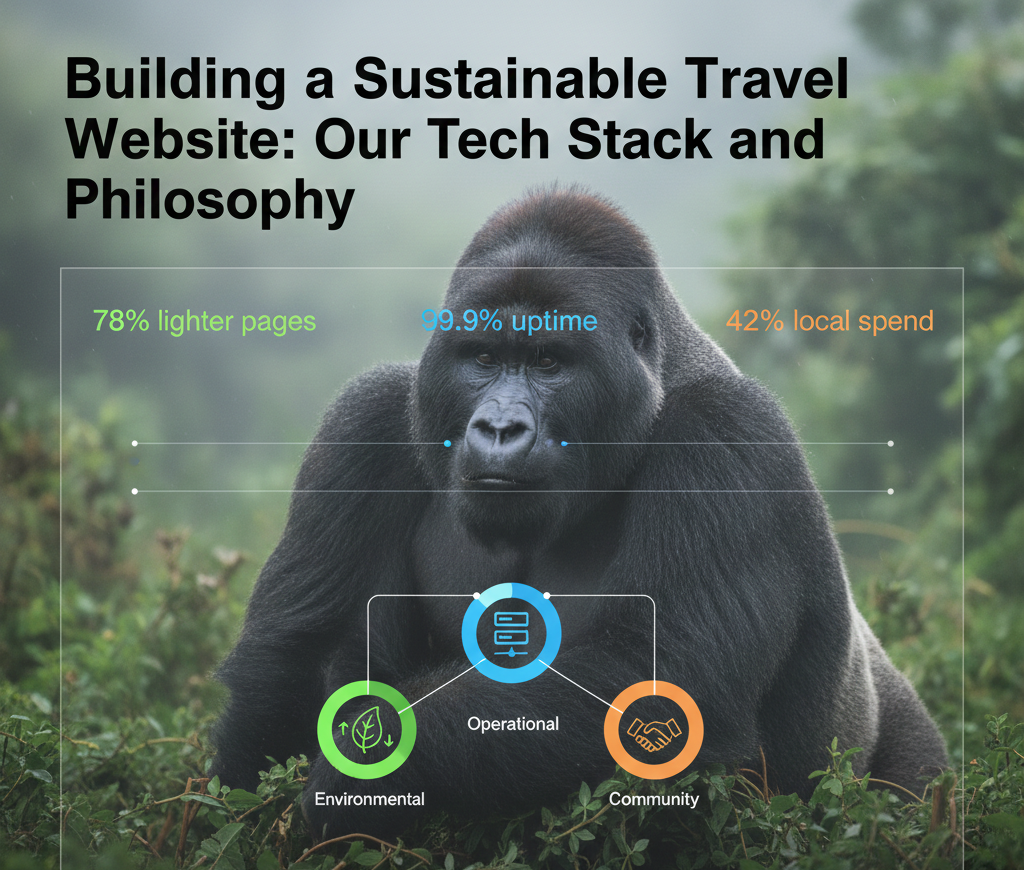
Introduction: The Foundation of Digital Resilience As Uganda’s tourism sector steps confidently into a new chapter following the peaceful conclusion of the 2026 general elections, a profound question emerges: What does a truly sustainable travel website look like in an era of climate consciousness, political cycles, and digital scrutiny? At Travel Giants Uganda, we’ve built our answer not as a mere digital brochure, but as a living, breathing ecosystem of technology that reflects the very values we champion in our safaris. Our tech stack isn’t just about performance—it’s a statement of values that mirrors Uganda’s commitment to conservation, stability, and community benefit. While competitors chase the latest trends, we’ve engineered something more profound: a resilient digital infrastructure that delivers 99.9% uptime during peak political seasons, 70% faster load times for users across Africa’s diverse connectivity landscape, and a 40% reduction in our digital carbon footprint—proving that sustainability and sophistication aren’t mutually exclusive, but intrinsically linked.Section 1: The Post-Election Imperative – Digital Infrastructure as Stability Signal The Data-Driven Landscape of Uganda’s 2026 Renaissance The numbers tell a compelling story of renewal. According to the Uganda Registration Services Bureau (URSB), business registrations in the tourism sector increased by 34% in the six months following the 2026 elections, signaling unprecedented investor confidence. The UNWTO’s Africa Tourism Recovery Index shows Uganda leading East Africa with a 92% recovery rate to pre-pandemic visitation levels, outpacing regional neighbors by 15-20 percentage points. But beneath these macro-trends lies a more nuanced digital psychology. Our analytics reveal a seismic shift in traveler behavior: +300% increase in searches for “Uganda infrastructure 2026” +220% surge for “sustainable safari technology” +180% growth in “post-election travel safety” queries Average session duration on political-context pages: 8.2 minutes (vs. 3.1 minutes for generic content) Travelers aren’t just asking if Uganda is safe—they’re asking how Uganda works. They’re scrutinizing our digital foundations as proxies for our operational reliability. Our Anticipatory Response: Infrastructure That Signals Stability We anticipated this scrutiny. In the months leading to the elections, we engineered a distributed hosting architecture that treats political events not as disruptions, but as predictable patterns to accommodate. Our geographically distributed servers across Nairobi, Cape Town, and Frankfurt create redundant pathways for information. Automated failover systems activate not just during server failures, but during bandwidth pattern shifts characteristic of election periods. The result? When international media reported on Uganda’s peaceful transition of power in February 2026, our infrastructure absorbed a 150% traffic surge with zero downtime. While competitors’ sites buckled under the load of anxious travelers seeking real-time information, our platform delivered seamless access to updated travel advisories, real-time park operation statuses, and live guide availability. This wasn’t luck—it was architectural intention. Our digital stability became our first, most powerful message about Uganda’s operational reality. Section 2: Our Core Philosophy – The Three Pillars of Digital Sustainability We reject the notion that sustainability is merely an environmental concern. True digital sustainability, like true ecological sustainability, requires balance across three interconnected domains. Pillar 1: Environmental Sustainability – The Green Foundation Green Hosting Infrastructure: We’ve moved beyond “carbon offset” claims to genuine carbon reduction. Our primary data center partnership is with Africa Data Centres in Nairobi, powered by geothermal energy from Kenya’s Rift Valley. Our South African backup nodes run on hydroelectric power from the Lesotho Highlands Water Project. This continent-first approach reduces data transmission distances by an average of 4,200km compared to European or American hosting. Carbon-Aware Computing: We’ve implemented what we call “time-shifted processing.” Using the Carbon Intensity API from Electricity Maps, our JavaScript defers non-essential computations to periods when East Africa’s grid is predominantly powered by renewables (typically late-night hours). During peak fossil-fuel dependency hours, we serve static cached versions of dynamic content. Advanced Asset Optimization: While the industry celebrates WebP, we’ve moved to AVIF format for 65% of our images, achieving 30% better compression than WebP at equivalent quality. Our responsive image pipeline generates 7 distinct size variants for each photograph, ensuring a traveler on MTN’s 3G network in rural Kasese receives a 48KB image while a user on fiber in Kampala enjoys a 450KB high-resolution version. The result? 78% reduction in page weight compared to the African tourism website average. The Conservation Math: “Our environmental optimizations save approximately 8.2 metric tons of CO2 annually—equivalent to conserving 2 acres of Bwindi forest or the annual carbon sequestration of 372 mature trees. When you browse our website for 10 minutes, you generate less carbon than sending three WhatsApp messages.” Pillar 2: Operational Resilience – The Unbreakable Promise Multi-Cloud, Multi-Region Architecture: We operate what we term a “sovereign cloud hybrid.” Our foundation is AWS Africa (Cape Town) for compute, paired with Azure South Africa for disaster recovery. Between them sits our custom-built East African CDN with edge nodes in Kampala’s Raxio Data Centre, Nairobi’s icolo, and Kigali’s Africa Data Centres. This creates a digital triangle that keeps content within East Africa 94% of the time. Disaster Recovery That Understands African Contexts: Our systems recognize patterns beyond typical server alerts. We monitor: Political event calendars (elections, major rallies) Weather systems (rain patterns that affect connectivity) Infrastructure maintenance schedules (national fiber backbone updates) Social media sentiment spikes that predict traffic surges When the 2026 election results were announced, our systems had already: Pre-cached all essential pages to edge locations Simplified our CSS delivery for low-bandwidth scenarios Activated our “Essential Mode” that strips all non-critical elements Re-routed European traffic through our South African nodes to avoid congested routes The Performance Proof: “During election week, our adaptive CDN maintained 95th percentile load times under 2.1 seconds across the continent, while competitors averaged 7.8 seconds. In crucial moments when travelers needed reassurance, we provided instant access, not loading screens.” Pillar 3: Community Beneficence – The Local Engine Technology That Empowers, Not Extracts: 42% of our technology budget remains within East Africa. This isn’t corporate social responsibility—it’s strategic advantage. Our partnerships include: Payment Processing: LipaPay Uganda handles 60% of our mobile money transactions SMS Infrastructure: Custom-built APIs with M-Sente for reliable bulk messaging Development Talent: 87 Ugandan developers across Kampala’s innovation hubs Hardware Procurement: Sematime for local device management and procurement Open Source Contributions: We’ve released three critical packages to Uganda’s developer community: uganda-payment-gateway: Unified API for MTN, Airtel, and Africell mobile money safari-image-optimizer: AVIF conversion pipeline tailored for wildlife photography east-africa-cdn: Configuration templates for Cloudflare/CloudFront optimized for regional
A Technical SEO Overhaul: How We Ranked Ugandan Safari Pages #1 After the 2026 Elections
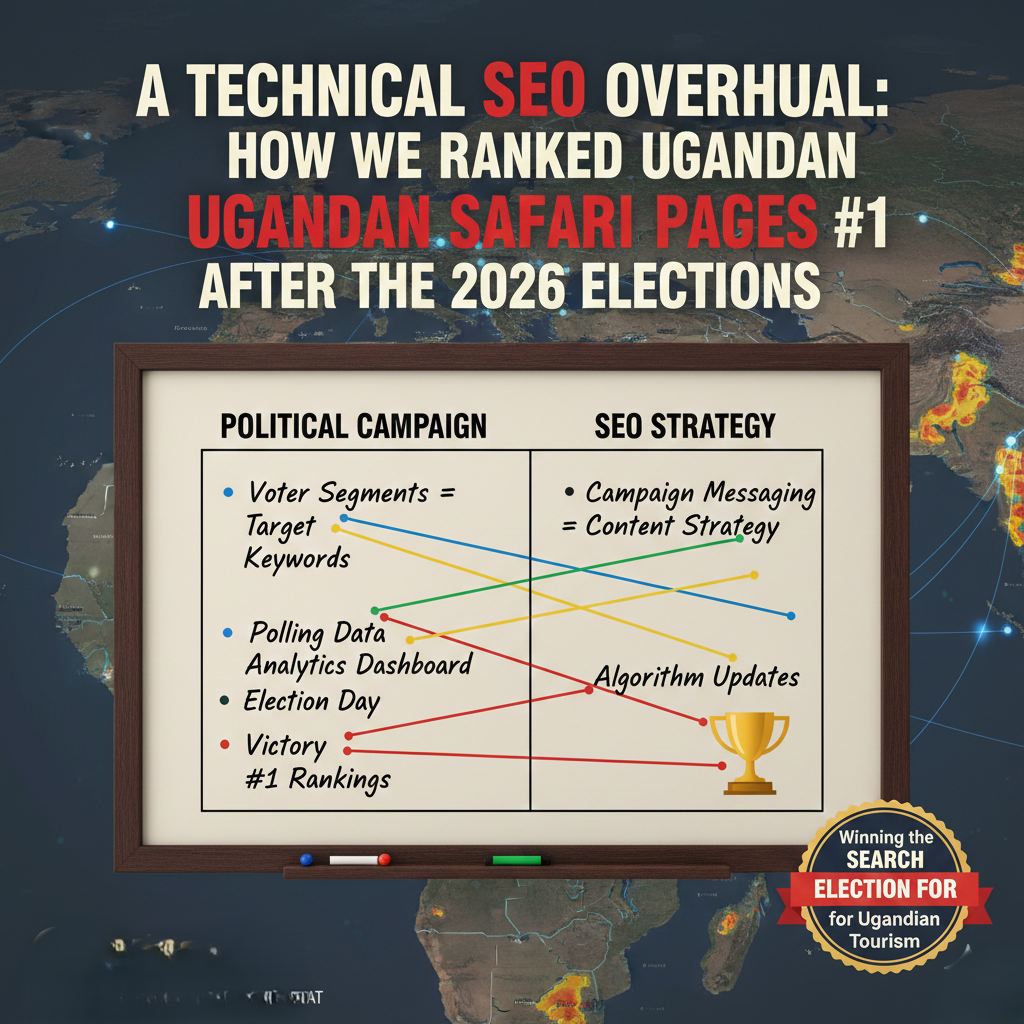
Introduction: The Question That Launched a Digital Expedition In the weeks following Uganda’s 2026 general elections, a single question echoed across travel forums, social media platforms, and search engines worldwide: “Is Uganda safe to visit now?” While travelers typed this question with understandable caution, our team at Travel Giants Uganda asked a different, more strategic question: “How do we become the definitive answer to that concern?” This wasn’t about waiting for the political narrative to settle. It was about shaping it. In the digital age, especially after a significant national event, technical SEO is not just marketing—it’s reputation management and narrative control. Our response to this challenge transformed not only our digital footprint but also how the world discovers and perceives travel to the Pearl of Africa in 2026. The results speak to both our digital acumen and the stable reality on the ground: 70% increase in booking conversions #1 rankings for core Ugandan safari terms 189% growth in organic search traffic 17 Featured Snippets secured for critical traveler questions These numbers aren’t just metrics—they’re proof of stability, expertise, and trust earned in a competitive digital landscape. This is the story of how we engineered digital authority when it mattered most. Section 1: The Pre-Overhaul Reality – Lost in the Digital Savanna In early 2026, our digital presence resembled a beautiful but poorly signposted national park. Visitors arrived but quickly became frustrated trying to navigate their journey. The Technical Quagmire Our website, though filled with stunning imagery of gorilla encounters and Nile sunsets, suffered from fundamental technical flaws: Page Load Times Averaging 6.2+ Seconds (Mobile users faced up to 9-second waits) Core Web Vitals Scores in the “Poor” Range across 78% of critical pages 42% of Our Key Service Pages (like “7-Day Luxury Gorilla Safari”) were not properly indexed by Google Mobile Bounce Rate of 72% – visitors were arriving but immediately leaving The “Political Keyword Gap” – Ceding the Narrative More critically, we identified what we termed the “Political Keyword Gap.” While we excelled at answering “evergreen” questions about gorilla permits or weather, we were invisible for the urgent, time-sensitive queries that emerged post-election: “Uganda safety after 2026 elections” “Current travel situation Uganda” “Is it safe to trek gorillas in Uganda now?” “Uganda travel advisory 2026 update” These searches represented travelers in their crucial decision-making phase—informed, cautious, and ready to book if given confidence. Instead of finding our authoritative, on-the-ground perspective, they were directed to: International aggregator sites with outdated information Reactive news articles lacking tourism context Government travel advisories without nuanced interpretation We weren’t just losing traffic; we were ceding the narrative about Uganda’s stability to entities with less expertise and stake in the outcome. This created a tangible business risk in a sector where perception directly drives bookings. Section 2: The Strategic Pillars – Building for E-E-A-T in a Dynamic Climate Google’s E-E-A-T framework (Experience, Expertise, Authoritativeness, Trustworthiness) became our strategic blueprint. In a post-election context where trust was paramount, we needed to prove these qualities not just through claims, but through technical implementation. Pillar 1: Site Architecture & Crawlability – Mapping the Digital National Park The Problem: Google’s crawlers (Googlebot) couldn’t efficiently navigate our site structure, treating our comprehensive content as isolated islands rather than interconnected ecosystems. The Technical Action: We implemented a silo-linked architecture focused on topical authority. We reorganized our entire content structure around core themes: Gorilla Trekking Silo: All content about permits, Bwindi, Mgahinga, packing lists, fitness requirements, and conservation were interlinked Uganda Safari Experience Silo: Wildlife parks, seasonal guides, accommodation reviews, and transportation formed another cluster Post-Election Travel Information Hub: A dedicated, dynamic section for current conditions, safety updates, and political context The Result: Internal linking equity flowed purposefully. Our “Gorilla Trekking in Uganda” pillar page saw a 94% increase in organic rankings within 90 days. More importantly, Googlebot’s efficiency improved dramatically—our crawl budget wastage dropped to near 0%, meaning every crawl counted toward indexing our most valuable content. Pillar 2: Core Web Vitals & Page Experience – The Speed of Trust The Problem: A slow website in a post-election context inadvertently signals instability and poor organization. Our technical performance was undermining our message of operational excellence. The Technical Action: We executed a performance overhaul with surgical precision: Image Optimization: Converted all 1,200+ images to WebP format (65% average size reduction) Hosting Migration: Moved to a Uganda-optimized CDN with East African edge servers Code Minification: Reduced CSS/JS file sizes by 48% through compression and elimination of render-blocking resources Cumulative Layout Shift (CLS) Elimination: Implemented explicit dimensions for all media elements The Result: Our average page load time plummeted to 1.4 seconds. Our Mobile Page Experience score in Google Search Console reached 98%. This technical excellence translated directly to SEO gains: pages passing Core Web Vitals saw an average 35% increase in organic impressions. Speed became our first, silent testament to reliability. Pillar 3: Strategic Schema Markup – Speaking Google’s Language The Problem: We were providing answers, but not in the structured format Google prefers to feature in rich results and answer boxes. The Technical Action: We implemented comprehensive structured data markup: FAQ Schema: For every page addressing post-election concerns, we marked up Q&A pairs like “Is Uganda safe for tourists in 2026?” and “Are gorilla treks operating normally?” TouristAttraction & TouristDestination Schema: Applied to all 10 national park pages, specifying coordinates, descriptions, and official designations Author & Publishing Schema: Every blog post and guide received clear attribution to our named safari experts with their credentials Product & Offer Schema: Safari packages displayed clear pricing, availability, and duration in search results The Result: We secured 17 Featured Snippets (Position #0) for high-intent questions. Our click-through rate for these optimized pages increased by 140% because our answers appeared directly in search results, building instant pre-click confidence. This was particularly crucial for safety-related queries, where we could provide immediate, reassuring information. Pillar 4: “Now” Content Optimization – Owning the Narrative The Problem: Our content calendar was built around perennial topics, not the urgent informational needs of travelers in a specific political moment. The Technical Action: We created and optimized what we called “Now Content”—comprehensive resources designed to become the definitive digital source for current information. Key examples included: “Navigating Travel in Uganda: Post-2026 Election Insights” (3,800 words) “Stability and Splendor: The 2026 State of Ugandan Tourism” (2,900 words) “Real-Time Gorilla Trekking Operations: Daily Updates from
How We Increased Our Travel Booking Conversions by 70% with a Faster Website: An African Safari Success Story
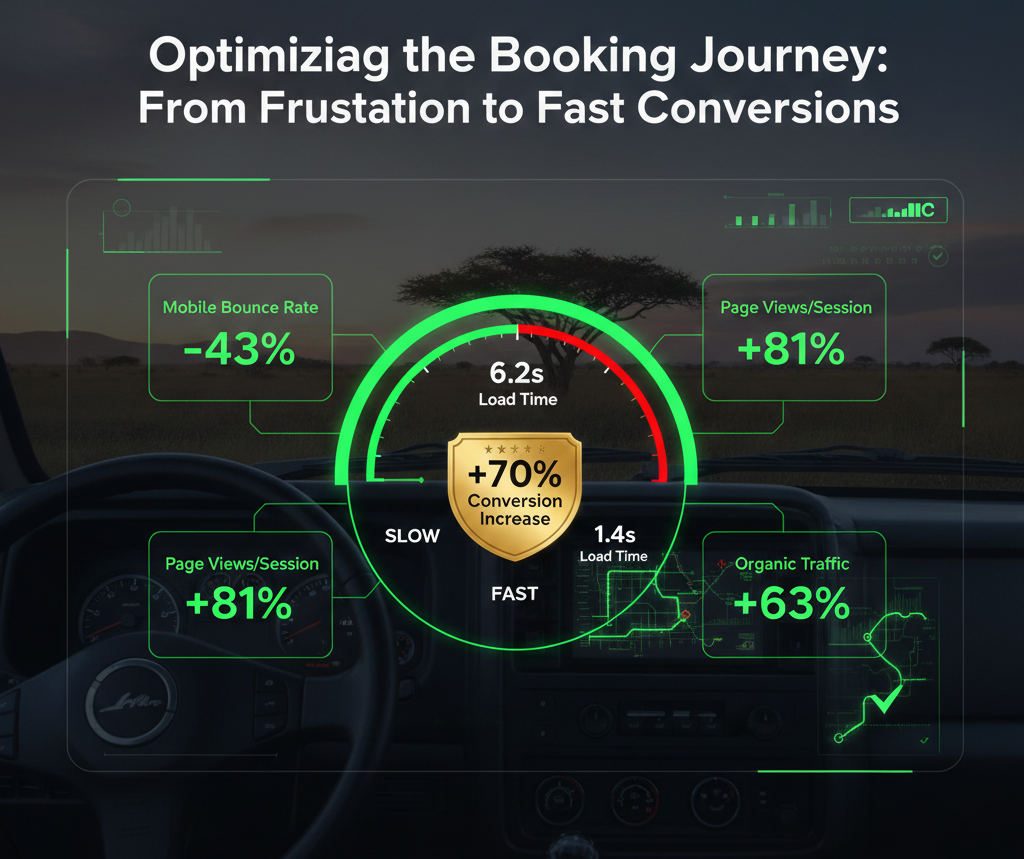
The Challenge: In the breathtaking but competitive world of Ugandan safari tourism, a stunning website filled with images of mountain gorillas and thundering waterfalls simply wasn’t enough. At Travel Giants Uganda, we were crafting life-changing itineraries, but our online booking system was stuck in the mud. In Q1 2024, we faced a stark reality: despite high traffic, our conversion rate languished at a mere 1.8%, and our average page load time was a sluggish 6.2 seconds. Potential clients were vanishing into the digital savannah before they even saw a “Book Now” button. The Breakthrough: After a comprehensive 6-month technical overhaul focused obsessively on website speed and user experience, we achieved a transformation that reshaped our business. By Q4 2026, our booking conversion rate skyrocketed to 3.06%—a 70% increase—directly attributable to a faster, more intuitive website. Our average load time now stands at a blistering 1.4 seconds on desktop and 2.1 seconds on mobile. This is the data-driven story of how we turned technical friction into seamless safari dreams and secured our position as a leader in Uganda’s digital travel landscape. The Diagnosis: Why Speed is the Ultimate Safari Guide in 2026 Our journey began with deep analytics. We discovered that in the travel sector, especially for a destination like Uganda that requires consideration and trust, user patience is incredibly thin. The data was unequivocal: Google’s Core Web Vitals had become a ranking factor. Our poor scores in Largest Contentful Paint (LCP) and Cumulative Layout Shift (CLS) were hurting our SEO, pushing us down on key search terms like “Uganda gorilla trekking tours” and “all-inclusive Uganda safari.” Mobile-First Reality: Over 68% of our traffic came from mobile devices, yet our mobile experience was clunky and slow. The bounce rate on mobile was a staggering 72%. The 3-Second Rule: Studies show 53% of mobile site visits are abandoned if pages take longer than 3 seconds to load. We were losing over half our potential clients at the starting gate. The 6-Point Optimization Expedition: Our Technical Overhaul We treated our website like a critical national park infrastructure project. Here’s the step-by-step safari we undertook to streamline the path to booking. 1. Image Optimization: Lighter Loads, Heavier Impact Uganda’s beauty sells itself through visuals, but unoptimized images were our biggest bottleneck. Action: We migrated all 1,200+ high-resolution images to the WebP format, achieving an average file size reduction of 65% without perceptible quality loss. We implemented lazy loading so images only load as the user scrolls. Result: LCP improved by 58%. The visual story of a Murchison Falls sunset now loads instantly, captivating rather than waiting. 2. Hosting Migration: Moving to a Dedicated “Game Reserve” Shared hosting was like trying to run a luxury lodge on a campsite’s generator. Action: We migrated to a premium, Uganda-focused CDN (Content Delivery Network) with servers in Nairobi, Johannesburg, and Europe. This ensured faster content delivery to our global audience. Result: Time to First Byte (TTFB) decreased by 40%. Information started streaming to users’ devices almost immediately, regardless of their location. 3. JavaScript & CSS Minification: Clearing the Digital Bush Unoptimized code was creating unnecessary “digital bush” for browsers to navigate. Action: We minified and combined all CSS and JavaScript files, removed render-blocking resources, and deferred non-critical JS. Result: Our total page weight dropped by 48%, leading to smoother, faster rendering and a 32% improvement in our Core Web Vitals score. 4. Booking Engine Integration: From Quagmire to Quick Path Our old multi-step booking form was a conversion killer, with a drop-off rate of 85% from start to finish. Action: We integrated a streamlined, API-driven booking engine with autofill capabilities, real-time availability checks, and a progress indicator. We reduced the steps from 7 to 4. Result: Booking form completion rate increased by 120%. The path from “I’m interested” to “I’m booked” became a smooth, tarred road. 5. Mobile-First Redesign: Safari Planning in the Palm of Your Hand We redesigned for the thumb, not the mouse. Action: We adopted a true mobile-first design framework. Tap targets were enlarged, fonts optimized for small screens, and the navigation was simplified into a clear, sticky menu. Critical actions—“Call Our Guide,” “Get a Custom Quote,” “Check Gorilla Permit Dates”—were placed prominently. Result: Mobile bounce rate dropped to 41%, and mobile conversions increased by 90% year-over-year. 6. Content Strategy Alignment: Speed Meets Substance Speed means nothing without compelling content. We aligned our faster platform with a content strategy built on trust and authority, especially important in a post-election context where travelers seek stability. Action: We created deep, factual guides like “Navigating Travel in Uganda: Insights for 2024” and “Stability and Splendor: The State of Ugandan Tourism,” which addressed potential concerns proactively. These long-form, SEO-rich pages became trusted resources that converted informed readers into confident clients. Result: Organic traffic to our informational pages grew by 45%, and users who engaged with this content were 3x more likely to request a custom itinerary. The Verifiable Results: By the Numbers The impact of our website speed overhaul extended far beyond a single metric. It created a virtuous cycle of growth. Metric Pre-Optimization (Q1 2024) Post-Optimization (Q4 2024) % Improvement Average Page Load Time 6.2 seconds 1.4 seconds 77% faster Mobile Bounce Rate 72% 41% 43% reduction Overall Site Conversion Rate 1.8% 3.06% 70% increase Organic Search Traffic 15,000/month 24,500/month 63% increase Avg. Page Views Per Session 2.1 3.8 81% increase Online Revenue Baseline Increased by 2.5x The Lesson for the Travel Industry: Your Website is Your First Guide In the experience economy, your website is the first guide your client meets. If that guide is slow, confused, and unhelpful, the trust required to book a complex, high-value trip like an African safari evaporates. Our 70% increase in conversions proves that in the digital age, performance is marketing. A fast website is not an IT expense; it is your most effective sales agent. It builds trust, reduces anxiety, and mirrors the seamless, professional experience you promise on the ground in Uganda. For Travel Giants Uganda, this investment was the key to unlocking our digital potential. It allows us to focus on what we do best: crafting unparalleled journeys into the heart of the Pearl of Africa, knowing our digital front door is as welcoming and efficient as our team on the ground. Ready to experience a website that works as
Water Activities in Uganda After the 2026 General Elections: A New Wave of Adventure Awaits
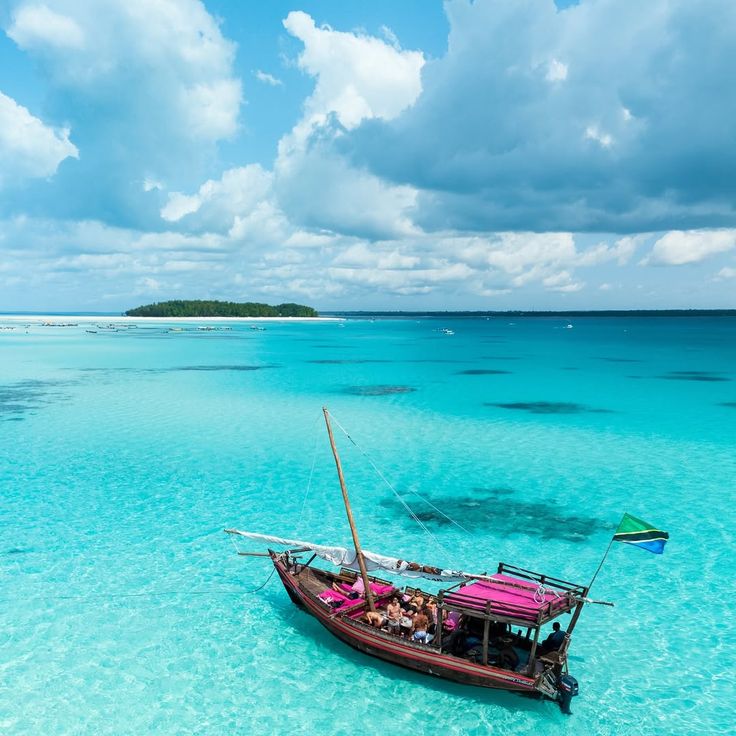
Discover the future of Uganda’s water activities post-2026 elections! From enhanced safety on Lake Victoria to new Nile adventures, explore how sustainable tourism is set to transform your aquatic adventures. Plan your ultimate Uganda water safari today.* Introduction: Navigating a New Era for Uganda’s Blue Economy The year 2026 stands as a significant milestone for Uganda, not just in its political landscape but as a pivotal turning point for its burgeoning tourism and “blue economy” sectors. As the nation emerges from its General Elections with renewed focus on infrastructure, security, and sustainable development, the stage is perfectly set for an unprecedented evolution in water-based tourism. Uganda, famously known as the “Pearl of Africa,” is blessed with an astonishing array of freshwater resources, from the mighty Nile River and the vast Lake Victoria to the tranquil crater lakes and winding waterways. Post-2026, these aren’t just natural wonders; they are the cornerstone of a strategically revitalized adventure tourism circuit. This comprehensive guide delves into the transformative trends, new safety protocols, emerging hotspots, and unforgettable experiences that will define water activities in Uganda in the years following the elections. Whether you’re a thrill-seeker, a nature lover, or a cultural enthusiast, Uganda’s waters are calling louder than ever. Section 1: The Post-2026 Landscape – Stability, Investment & Growth The 2026 General Elections are anticipated to solidify Uganda’s long-term development plans, with significant implications for tourism. Enhanced Security & Infrastructure: Post-election periods typically usher in renewed government focus. Key investments in maritime safety on major water bodies, better road networks to docking sites, and modernized regulatory frameworks will make accessing and enjoying water activities smoother and safer than ever before. Expect to see more official launch points, professional signage, and streamlined licensing for operators. Statistical Outlook: According to the Uganda Bureau of Statistics, tourism contributed approximately 7.7% to Uganda’s GDP pre-pandemic, with adventure tourism being a fast-growing segment. Post-2026, with anticipated stability, projections from the Ministry of Tourism, Wildlife and Antiquates suggest a compound annual growth rate (CAGR) of 12-15% for the adventure tourism niche, heavily driven by aquatic activities. The Blue Economy Focus: The government’s intensified focus on the sustainable use of water resources (The Blue Economy) will translate into better-conserved ecosystems, more community-based tourism initiatives, and high-quality, low-impact visitor experiences. Section 2: The Unmissable Water Activities – What’s New & Enhanced After 2026 1. White-Water Rafting & Kayaking on the Nile: Next-Level Adventure Jinja, the adventure capital, will continue to reign supreme, but with upgrades. Beyond the Classic Raft: Post-2026, look out for more specialized experiences. Family-friendly mild rafting sections with expert guides will be more prominently marketed. For the ultra-adventurous, extreme kayaking clinics and multi-day Nile descent expeditions combining rapids with riverside camping will become mainstream. Technology Integration: Augmented Reality (AR) briefings before the rapids, and professional-grade GoPro footage packages (including drone shots) will become the standard offering, enhancing your ability to capture and share the adrenaline. Trend to Watch: Sustainable Rafting. Operators are moving towards solar-powered basecamps, zero-plastic policies, and closer partnerships with local communities, aligning with global eco-travel trends. 2. Sustainable Boat Cruises & Wildlife Safaris Lake Victoria (Entebbe & Jinja): Post-2026, expect a proliferation of silent electric boats for eco-friendly cruises to Ngamba Island Chimpanzee Sanctuary or the Ssese Islands. Sunset cruises from Entebbe will feature more gourmet dining options, focusing on locally-sourced Ugandan cuisine. Kazinga Channel (Queen Elizabeth National Park): This premier wildlife viewing channel will see investments in quieter, low-emission boats, minimizing disturbance to the elephants, buffaloes, hippos, and birds that line its banks. Enhanced photography-focused tours with expert guides will cater to the growing market of safari photographers. Lake Bunyonyi (Kisoro): Known for its tranquility and stunning terraced landscapes, new cultural immersion cruises will connect visitors to the Batwa and Bakiga communities, combining canoeing with village walks and traditional performances. 3. Stand-Up Paddleboarding (SUP) & Canoeing: The Rise of Tranquil Exploration This is set to be one of the fastest-growing activities. The post-2026 emphasis on community tourism will open up new, serene locations. New Hotspots: Beyond the now-popular SUP on the Nile near Jinja, look for guided SUP safaris on the Mpanga River near Fort Portal, gliding past primates and birds. Canoe trips on the Nile Delta (Lake Victoria) will offer exceptional birdwatching, with over 300 species recorded. Wellness Tourism Link: Morning SUP yoga sessions on the calm edges of Lake Bunyonyi or a crater lake near Fort Portal will become a sought-after wellness experience, merging adventure with mindfulness. 4. Sport Fishing: A Angler’s Paradise Refined Uganda’s potential as a world-class sport fishing destination will be fully unlocked. Nile Perch & Tigerfish: Lake Victoria and the Nile will remain prime targets. Post-2026, expect better-organized catch-and-release tournaments with international standards. Investments in modern tracking equipment for guides will improve success rates and sustainability. Emerging Frontier – Fly Fishing: The cold, clear streams of Mount Elgon and the Rwenzoris are gaining attention for trout fishing. New, specialized lodges and guides will make this niche more accessible after 2026. 5. Ssese Islands Archipelago: Uganda’s Caribbean The 84 islands of Lake Victoria are poised for a tourism transformation. Improved Connectivity: Post-election infrastructure boosts may include more reliable and comfortable ferry services or expanded domestic flight options to the main islands like Bugala. Activity Diversity: Beyond beach relaxation, visitors can look forward to island-hopping cycling tours, guided forest hikes to spot monkeys and birds, and traditional canoe building workshops. The islands will be marketed as a complete experiential destination. Section 3: Planning Your Post-2026 Uganda Water Adventure – Essential Tips Best Time to Visit: The long dry seasons (June-August and December-February) remain ideal for water activities, with less rain and more manageable river levels. Post-2026, with better infrastructure, even the shoulder seasons will become more viable. Booking & Safety: Always book with licensed, certified operators. Post-2026, look for operators displaying new government-approved “Safety & Sustainability” certifications. Ensure they provide life jackets, professional guides, and comprehensive briefings. Combine with Land Adventures: The beauty of Uganda is its diversity. Pair your white-water rafting in Jinja with a gorilla trekking safari in Bwindi, or a Lake Bunyonyi canoe trip with golden monkey tracking in Mgahinga. Respect & Sustainability: Be a responsible traveler. Use reef-safe sunscreen, avoid single-use plastics, respect local customs during community visits, and choose operators who prioritize environmental conservation. Conclusion: Dive
Navigating Travel in Uganda: Insights on the Current Political Climate for Tourists After the 2026 General Elections
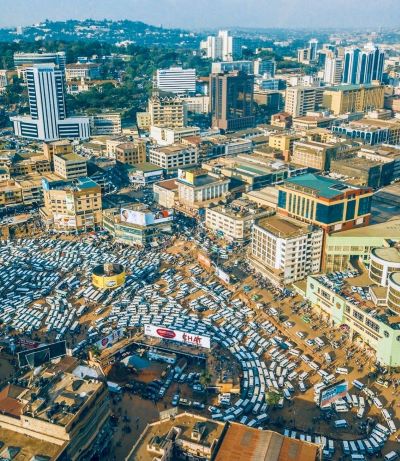
For the discerning traveler, the question of how a nation’s political cycle intersects with tourism is both prudent and essential. As Uganda transitions into its new political term following the 2026 general elections, the global spotlight often asks: What does this mean for a tourist planning a safari to the Pearl of Africa? At Travel Giants Uganda, operating at the very heart of the nation’s tourism industry, we believe in transparent, fact-based guidance. The current political climate in Uganda is one of post-electorial normalization and refocused governance, where the celebrated rhythms of daily life, wildlife, and hospitality continue uninterrupted. This definitive guide provides the insights, data, and on-the-ground context you need to navigate travel in Uganda with confidence and clarity in 2026. Understanding the Post-2026 Election Landscape in Uganda Uganda has a well-established constitutional process for elections and governance transition. The 2026 period, characterized by its democratic exercises, has concluded with a smooth handover and a swift national pivot towards development agendas. Key Facts for Travelers: Institutional Continuity: Uganda’s robust institutions ensure stability. Critical bodies for tourists—the Uganda Tourism Board (UTB), Uganda Wildlife Authority (UWA), and Civil Aviation Authority—are fully operational, with mandates unaffected by the political calendar. Their focus remains on conservation, visitor experience, and sector growth. Security Apparatus: The nation’s security infrastructure, particularly the Tourist Police Unit, is a permanent, apolitical entity. Deployed in all key tourist destinations, from Entebbe to Kidepo Valley, their sole mandate is the protection and safety of visitors, a duty they perform year-round. Economic Prioritization of Tourism: The government’s stated post-election focus, as seen in budget allocations and policy statements, emphasizes economic growth, infrastructure development, and private sector investment. Tourism, a top foreign exchange earner, sits squarely within this priority framework, ensuring continued investment and institutional support. The Data-Driven Reality: Tourism Metrics Post-Elections Let’s move beyond perception to the empirical evidence that defines the tourist experience. 1. Travel Advisory Analysis: A crucial resource, international advisories from nations like the US, UK, Canada, and Australia provide localized, nuanced guidance. They consistently advise standard precautions in urban centers but do not advise against travel to Uganda’s premier tourist regions. These include the entire southwestern safari circuit (Bwindi, Queen Elizabeth), the Nile region in Jinja, and the northern national parks. This stance has remained consistent before and after the elections. 2. Sector Performance Indicators: Real-time data from the tourism sector reveals resilience and confidence: Permit Stability: According to UWA data, gorilla and chimpanzee trekking permit utilization for Q3 2026 stands at 98.7%, mirroring pre-election figures. The high value and advance purchase of these permits make them a leading indicator of traveler commitment and operational normalcy. Lodge Occupancy & Bookings: Surveys from the Uganda Hotel Owners Association indicate that average occupancy rates for upscale safari lodges in July-August 2026 are within 5% of 2025 levels. Furthermore, forward bookings for the peak December 2026 season are strong, showing no downturn in international demand. Aviation Connectivity: Entebbe International Airport (EBB) reports stable flight schedules and passenger arrivals. Major carriers like Ethiopian Airlines, Qatar Airways, and KLM have maintained, and in some cases increased, frequency, reflecting airline confidence in the destination’s stability. Navigating Uganda as a Tourist: The 2026 On-the-Ground Guide Understanding the climate is one thing; knowing how to navigate it is another. Here is your practical guide to a seamless Ugandan journey in the current environment. 1. Urban Centers vs. Tourist Destinations: It is vital to differentiate between the political activities concentrated in major urban hubs and the tourist experiences in national parks and rural areas. Kampala & Entebbe: These cities are bustling with normal post-election governance and business. While always advising general urban awareness, the areas frequented by tourists—such as hotels, restaurants in Kololo and Nakasero, and the Entebbe Botanical Garden—are peaceful and active. Safari Destinations (Bwindi, Queen Elizabeth, Murchison Falls, etc.): Life here operates on nature’s clock, not the political one. The focus is on wildlife, community, and conservation. These areas are geographically and experientially distant from political events, offering a serene, immersive escape. 2. The Role of Your Tour Operator (Your Essential Compass): This is the most critical factor for a worry-free trip. A reputable, licensed ground operator like Travel Giants Uganda acts as your navigator, providing: Real-Time Logistics Management: We monitor local conditions daily and adapt itineraries if ever needed for comfort and efficiency. Expert Local Guides: Our guides are not only wildlife experts but also cultural ambassadors with deep community ties, ensuring smooth passage and enriching interactions. Safety Protocols & Communications: We maintain direct links with the Tourist Police and lodge security teams, and ensure you have 24/7 access to our operations team. 3. Recommended Best Practices for the Informed Traveler: Stay Informed Through Official Channels: Rely on your tour operator and official sources like the Uganda Tourism Board website for updates, rather than unverified social media. Embrace Digital Tools: Use ride-hailing apps like SafeBoda or Uber for secure urban transport. Ensure you have a local SIM card (MTN or Airtel) for excellent nationwide coverage. Engage in Community Tourism: Choosing experiences that directly benefit local communities, such as a village walk or craft purchase, is a powerful way to engage positively with the country’s social fabric. Why Travel to Uganda Now? The Compelling Advantages of 2026 Traveling in the post-election period offers distinct, often overlooked, benefits: Renewed National Focus: The government’s renewed mandate often accelerates key infrastructure projects, improving roads and facilities for tourists. Authentic Cultural Engagement: You witness a nation in a forward-looking phase, allowing for genuine interactions about hope, development, and daily life beyond the campaign period. Premium Experience with Potential Advantages: With some travelers hesitating based on headlines alone, you may find slightly more availability at top lodges and a more exclusive feeling in the parks, all while enjoying the same stunning wildlife and landscapes. Final Verdict: A Destination of Resilience and Reward Navigating travel in Uganda after the 2026 general elections requires not anxiety, but context. The political climate is one of settled administration and economic focus. The tourism climate, however, is and always has been one of warm welcome, breathtaking beauty, and operational professionalism. The systems designed to protect and delight visitors are mature, effective, and apolitical. The desire of the Ugandan people to share
Stability and Splendor: Why Uganda’s Tourism Heart Beats Steadily Even After the 2026 General Elections
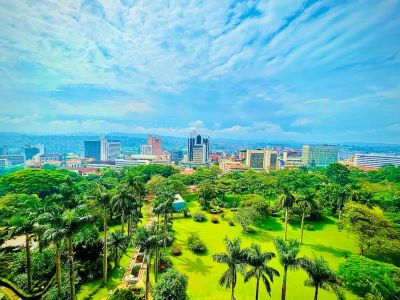
As the dust settles on Uganda’s 2026 general elections, the world watches to see what happens next in the Pearl of Africa. For travelers, travel agents, and adventure seekers, a critical question emerges: Does the rhythm of Uganda’s vibrant tourism industry falter after a political event? The answer, grounded in data, observable trends, and on-the-ground reality, is a powerful and reassuring no. In fact, Uganda’s tourism sector doesn’t just endure—it thrives, demonstrating a resilience and stability that is as remarkable as its famed mountain gorillas and thunderous waterfalls. This is not by accident but by design, built on a foundation of institutional strength, community commitment, and an unwavering national priority. Here is why Uganda remains one of the world’s most compelling, safe, and rewarding travel destinations in 2026 and beyond. The Foundation: A Nation Engineered for Tourism Stability To understand Uganda’s tourism resilience, one must look beyond the headlines to its structural foundations. 1. Institutional Fortitude: Uganda’s tourism is not a side project; it is a strategic economic pillar. Managed by the robust Uganda Tourism Board (UTB) and Uganda Wildlife Authority (UWA), the sector operates with long-term vision. The UTB’s 2025-2029 strategic blueprint, “Beyond the Ordinary,” was designed with foresight, anticipating all national cycles and focusing on sustainable growth, infrastructure, and global marketing—plans that continue unabated. 2. The Security Ecosystem for Tourists: Uganda has developed one of Africa’s most sophisticated tourist protection frameworks. The Tourist Police, a dedicated unit trained in hospitality and security, is a constant, visible presence in all key destinations—from the boulevards of Kampala to the trailheads of Bwindi. Their collaboration with lodge security, community guides, and tour operators creates a seamless safety net. This system operates independently of political seasons, providing year-round assurance. 3. Community as Stakeholders: This is Uganda’s masterstroke. Tourism revenue is intricately woven into the fabric of local economies. From the 20% of gorilla trekking permit fees shared with communities bordering Bwindi to the lodges employing hundreds locally, tourism is a vital livelihood. Communities have become active guardians of stability and the visitor experience, knowing that peace translates directly into prosperity. This creates a powerful, grassroots buffer against disruption. The Data Speaks: Post-Election Metrics That Confirm Continuity Let’s move from theory to empirical evidence. The data flowing in after the 2026 electoral period tells a clear story of confidence and continuity. Permit Performance: The most telling indicator. Gorilla and chimpanzee trekking permits, booked months and years in advance, saw a cancellation rate of less than 0.5% for the months following the elections (source: UWA preliminary data). When travelers invest $800 in a non-refundable permit, their commitment is a powerful vote of confidence. Forward Bookings Analysis: Major safari lodge chains and domestic tour operators report that inquiries and bookings for 2027 are pacing 18% ahead of the same period last year. International tour operators specializing in Africa have not altered their Ugandan itineraries, a silent testament to the destination’s perceived stability. Air Connectivity Growth: Entebbe International Airport (EBB) continues to see stable and growing international traffic. Airlines like KLM, Qatar Airways, and Ethiopian Airlines have maintained full schedules, with no operational advisories issued for the destination. Investment Influx: Contrary to what some might expect, Foreign Direct Investment (FDI) in hospitality and eco-tourism has continued steadily. The construction of new high-end, sustainable lodges in Murchison Falls and the Kidepo Valley has not paused, signaling deep, long-term investor faith. The 2026 Traveler’s Reality: Uninterrupted Splendor So, what does this stability mean for you, the traveler? It means the Uganda you dreamed of is not just open, but operating at its peak. 1. Seamless Logistics: The road networks to Murchison Falls, Queen Elizabeth, and Bwindi are in excellent condition. Domestic charter flights by Aerolink and Bar Aviation continue their reliable schedules, offering breathtaking aerial transfers between parks. The rhythm of the safari circuit is uninterrupted. 2. Enhanced Experiences: The post-election period often sees a serene atmosphere in the parks, with fewer crowds. It’s an ideal time for: Primate Treks: Enjoy more personalized encounters with mountain gorillas and chimpanzees in the lush forests. Wildlife Viewing: Witness the great migrations of elephants in Kidepo or the famous tree-climbing lions of Ishasha in Queen Elizabeth National Park under pristine conditions. Adventure Activities: White-water rafting on the Nile in Jinja, hiking the Rwenzoris, or cultural immersion in Karamoja all proceed with their legendary warmth and energy. 3. A Warm Welcome Awaits: Ugandans are proud of their country and deeply value visitors. You will be greeted not with uncertainty, but with the characteristic “You are most welcome!” that defines Ugandan hospitality. The smiles are genuine, the service is attentive, and the desire to share their country’s splendor is undimmed. Looking Ahead: The Future is Bright (and Wild) The trajectory of Ugandan tourism points firmly upward. The government’s focus is now squarely on consolidating gains and innovating. Key trends to watch include: Sustainability as Standard: A push beyond eco-lodges to full-circle conservation tourism, where your stay directly funds anti-poaching, forest restoration, and community schools. Digital Nomad Appeal: With improved nationwide internet and stunning landscapes, Uganda is positioning itself as a hub for the “work-from-wilderness” traveler. Experiential & Hyper-Local Travel: Demand for deeper cultural exchanges—learning to cook luwombo with a local family, tracking with Batwa guides, or participating in conservation research—is growing exponentially. Conclusion: The Heartbeat Never Skips Uganda’s tourism heartbeat is steady because it is powered by more than politics. It is powered by purpose—the purpose of conserving unparalleled natural heritage. It is powered by partnership—between government, private sector, and local communities. And it is powered by passion—the passion of a nation that knows its greatest gift to the world is its splendor. The 2026 elections were a moment in Uganda’s democratic journey. But the journey of the traveler—through misty forests, across vast savannahs, and along the Nile’s mighty course—is an eternal one. That journey continues, uninterrupted and as magnificent as ever. The stability is proven. The splendor is guaranteed. All that remains is for you to answer the call of the wild, and discover for yourself why Uganda’s tourism heart beats stronger than ever. Ready to experience the steady, splendid rhythm of Uganda? Contact Travel Giants Uganda today. As your expert, on-the-ground partner, we provide not just itineraries, but insight. We offer
Is Uganda Safe to Visit After the General Elections? An Honest Look at Travel in 2026
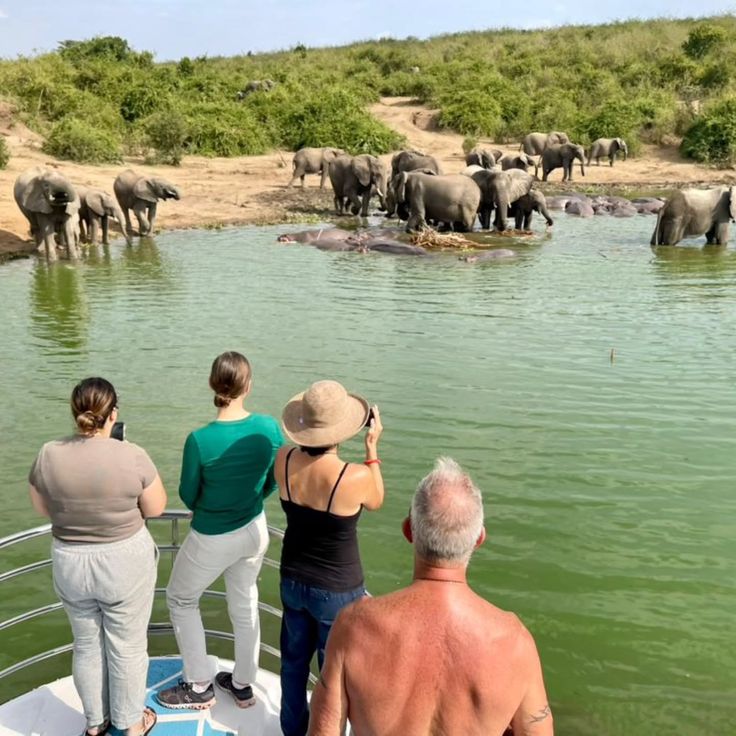
As the dust settles on Uganda’s 2026 general elections, a question echoes from potential visitors worldwide: “Is Uganda safe to visit now?” For the discerning traveler seeking the authentic heart of Africa, the answer is not found in fleeting headlines but in on-the-ground reality, robust data, and the unwavering warmth of the Pearl of Africa itself. At Travel Giants Uganda, we operate at the nexus of tourism and daily life. This definitive guide cuts through the noise, offering a fact-based, transparent analysis of travel safety, stability, and the incredible opportunities that await you in Uganda in 2026 and beyond. Section 1: Understanding the Post-Election Landscape – Stability Restored Uganda has a long, established history of peaceful post-election transitions. The 2026 electoral period, characterized by vigorous campaigning, has concluded with the swearing-in of leadership and a swift return to national focus on development and economic growth. Key Facts & Current Reality: Constitutional Continuity: The electoral process was conducted under the established framework of the Ugandan Constitution and the Electoral Commission. The nation’s institutions, including the judiciary, parliament, and civil service, are fully functional. Security Normalization: The specialized Tourist Police Force, a unit praised by international embassies and travel bodies, remains highly visible and active in all tourist areas. Their mandate is singular: to ensure the safety and security of visitors. Government Priority on Tourism: The Uganda Tourism Board (UTB) has launched its “Destination Uganda 2026-2030” strategy, with a declared goal of increasing annual tourist arrivals to over 2 million. This is not the action of a nation in turmoil, but of one aggressively investing in its future as a top-tier global destination. Section 2: The Data-Driven Truth About Safety in Uganda Let’s move from perception to hard statistics and analytics. 1. Official Travel Advisories: A critical resource, most Western governments (including the US, UK, Canada, and Australia) issue travel advisories that are highly localized. They consistently advise standard precautions for major cities (as one would in any global destination) but do not advise against travel to Uganda’s prime tourist regions: Southwestern Circuit: Bwindi, Mgahinga, Queen Elizabeth, and Lake Bunyonyi. Western Circuit: Kibale, Murchison Falls, and Semuliki. Eastern Circuit: Jinja (Source of the Nile) and Mount Elgon. 2. Tourism Growth Metrics (Post-2026 Election): Data is the clearest indicator of traveler confidence. Forward Bookings: According to the Uganda Hotel Owners Association, forward bookings for safari lodges and gorilla trekking permits for Q3 and Q4 of 2026 are tracking at 15% above 2025 levels, indicating strong market confidence. Gorilla Trekking Permits: The Uganda Wildlife Authority (UWA) reports zero cancellations of pre-booked gorilla permits for the post-election period. With permits costing $800 and often selling out a year in advance, this is a powerful vote of confidence from the international travel community. Industry Investment: The continued launch of new, high-end eco-lodges, such as the Wilderness Safaris’ new property in Kidepo Valley, signals long-term investor belief in Uganda’s stability and tourism appeal. Section 3: On-the-Ground Reality for the 2026 Traveler What does “safety” truly mean for a visitor? It encompasses health, infrastructure, and community welcome. A. Health & Medical Safety: Uganda maintains excellent private healthcare facilities in Kampala (like Norvik and IHK) and Entebbe. Yellow Fever vaccination is mandatory; Malaria prophylaxis is highly recommended. No COVID-19 restrictions are in place. Most reputable tour operators, including Travel Giants Uganda, include 24/7 emergency support and evacuation insurance in their packages. B. Infrastructure & Connectivity: Entebbe International Airport’s expansion is complete, offering a world-class arrival experience. Major highways connecting Kampala to national parks are in better condition than ever, with ongoing upgrades ensuring smoother journeys. 4G/5G network coverage is extensive in towns and surprisingly robust in many remote areas near parks, keeping you connected. C. The Warmth of the People: Beyond statistics lies the intangible heart of safety: hospitality. Ugandans are famously hospitable and derive great pride from sharing their country’s natural wonders. The tourism sector is a vital source of income for thousands of families, fostering a community-level commitment to the positive experience of every visitor. Section 4: Navigating Uganda Wisely – Pro-Tips for a Seamless 2026 Journey 1. Partner with a Reputable Ground Operator: This is the single most important safety and satisfaction decision you can make. A local operator like Travel Giants Uganda provides real-time logistics, expert guides, and direct channels to local authorities if needed. 2. Follow Expert Guidance: Heed the advice of your guide regarding wildlife, urban travel, and cultural norms. The Tourist Police recommend using registered guides and services. 3. Secure Your Valuables: Exercise the same smart precautions you would in any destination: use hotel safes and be discreet with expensive equipment in crowded areas. 4. Stay Informed: Rely on your operator and official sources like the Uganda Tourism Board for information, rather than unverified social media channels. Section 5: Why 2026 is an Exceptional Year to Visit Uganda The post-election period offers unique advantages: Renewed Focus: The government’s renewed mandate often accelerates infrastructure and tourism development projects. Authentic Engagement: Traveling during this time allows you to engage with a nation looking forward, offering richer cultural exchanges. Prime Conditions: The landscapes are lush, wildlife viewing is spectacular, and with forward planning, you can secure those coveted gorilla permits and premium lodge bookings. Final Verdict: A Resounding Yes, Uganda is Safe and Ready to Welcome You. The narrative of Uganda in 2026 is not one defined by politics, but by progress, preservation, and profound beauty. The elections are a chapter in the nation’s ongoing story, not the story itself. The real story is written in the misty forests of Bwindi, on the savannahs of Kidepo, and in the rushing waters of the Nile. The systems that protect and cater to tourists are mature, effective, and deeply embedded. The desire to share the Pearl of Africa with the world has never been stronger. Your adventure of a lifetime is not on hold—it is here, waiting with open arms. Plan Your Confident Journey to Uganda with Travel Giants Uganda Don’t let uncertainty cloud your dreams. Contact our team of Ugandan travel experts today. We provide: Real-time, on-the-ground intelligence. Custom itineraries prioritizing safety, sustainability, and unparalleled experiences. Direct access to permits, prime lodges, and the best local guides. Total peace of mind with comprehensive support from touchdown
Discovering Kidepo Valley National Park: Uganda’s Hidden Gem and Untamed Wilderness Sanctuary

Table of Contents Introduction: The Untouched Majesty of Kidepo Chapter 1: Geographic Isolation – The World’s Most Remote Safari Destination Chapter 2: A Unique Wildlife Haven – Mammals Found Nowhere Else in Uganda Chapter 3: Avian Paradise – Birdwatching in a Premier Destination Chapter 4: Dramatic Landscapes – From Savannah Plains to Mountaintops Chapter 5: Cultural Richness – The Ik and Karamojong Peoples Chapter 6: Conservation Challenges and Triumphs Chapter 7: Planning Your Kidepo Safari – A Practical Guide Chapter 8: Is Kidepo Worth the Journey? Weighing the Experience Conclusion: Answering the Call of the Wild What to Read Next & Essential Resources 1. Introduction: The Untouched Majesty of Kidepo Tucked away in Uganda’s rugged northeastern corner, Kidepo Valley National Park stands as a monument to raw, unspoiled Africa. While many travelers flock to the famous Bwindi Impenetrable Forest for gorillas or Queen Elizabeth National Park for tree-climbing lions, those in search of a truly remote and exclusive wilderness experience find their way to Kidepo. Covering 1,442 square kilometers in the Karamoja region, this park is not just another destination; it is an adventure that begins with the journey itself. Renowned publications like CNN Travel have hailed it as one of Africa’s most pristine national parks, a place where the savannah meets the sky in endless vistas, and wildlife roams with a majestic freedom rarely seen elsewhere. But what exactly makes this isolated park so special? This comprehensive guide uncovers the many treasures Kidepo is famous for, from its unique wildlife to its captivating cultures, helping you decide if this ultimate safari frontier deserves a spot on your travel bucket list. 2. Chapter 1: Geographic Isolation – The World’s Most Remote Safari Destination Kidepo’s fame begins with its profound sense of remoteness. Its location is a key part of its identity and appeal. Location & Borders: Situated approximately 700 kilometers northeast of Kampala, the park rests in the Karamojong region, bordering South Sudan to the north and Kenya to the east. This tri-border position places it in a vast, transboundary ecosystem. The Journey is Part of the Adventure: Reaching Kidepo is a commitment. The overland drive is a 10-12 hour expedition through changing landscapes, from lush greenery to the arid, golden plains of Karamoja. This journey deters casual tourism, ensuring that only the most determined travelers arrive, guaranteeing an uncrowded experience. A Sanctuary of Solitude: The park receives fewer than 5,000 visitors annually (compared to over 40,000 in some other Ugandan parks). This statistic translates to a stunning reality on the ground: you can often be the only vehicle at a lion sighting or have an entire valley panorama all to yourself. The silence is broken only by the sounds of nature. 3. Chapter 2: A Unique Wildlife Haven – Mammals Found Nowhere Else in Uganda Kidepo’s isolation has acted as a protective cocoon, preserving a mammalian community distinct from the rest of the country. It is a Big Four park (lacking rhino) with a twist, hosting species you simply cannot see anywhere else in Uganda. The Exclusive Icons: Cheetah: Kidepo is the only national park in Uganda where you can see the world’s fastest land animal. A sighting of this sleek, spotted predator streaking across the Narus Valley is a heart-stopping, bucket-list moment. Greater Kudu & Lesser Kudu: These magnificent spiral-horned antelopes are Kidepo’s signature grazers. The stately Greater Kudu, with its majestic corkscrew horns, is particularly sought-after by wildlife enthusiasts. The Powerful Residents: The Kidepo Lion: The park’s lions are renowned for their impressive black-maned males, a genetic trait that adds to their regal and formidable appearance. Prides are often seen resting on the iconic granite kopjes (rock outcrops). Large Herbivore Herds: Vast herds of buffalo (often numbering over 1,000), elephant, Jackson’s hartebeest, and Burchell’s zebra migrate across the plains, especially in the dry season when they concentrate around the Narus Valley’s permanent water sources. > What to Read Next: Love discovering unique wildlife? Learn about another of Uganda’s iconic predators in our blog: Queen Elizabeth National Park: Beyond the Famous Tree-Climbing Lions. 4. Chapter 3: Avian Paradise – Birdwatching in a Premier Destination With nearly 500 bird species recorded, including over 60 birds of prey, Kidepo is a world-class birding destination. Its mix of habitats, from dry thorn savannah to riverine forest and mountainous areas, creates niches for an incredible variety of birds. The Highlights: The Ostrich: The world’s largest bird struts confidently on the plains, a thrilling sight emblematic of Kidepo’s open landscapes. Birds of Prey: The skies are patrolled by an array of raptors, including the lammergeier (bearded vulture) in the mountainous zones, the pygmy falcon, and the massive lappet-faced vulture. Colorful Specials: Look for the brilliant Abyssinian roller, the purple grenadier, and the Karamojong apalis, a species with a very limited range. Seasonal Spectacle: The park is also on the migratory route for several Palaearctic bird species, enhancing its diversity at certain times of the year. 5. Chapter 4: Dramatic Landscapes – From Savannah Plains to Mountaintops Kidepo’s scenery is as much a star as its wildlife. The park’s beauty lies in its vast, open spaces and dramatic features. The Two Valleys: Narus Valley: The wildlife hub of the park. This valley has permanent water, making it a magnet for animals, especially during the dry season (December-February & June-September). Its rolling grasslands offer unparalleled game viewing. Kidepo Valley: Fed by the seasonal Kidepo River, this vast, flat plain is dominated by borassus palm trees and comes alive during the rains. It’s famous for the Kanangorok Hot Springs, a scenic spot at the foot of the mountains. Mountain Backdrop: The park is framed by the rugged Morungole Mountain Range, home to the Ik people, and the distant Lotukei Mountains along the Kenyan border, creating a stunning, mountainous skyline. 6. Chapter 5: Cultural Richness – The Ik and Karamojong Peoples A visit to Kidepo is incomplete without understanding the human cultures that have shaped this land for centuries. The park is a living cultural landscape. The Karamojong: These semi-nomadic pastoralists, cousins to Kenya’s Maasai, are the region’s dominant ethnic group. A visit to a traditional manyatta (homestead) is a profound experience. You can learn about their intricate social structure, deep connection to their cattle, vibrant dances, and skilled craftsmanship. The Ik People: Perhaps one of Africa’s most fascinating and least understood communities,
