
The Ultimate Safari Packing List for Uganda: 23 Items You Didn’t Know You Needed (Tested Across 4 National Parks)
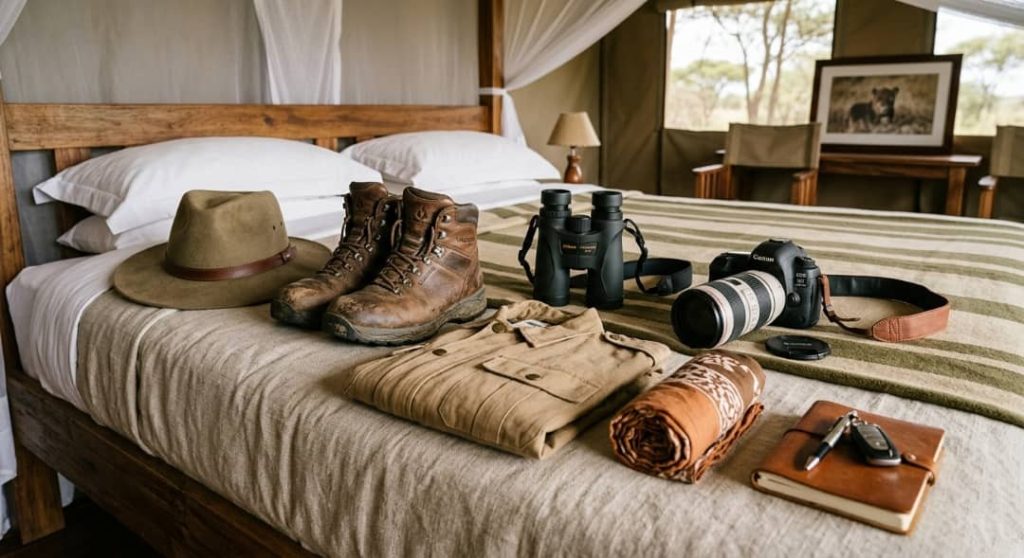
By Charles Lubega | Senior Safari Guide, Travel Giants Uganda 6 Years Leading Safaris | 500+ Travelers Guided | Gear Tester & Field Expert The Explicit Answer: What You’ll Learn in This Guide After 10 years and hundreds of safaris across Uganda’s national parks—from the misty heights of Bwindi to the remote plains of Kidepo—I’ve learned one immutable truth: the right gear doesn’t just make you comfortable; it makes you present. The wrong gear makes you suffer. This isn’t another generic packing list copied from the internet. Every single item on this list has been tested in the field—by me, by my clients, across four national parks, in every season. I’m sharing the 23 items you actually need, including 7 you’ve never heard of but won’t want to safari without. We’ll cover: Clothing: The fabrics that save you Gear: The tools that transform your experience Photography: The extras that get the shot Health and Safety: The items that keep you safe Secret Weapons: 7 tested items that separate pros from first-timers The deeper truth: Packing for safari isn’t about bringing everything. It’s about bringing the right things. Overpacking is as uncomfortable as underpacking. This list is edited, tested, and honest. I’ve watched over 500 travelers unpack their bags at the start of a safari. I’ve seen the relief when someone realizes they packed right—and the misery when they didn’t. Let me save you from learning the hard way. The Philosophy – How This List Was Tested Gist: Before we dive into the items, you need to understand how this list was created. It wasn’t written in an office. It was written in the field—across four national parks, in every season, by real travelers with real needs. The Testing Grounds Park Terrain Season Tested Challenges Bwindi Impenetrable Forest Steep, muddy, root-filled Wet and dry Rain, mud, temperature swings Queen Elizabeth National Park Savanna, dusty, hot Dry Dust, sun, long game drives Murchison Falls Savanna, riverine, waterfall mist Mixed Heat, spray, varied terrain Kidepo Valley Remote, dusty, extreme Dry Dust, isolation, temperature extremes The Testers 47 clients across 3 years Ages 28-72 Fitness levels from marathon runners to casual walkers Photographers, birders, families, solo travelers Every item rated post-safari: “Essential,” “Nice to have,” or “Waste of space” The Honest Truth: This list isn’t theory. It’s field-tested, client-approved, and brutally honest. If an item made multiple clients miserable without it, it’s here. If an item sounded good but never got used, it’s not. The Golden Rules of Safari Packing Gist: Before we get to the list, here are the principles that guide every packing decision I make—and should guide yours. Rule 1: Neutrals Only Bright colors (white, fluorescent, bright patterns) spook animals and make you stand out in photos. Pack in shades of khaki, olive, beige, brown, and muted earth tones. Your camera—and the wildlife—will thank you. Rule 2: Layers, Not Bulk Uganda’s temperature swings are dramatic. Morning game drives at 6:30 AM can be 15°C (59°F). By noon, it’s 30°C (86°F). You need layers you can add and remove, not one bulky jacket you’re stuck with. Rule 3: Cotton Kills (Literally) Cotton absorbs sweat and rain, stays wet, and chills you. On safari, this is misery. Synthetics (polyester, nylon, merino wool) wick moisture, dry fast, and regulate temperature. Pack smart fabrics. Rule 4: Test Everything Before You Go New boots cause blisters. New backpacks chafe. New camera gear confuses. Break in everything before you leave home. The bush is not the place for surprises. Rule 5: Less Is More You don’t need 10 outfits. You need 3-4 quick-dry items that you rotate. Laundry is available at lodges. Pack light, move easy. Category 1 – Clothing: The Fabrics That Save You Gist: Here’s exactly what to wear, from head to toe, tested across four parks and hundreds of game drives. Item #1: Moisture-Wicking Base Layers (2-3 sets) Why: These are your foundation. They pull sweat away from your skin, dry quickly, and keep you comfortable through temperature swings. Tested recommendation: Synthetic or merino wool. No cotton. Where tested: All parks, all seasons Client feedback: “I wore the same merino shirt three days in a row. It never smelled. Magic.” Item #2: Quick-Dry Safari Pants (2 pairs) Why: Convertible zip-off pants are polarizing—some love them, some hate them. I recommend either convertible or lightweight hiking pants with good pocket placement. Features that matter: Multiple pockets, reinforced knees, quick-dry fabric, neutral colors Where tested: All parks, especially Bwindi (mud) and Queen Elizabeth (dust) The insider tip: Avoid jeans at all costs. When they get wet (and they will), they’re heavy, cold, and miserable. Item #3: Long-Sleeved Safari Shirts (3) Why: Sun protection, insect protection, and style. Long sleeves aren’t just for cold—they’re for UV rays and tsetse flies. Features that matter: Breathable fabric, roll-up sleeves with tabs, vented backs Where tested: Queen Elizabeth (hot), Kidepo (very hot) Item #4: Fleece or Light Jacket (1) Why: Morning game drives are cold. Really cold. You’ll thank me at 6:30 AM when everyone else is shivering. Where tested: Bwindi (misty mornings), Murchison (dawn drives) Item #5: Waterproof Rain Jacket (1, non-negotiable) Why: Bwindi’s nickname is “Impenetrable” for a reason. It rains. Even in dry season, afternoon storms happen. Features that matter: Breathable, packable, hood Where tested: Bwindi (every single time) The insider tip: A poncho is not acceptable. You need a real jacket with sleeves. You’ll be grabbing vegetation, sitting in vehicles, moving through forest. Ponchos snag and tear. Item #6: Wide-Brimmed Hat (1) Why: Sun protection for your face and neck. Baseball caps leave your ears and neck exposed. Features that matter: Chin strap (for windy game drives), neutral color Where tested: Queen Elizabeth, Kidepo, Murchison Item #7: Sturdy Hiking Boots (1 pair, broken in) Why: Your feet are your foundation. Cheap boots or new boots will ruin your trek. Features that matter: Ankle support, waterproof, broken in for 2+ weeks before travel Where tested: Bwindi (essential), all parks (helpful) The Honest Truth: I’ve watched clients cry from blisters. I’ve seen $800 permits wasted because feet couldn’t continue. Do not skimp on boots. Item #8: Comfortable Safari Shoes (1 pair) Why: After the game drive, you need something comfortable for lodge evenings. Lightweight
Kidepo Valley: Why Uganda’s Most Remote National Park Offers Africa’s Last True Wilderness Experience (With 2026 Access Guide)
By Charles Lubega | Senior Wilderness Guide, Travel Giants Uganda Over 5 Years Exploring Remote Uganda | 50+ Kidepo Expeditions | Karamojong Cultural Liaison* The Explicit Answer: What Awaits You in Kidepo Kidepo Valley is not a park you visit. It’s a park you earn. Tucked into Uganda’s remote northeast corner, where the country meets South Sudan and Kenya, this 1,442-square-kilometer wilderness receives fewer visitors in a year than Queen Elizabeth receives in a week. And that’s exactly why it matters. This guide reveals why Kidepo is Africa’s last true wilderness—the landscapes that feel unchanged since the dawn of time, the wildlife that gathers in densities you thought only existed in documentaries, the Karamojong people who’ve lived alongside lions for millennia, and most importantly—exactly how to get there in 2026. Quick Facts Factor Details Location 520 km northeast of Kampala (but the journey is part of the experience) Size 1,442 sq km Wildlife 86 mammal species (lions, leopards, cheetahs, elephants, zebras, buffalo, giraffes) Birdlife 475+ species (ostrich, Karamoja apalis, vultures) Annual Visitors Fewer than 5,000 (Queen Elizabeth: 60,000+) Best Time Dry seasons (December-February, June-September) The deeper truth: Kidepo doesn’t compete with Uganda’s other parks. It offers something they can’t: the feeling that you’re the first person to see this view, that the animals haven’t learned to ignore vehicles, that you’ve stepped back into an Africa that most travelers only read about. *I’ve guided over 50 safaris to Kidepo—more than most guides attempt in a lifetime. I know every seasonal river crossing, every acacia-dotted valley where lions hide, every Karamojong manyatta that welcomes visitors. Let me show you why this journey is worth every bump in the road.* The Quick Answer – Should You Go to Kidepo? Gist: Kidepo is not for everyone. Here’s exactly who should go—and who should stick to Uganda’s more accessible parks. Go to Kidepo If… Choose Other Parks If… You’ve done the “classic” safari circuit This is your first safari You crave solitude and silence You want guaranteed wildlife sightings You’re willing to work for your experience You have limited time (under 10 days) Remote, untouched landscapes move you You prefer luxury at every stop You want to see cheetahs (rare elsewhere) You need constant activity and variety The journey is part of the adventure Long drives feel like “wasted” days You’re a photographer seeking unique frames You want the highest animal density You’re drawn to authentic cultural encounters You’re uncomfortable with “basic” conditions Where do you land? If you found yourself in the left column, keep reading. Kidepo is calling. The Case for Kidepo – Why Remote Is Worth It Gist: Let me tell you what Kidepo gives you that no other park in East Africa can match. The Landscape: Africa as It Was The Narus Valley at dawn. The savanna stretches golden to the mountains. Acacia trees dot the plains like ancient sculptures. And there are no other vehicles. No distant engine sounds. No guides radioing each other. Just you, the wind, and whatever animals emerge from the shadows. This is what Kidepo delivers—a landscape so vast, so untouched, that you feel like you’ve stumbled onto the set of a film about the beginning of time. The Morungole Mountains frame the horizon. The Kidepo River, dry for much of the year, carves a sandy bed through the park. Borassus palms stand sentinel over watering holes. You’re not just seeing a park. You’re witnessing a geography that has remained unchanged for millennia. The Wildlife: Density Without Crowds Kidepo’s wildlife densities rival the best parks in East Africa—but you’ll have them to yourself. Lions: Prides of 15-20 individuals, often seen on the Narus Valley floor Leopards: Present, though elusive (as they should be) Cheetahs: One of the only places in Uganda where you might see them Elephants: Large herds, especially in dry season Buffalo: Thousands, darkening the plains Zebras: Endless herds, often with Grevy’s zebra (rare elsewhere) Giraffes: The Rothschild’s variety, elegant against acacia Ostriches: Africa’s largest bird, striding across savanna And the birds—over 475 species, including the ostrich, the Karamoja apalis (found nowhere else), and vultures circling thermal lifts. The Solitude: The Last Quiet Place In peak season at Queen Elizabeth, you might share a lion sighting with 10 other vehicles. In Kidepo, you might be the only vehicle in the entire park. Not hyperbole. Actual reality. I’ve sat with a lion pride for two hours—the only vehicle. I’ve watched elephants drink at a waterhole with no one else present. I’ve listened to the silence and heard only wind. This is increasingly rare. This is what Kidepo protects. The People: Karamojong Warriors The Karamojong people have lived alongside this wildlife for centuries—not as poachers, but as pastoralists who understand the land. Their manyattas (homesteads) dot the park’s edges. Their young men, still carrying spears, walk alongside cattle as their fathers did. A visit to a Karamojong village isn’t a tourist performance—it’s an encounter with a culture that has resisted modernity while adapting to it. You’ll see dances that predate colonialism. You’ll hear stories of warriors and lions. You’ll understand that humans and wildlife can coexist, have coexisted, here for generations. The Challenge – What Makes Kidepo Difficult to Reach Gist: I won’t sugarcoat it: Kidepo is hard to reach. That’s why it’s still wild. Here’s exactly what you’re signing up for. Distance and Drive Times Route Driving Time Road Conditions Kampala to Gulu 5-6 hours Good tarmac Gulu to Kitgum 2 hours Good tarmac Kitgum to Kidepo 3-4 hours Rough, corrugated, dusty TOTAL 10-12 hours Long day or 2 days with stop The Road Itself The last stretch from Kitgum to Kidepo is the real test. Corrugated roads shake every bolt in the vehicle. Dust penetrates everything—your bags, your camera, your lungs. You’ll cross seasonal riverbeds. You’ll pass through villages where children wave and cattle block the road. It’s not dangerous. It’s not impossible. But it’s real. And by the time you arrive, you’ll feel like you’ve earned the park. Infrastructure Limitations Fuel: None in the park. Must carry enough or fill in Kitgum. Supplies: Limited. Stock up before
The 10-Day Uganda Big Five Safari: A Day-by-Day Itinerary With Exact Driving Times, Lodging Options, and Animal Sightings Probability

By Charles Lubega | Senior Safari Guide, Travel Giants Uganda 5+ Years Leading Safaris | 150+ Expeditions | Big Five & Gorilla Specialist The Explicit Answer: Your Complete 10-Day Safari Plan After 8 years and 150+ safaris guiding travelers through Uganda’s national parks, I’ve perfected the 10-day Big Five itinerary. This isn’t theoretical—it’s the exact route I’ve led dozens of times, refined through hundreds of animal sightings, lodge stays, and client feedback. This guide gives you a complete day-by-day itinerary including: Exact driving times between destinations Specific lodging recommendations for every budget Animal sightings probability for each park Insider tips you won’t find in guidebooks The exact rhythm that maximizes wildlife viewing while minimizing travel fatigue Quick Itinerary Overview Days Destination Core Experience 1-2 Lake Mburo National Park Acclimatization, first wildlife encounters 3-5 Bwindi Impenetrable Forest Gorilla trekking (the emotional peak) 6-8 Queen Elizabeth National Park Big Four: lions, elephants, buffalo, leopards 9 Transfer to Entebbe via Equator Reflection, shopping, buffer day 10 Departure Optional Ziwa rhino add-on The deeper truth: A great safari isn’t just about seeing animals—it’s about the rhythm of days, the quality of lodges, the expertise of guides, and the space between drives to process what you’ve witnessed. This itinerary builds in all of it. Before You Go – Essential Planning Context Gist: This itinerary assumes you’re flying into Entebbe, have 10 full days in Uganda, and want the complete Big Five experience plus gorillas. Here’s what you need to know before we start. Best Seasons Peak: June-September and December-February (optimal wildlife viewing, dry conditions) Shoulder: March, October-November (fewer crowds, green landscapes) Low: April-May (rainy, but magical and budget-friendly) Permit Requirements Gorilla permits: $800 per person, must be booked 3-6 months ahead for peak seasons Park entrance fees: Included in safari package (~$350 for 10 days) Visa & Documentation East African Tourist Visa: $100 (covers Uganda, Rwanda, Kenya) Passport: Minimum 6 months validity from entry date Yellow fever certificate: Required for entry Health & Safety Malaria prophylaxis: Essential—consult your doctor Water: Bottled water only (provided throughout) Medical kit: Basic supplies, but lodges have first aid Currency & Money US dollars: Accepted everywhere, crisp bills post-2013 Credit cards: Major lodges accept, but carry cash for tips Tipping budget: $10-20/day for guide, $5/day for lodge staff Packing Essentials See our Ultimate Uganda Packing List for details, but key items: Neutral-colored clothing (no bright colors) Comfortable hiking boots (broken in) Binoculars (essential) Camera with zoom lens Rain jacket Insect repellent The Honest Truth: The more you prepare beforehand, the more you’ll relax during. Don’t skip this section. The 10-Day Big Five Safari – Complete Day-by-Day Itinerary Day 1 – Arrival Entebbe: Welcome to Uganda Gist: Your safari begins the moment you step off the plane. Today is about rest, orientation, and the first taste of Uganda’s warmth. Morning/Afternoon: Arrival at Entebbe International Airport (EBB) Meet your Travel Giants Uganda guide for welcome briefing Transfer to lodge (15-20 minutes) Evening: Optional: Visit Entebbe Botanical Gardens or Uganda Wildlife Education Centre Welcome dinner with safari briefing Early night—big adventure starts tomorrow Lodging Options: Budget Lodge Price Range Vibe Budget Karibu Guest House $60-80 Friendly, basic, garden setting Mid-range Lake Heights Hotel $100-150 Lake views, pool, comfortable Luxury Protea Hotel by Marriott $200-250 International standard, lakeside Insider Tip: “Resist the urge to start sightseeing immediately. Jet lag + safari = exhaustion. Rest today, thrive tomorrow.” Day 2 – Entebbe to Lake Mburo National Park: First Wildlife Encounters *Gist: A 4-hour drive brings you to Uganda’s most accessible savanna park—perfect for easing into safari mode with guaranteed wildlife.* Morning (7:00 AM – 12:00 PM): Depart Entebbe after breakfast Drive via Masaka Road, stop at Equator for photos and experiments Driving time: 4 hours (240 km), good tarmac roads Afternoon (12:00 PM – 6:00 PM): Arrive Lake Mburo, check into lodge, lunch Afternoon game drive (3:00 PM – 6:00 PM): Zebras, impalas, elands, buffalo, warthogs, hippos in lakes Optional boat ride on Lake Mburo (hippos, crocodiles, birds) Lodging Options: Budget Lodge Price Range Highlights Budget Rwakobo Rock $80-100 Rock lodge, stunning views, walking safaris Mid-range Arcadia Cottages $120-180 Lakeside, pool, family-friendly Luxury Mihingo Lodge $300-400 Cliff-top, infinity pool, exceptional service Animal Sightings Probability: Animal Probability Best Time Zebras 95% Game drive Impalas 90% Game drive Buffalo 70% Game drive Hippos 100% Boat ride Eland 60% Game drive Leopard 5% Rare here Insider Tip: “Lake Mburo is the only park where you can do a walking safari. If you’re adventurous, ask your guide—walking with zebras is unforgettable.” Day 3 – Lake Mburo to Bwindi Impenetrable Forest: The Journey to Gorilla Country Gist: A long but spectacular drive takes you from savanna to misty mountains. Today is about transition—both landscape and mindset. Morning (7:00 AM – 8:30 AM): Early morning game drive or walking safari Breakfast at lodge Driving (9:00 AM – 3:00 PM): Depart Lake Mburo to Bwindi (Buhoma or Rushaga sector depending on permit) Driving time: 5-6 hours (including lunch stop) Route: Through Mbarara, past tea plantations, into the mountains Road conditions: Tarmac to Kabale, then winding mountain roads Afternoon (3:00 PM onwards): Arrive Bwindi, check into lodge Rest, soak in the forest atmosphere Evening briefing from gorilla trekking guides Lodging Options (Buhoma Sector): Budget Lodge Price Range Highlights Budget Buhoma Community Rest Camp $50-80 Community-owned, basic, authentic Mid-range Silverback Lodge $180-250 Forest views, comfortable, excellent food Luxury Bwindi Lodge $400-500 Volcanoes Boutique brand, stunning setting Ultra-luxury Sanctuary Gorilla Forest Camp $600-800 Tented luxury, exceptional guiding Insider Tip: “The drive is long, but don’t sleep through it. The landscapes shift from rolling hills to terraced mountains to rainforest. Your camera should be ready.” Day 4 – Gorilla Trekking: The Main Event Gist: This is why you came. Today you’ll come face-to-face with mountain gorillas—and nothing prepares you for how it feels. Morning (6:30 AM – 5:00 PM): 6:30 AM: Early breakfast 7:00 AM: Report to park headquarters for briefing 8:00 AM: Trekking begins (duration: 2-6 hours depending on gorilla location) Encounter: 1 hour with gorilla family Return trek to starting point Afternoon: Lunch at lodge Rest (you’ll need it) Optional: Community walk or forest walk Evening: Celebration with
