
By Charles Lubega | Senior Wildlife Photography Guide, Travel Giants Uganda
5 Years Leading Photo Safaris | 100+ Photography Expeditions | Canon Ambassador (East Africa)*
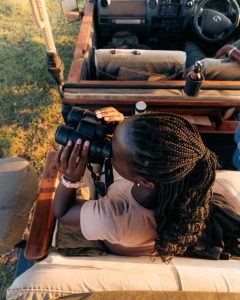
The Explicit Answer: Your Photographer’s Decision
Choose Queen Elizabeth if you prioritize hippo and elephant photography from water, tree-climbing lions in fig trees, and the highest density of wildlife along the Kazinga Channel. Choose Murchison Falls if you want the dramatic waterfall backdrop, rhino tracking at Ziwa, giraffes in abundance, and the classic African savanna aesthetic with the Nile as your constant companion.
Quick Facts Comparison
| Factor | Queen Elizabeth | Murchison Falls |
|---|---|---|
| Size | 1,978 sq km | 3,893 sq km |
| Mammal Species | 95 | 76 |
| Bird Species | 600+ | 450+ |
| Signature Feature | Kazinga Channel (hippo capital) | Victoria Nile (waterfall backdrop) |
| Unique Advantage | Tree-climbing lions | Ziwa rhino add-on |
| Landscape | Volcanic craters, savanna, channel | Falls, Nile, savanna, riverine forest |
| Best Season | Dry (June-Sept, Dec-Feb) | Any season (water always present) |
Both parks deliver world-class wildlife photography, but they serve different photographic visions. This guide will help you match your photographic priorities—whether you crave water-level hippo shots, lions in fig trees, the iconic waterfall frame, or golden savanna light—to the right park.
*I’ve led over 100 photography-focused safaris through both parks. I’ve watched photographers cry from joy and frustration. I know exactly where to position the vehicle at 6:17 AM for golden hour light on elephants, which termite mounds leopards favor for dawn appearances, and how the angle of light transforms the Kazinga Channel versus the Nile Delta. Let me guide you to the right choice.*
Quick Answer – Which Park Should a Photographer Choose?
Scan this table. You’ll find yourself in one column instantly.
| Choose Queen Elizabeth If… | Choose Murchison Falls If… |
|---|---|
| You want hippo photography (world’s highest concentration) | You want the waterfall as a dramatic backdrop |
| Tree-climbing lions in fig trees are your priority | Giraffes in classic savanna settings are your goal |
| You prefer water-level wildlife (boat safari photography) | You want vast landscapes with the Nile River |
| You seek volcanic landscape diversity | You want to add rhinos at Ziwa Sanctuary |
| You want the highest density of birds (600+ species) | You prefer fewer tourists, more solitude |
| You’re photographing in dry season (animals concentrated) | You’re photographing any season (water always present) |
| You want elephants against savanna with mountains | You want elephants against river with waterfall |
Where did you land? Queen Elizabeth or Murchison Falls? Keep that in mind as we go deeper. But stay open—sometimes the park that chooses you is the one you hadn’t considered.
The Photographer’s Perspective – What Makes a Park “Good” for Photography?
*Gist: Before we compare, let’s agree on what photographers actually need: light quality, animal density, behavioral opportunities, compositional variety, and accessibility. Here’s how I evaluate parks after 100+ photo safaris.*
The Five Photographic Factors
| Factor | Why It Matters |
|---|---|
| Light Quality | Golden hour duration, angle of sun relative to landscapes, cloud cover patterns |
| Animal Density | How many subjects per square kilometer, predictability of sightings |
| Behavioral Opportunities | Action shots (hunting, playing, fighting), unique behaviors |
| Compositional Variety | Backgrounds, foregrounds, water elements, tree structures |
| Accessibility | Can you get close? Vehicle positioning restrictions? Boat platforms? |
Personal credibility marker: I’ve led photography workshops in both parks for 8 years. I’ve watched photographers cry from joy and frustration. I know exactly which park delivers which shot.
Queen Elizabeth National Park – The Photographer’s Breakdown
Gist: Queen Elizabeth is Uganda’s most biodiverse park—and for photographers, that means endless variety. But variety isn’t the same as consistency. Here’s exactly what you’ll find.
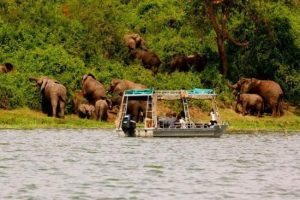
The Kazinga Channel (Water-Level Gold)
What you’ll photograph: Hippos (hundreds, sometimes thousands), elephants drinking and bathing, buffalo along shores, crocodiles basking, incredible birdlife.
Best time: 11:00 AM – 2:00 PM (harsh light but animals active; bring polarizer)
Photographic advantages: Eye-level with animals from boat, intimate portraits, reflection shots.
Gear recommendation: 70-200mm for hippos, 100-400mm for birds, polarizer for water glare.
The shot everyone wants: Elephant trunk reaching for water with hippos yawning in background.
Kasenyi Plains (Predator Territory)
What you’ll photograph: Lions (60% sighting probability), leopards (20%, requires luck), Uganda kob, hyenas, jackals.
Best time: 6:30 AM – 9:00 AM (golden hour, predators returning from night hunt)
Photographic advantages: Open plains mean long visibility, termite mounds as compositional elements.
Gear recommendation: 100-400mm or 150-600mm for lions, 70-200mm for kob herds.
The shot everyone wants: Lion walking toward camera with morning light, termite mound behind.
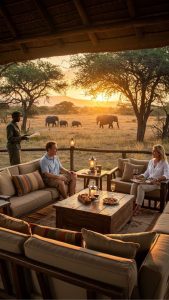
Ishasha Sector (Tree-Climbing Lions)
What you’ll photograph: Lions draped in fig tree branches—a phenomenon found only here and Tanzania.
Best time: Afternoon (lions often rest in trees 3:00 PM – 6:00 PM)
Photographic advantages: Unique behavior, compositional possibilities with tree frames.
Gear recommendation: 70-200mm for tree shots, 100-400mm for ground shots.
The shot everyone wants: Lioness with cubs in fig tree, golden afternoon light filtering through leaves.
Volcanic Landscapes
What you’ll photograph: Explosion craters, panoramic views, dramatic skies.
Best time: Late afternoon for shadows defining crater rims.
Photographic advantages: Landscape variety beyond wildlife, context shots for storytelling.
The Honest Photographic Truth
“Queen Elizabeth gives you variety and density. You’ll never run out of subjects. But animals are spread across different sectors—you’ll drive between them. The Kazinga Channel is the reliable superstar. If you only have one day, spend it on the boat.”
Murchison Falls National Park – The Photographer’s Breakdown
Gist: Murchison Falls is Uganda’s largest park—and for photographers, it offers scale, drama, and the iconic waterfall shot. But the real magic is the Nile as your constant companion.
The Victoria Nile (Waterfall Drama)
What you’ll photograph: The Nile squeezing through a 7-meter gap and plunging 43 meters—the world’s most powerful waterfall.
Best time: Morning for light on the falls (east-facing), afternoon for rainbows.
Photographic advantages: The falls themselves are the subject; wildlife in foreground adds scale.
Gear recommendation: 24-70mm for wide shots of falls, 70-200mm for compressed compositions with animals.
The shot everyone wants: Elephant or giraffe with waterfall in background—the classic Murchison frame.
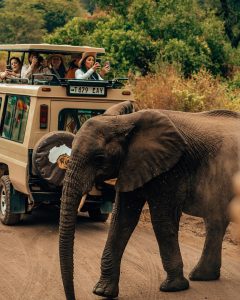
Murchison Falls’ signature shot: wildlife with the world’s most powerful waterfall as backdrop.
Northern Bank (Classic Savanna)
What you’ll photograph: Giraffes (abundant), elephants, buffalo, lions, leopards, hyenas, antelopes.
Best time: 6:30 AM – 10:00 AM and 4:00 PM – 6:30 PM.
Photographic advantages: Open savanna with acacia trees, classic African aesthetic, fewer vehicles.
Gear recommendation: 100-400mm for wildlife, 70-200mm for landscapes with animals.
The shot everyone wants: Giraffe walking across savanna with acacia tree silhouettes at sunset.
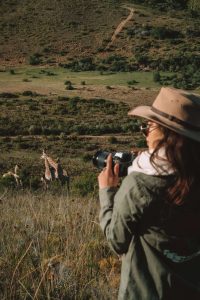
Murchison’s northern bank offers classic savanna photography with abundant giraffes.
Nile Boat Safari (Different Water Perspective)
What you’ll photograph: Hippos, crocodiles, elephants along shore, incredible birdlife, approach to waterfall base.
Best time: Morning for light on falls approach, afternoon for return light.
Photographic advantages: Get close to waterfall base (spray warning!), different angle on wildlife.
Gear recommendation: 24-70mm for waterfall approach, 70-200mm for wildlife, rain cover for spray.
The shot everyone wants: Boat approaching falls with rainbow, crocodile on sandbank in foreground.
Ziwa Rhino Sanctuary (Add-on)
What you’ll photograph: White rhinos on foot—the only place in Uganda.
Best time: Morning (cooler, rhinos more active).
Photographic advantages: Walking safari means ground-level perspectives, intimate portraits.
Gear recommendation: 70-200mm, be ready for close encounters.
The shot everyone wants: Rhino mother with calf, eye contact, natural habitat.
The Honest Photographic Truth
“Murchison gives you scale and drama. The waterfall is the hero, and everything else supports it. Wildlife density is lower than Queen Elizabeth, but when you find animals, they’re often against spectacular backdrops. The northern bank feels like classic Hemingway Africa—open, vast, timeless.”
Side-by-Side Photographic Comparison
| Factor | Queen Elizabeth | Murchison Falls |
|---|---|---|
| Signature Shot | Hippos at water level, lions in fig trees | Wildlife with waterfall backdrop |
| Animal Density | Higher (especially along Kazinga) | Lower but more spread out |
| Giraffe Photography | Rare (few giraffes) | Excellent (abundant) |
| Lion Photography | Good (60% probability in Kasenyi) | Good (50-60% on northern bank) |
| Leopard Photography | 20% probability | 15-20% probability |
| Elephant Photography | Excellent (Kazinga shores) | Excellent (Nile banks) |
| Hippo Photography | World-class (Kazinga Channel) | Good (Nile) |
| Bird Photography | 600+ species, water birds abundant | 450+ species, savanna birds abundant |
| Landscape Variety | Volcanic craters, savanna, channel | Falls, Nile, savanna, riverine forest |
| Golden Hour Quality | Excellent in Kasenyi | Excellent along Nile |
| Crowds | Moderate (popular) | Fewer tourists |
| Unique Advantage | Tree-climbing lions | Waterfall backdrop |
| Best Season | Dry (June-Sept, Dec-Feb) | Any season (water always present) |
Light and Time – When to Be Where
Gist: Light is everything in photography. Here’s exactly when to be where in each park for the best shots.
Queen Elizabeth Golden Hour Guide
| Time | Location | Subject | Light Direction |
|---|---|---|---|
| 6:30-8:30 AM | Kasenyi Plains | Lions, kob, general wildlife | Soft, golden, side-lit |
| 8:30-11:00 AM | Game drive roads | General | Getting harsh, use for high-contrast |
| 11:00-2:00 PM | Kazinga Channel boat | Hippos, elephants, birds | Harsh overhead (bring polarizer) |
| 4:00-6:30 PM | Ishasha or Kasenyi | Tree lions, evening light | Warm, golden, backlight possibilities |
| 5:30-6:30 PM | Katwe salt lake or viewpoints | Landscapes, silhouettes | Sunset, dramatic |
Murchison Falls Golden Hour Guide
| Time | Location | Subject | Light Direction |
|---|---|---|---|
| 6:30-9:00 AM | Northern bank | Giraffes, elephants, general | Soft, golden, animals heading to water |
| 9:00-11:00 AM | Top of falls | Waterfall shots | Good light on falls (east-facing) |
| 11:00-2:00 PM | Boat safari | Falls approach, wildlife | Harsh but okay for waterfall |
| 4:00-6:30 PM | Northern bank | Evening wildlife, landscapes | Warm, golden, long shadows |
| 5:30-6:30 PM | Nile banks | Silhouettes, sunset | Spectacular |
Insider Tip: “In Queen Elizabeth, the Kazinga Channel boat safari happens mid-day when light is harsh—but that’s when animals are most active at water. Bring a polarizer. It saves your shots.”
Gear Recommendations by Park
Gist: Your gear bag should shift slightly depending on which park you choose. Here’s what I pack for each.
Queen Elizabeth Gear Kit
| Gear | Why |
|---|---|
| 100-400mm or 150-600mm | Primary lens for lions, distant wildlife |
| 70-200mm f/2.8 | Hippos from boat, portraits, low-light |
| 24-70mm | Landscapes, crater views, environmental shots |
| Polarizer | Essential for Kazinga Channel water glare |
| Bean bag | For vehicle door rest (tripods impractical) |
| Extra batteries | Cold mornings drain faster |
| Rain cover | Boat safari spray protection |
Murchison Falls Gear Kit
| Gear | Why |
|---|---|
| 100-400mm | Primary wildlife lens |
| 24-70mm | Essential for waterfall wide shots |
| 70-200mm | Compressed waterfall + wildlife shots |
| Tripod | For waterfall long exposures (if staying late) |
| Polarizer | Nile reflections, water glare |
| ND filter | For slow shutter waterfall effects |
| Rain cover | Boat spray at falls base |
The Honest Truth: “In both parks, your telephoto will do most of the work. But in Murchison, don’t neglect your wide-angle. The waterfall shots with wildlife require both lenses. In Queen Elizabeth, the boat safari demands a polarizer more than anything else.”
Unique Photographic Opportunities – The Shots You Can Only Get Here
Gist: Both parks have shots you can’t replicate elsewhere. Here’s what makes each unique.
Queen Elizabeth’s Exclusives
1. Tree-climbing lions in fig trees
Only here and in Tanzania’s Lake Manyara. Lions draped in branches, afternoon light filtering through leaves. Worth the trip alone.
2. Hippos at eye level
From the boat on Kazinga Channel, you’re at water level. Hippos yawning, fighting, playing—all from their perspective.
3. Elephants with volcanic backdrop
The Kasenyi Plains frame elephants against the distant volcanic craters. Unique geology, unique frames.
4. Salt lake abstractions
Katwe salt lake’s geometric pans make for stunning abstract landscape shots.
Murchison Falls’s Exclusives
1. Wildlife with waterfall backdrop
Elephant, giraffe, or buffalo with the world’s most powerful waterfall behind them. The classic shot.
2. Boat approaching the falls
The scale reveals itself as you approach. Rainbows in the spray. Crocodiles on sandbanks in foreground.
3. Giraffes in classic savanna
Murchison has Uganda’s highest giraffe population. Endless compositions with acacia trees.
4. Rhinos on foot at Ziwa
The only place in Uganda to photograph white rhinos from ground level. Intimate, powerful, rare.
The Honest Truth: “If you want the shot no one else has, Queen Elizabeth’s tree lions are rarer. If you want the iconic ‘Africa’ shot that everyone recognizes, Murchison’s waterfall is unbeatable.”
Seasonal Considerations for Photographers
Gist: Light changes with seasons. Animals move with water. Here’s when to go for your photographic priorities.
Dry Season (June-September, December-February)
| Factor | Queen Elizabeth | Murchison Falls |
|---|---|---|
| Animal concentration | High (water sources limited) | High (Nile always there, but animals concentrate) |
| Vegetation | Sparse, better visibility | Sparse, better visibility |
| Light quality | Excellent, dust in air adds warmth | Excellent, hazy skies possible |
| Crowds | Higher | Moderate |
| Best for | All-round photography | Classic savanna shots |
Wet Season (March-May, October-November)
| Factor | Queen Elizabeth | Murchison Falls |
|---|---|---|
| Animal concentration | Dispersed, harder to find | Still good (Nile constant) |
| Vegetation | Lush, green, beautiful but obstructive | Lush, green, beautiful |
| Light quality | Dramatic skies, storms | Dramatic skies, rainbows |
| Crowds | Low | Very low |
| Best for | Landscape photography, birding | Waterfall drama, storm shots |
Insider Tip: “For Queen Elizabeth, dry season is better—animals concentrate, visibility improves. For Murchison, the waterfall is always there, but wet season brings dramatic skies and rainbows that make the shot.”
Photographer’s Itinerary – 3 Days in Each Park
Gist: If you have time for both, here’s how to structure your photography days for maximum shot opportunities.
3-Day Queen Elizabeth Photography Itinerary
| Day | Morning | Afternoon |
|---|---|---|
| 1 | Arrive, settle, scout Kasenyi | Evening game drive Kasenyi |
| 2 | Dawn game drive Kasenyi (lions) | Kazinga Channel boat safari (hippos, elephants) |
| 3 | Drive to Ishasha (tree lions) | Afternoon tree lion photography |
3-Day Murchison Falls Photography Itinerary
| Day | Morning | Afternoon |
|---|---|---|
| 1 | Arrive, afternoon northern bank drive | Evening light on savanna |
| 2 | Dawn northern bank drive | Boat safari to falls (waterfall shots) |
| 3 | Top of falls photography | Drive to Ziwa (rhinos) or depart |
The Honest Truth: “Three days in each gives you buffer for weather, animal movements, and the golden light windows. Photographers need patience. Build it in.”
The Verdict – A Photographer’s Decision Tree
Start here: What’s your priority?
1. Water-level wildlife photography?
-
Yes → Queen Elizabeth (Kazinga Channel)
-
No → Go to question 2
2. Tree-climbing lions?
-
Yes → Queen Elizabeth (Ishasha sector)
-
No → Go to question 3
3. Waterfall backdrop for wildlife?
-
Yes → Murchison Falls
-
No → Go to question 4
4. Giraffe photography?
-
Yes → Murchison Falls
-
No → Go to question 5
5. Highest animal density?
-
Yes → Queen Elizabeth
-
No → Go to question 6
6. Fewer crowds, vast landscapes?
-
Yes → Murchison Falls
-
No → Either park works
Sample Photographer’s Shot List by Park
Queen Elizabeth Shot List
-
Lion in Kasenyi Plains, morning light
-
Lioness in fig tree, Ishasha, afternoon light
-
Hippo yawn from boat, eye level
-
Elephant drinking, Kazinga Channel
-
Hippo pod with reflections
-
Uganda kob leaping (mating season)
-
Sunset over Katwe salt lake
-
African fish eagle in flight
-
Leopard on termite mound (if lucky)
-
Elephant herd with volcanic backdrop
Murchison Falls Shot List
-
Elephant with waterfall background
-
Giraffe in classic savanna, acacia tree
-
Boat approaching falls, rainbow visible
-
Crocodile on sandbank, falls behind
-
Lion on northern bank, evening light
-
Buffalo herd crossing open plain
-
Top of falls wide shot, long exposure
-
Rhino mother and calf, Ziwa (add-on)
-
Sunset over Nile, silhouetted giraffe
-
Shoebill (if lucky in swamp areas)
Frequently Asked Questions from Photographers
Gist: These are the questions photographer clients ask me most often.
Can I use a tripod in the vehicle?
No—vehicles move, and space is tight. Use a bean bag on the door or window frame. Tripods are useful only at fixed locations (top of falls, lodge viewpoints).
What’s the longest lens I need?
400mm is sufficient for most shots. 600mm gives you more reach for distant subjects, especially in open plains. Rent if you don’t own.
Is a polarizer worth it?
Essential for Queen Elizabeth (Kazinga Channel water glare). Useful in Murchison for Nile reflections. Don’t leave home without it.
Can I get off the vehicle for ground-level shots?
Only in designated areas or during walking safaris (Ziwa, some specialized experiences). Otherwise, you shoot from vehicle.
Which park has better bird photography?
Queen Elizabeth for water birds (Kazinga Channel). Murchison for savanna birds and the rare shoebill in surrounding swamps.
What about flash?
Useless for wildlife at distance. Don’t bother.
Should I bring a second camera body?
Yes—lens changes in dusty conditions risk sensor spots. Two bodies with different lenses is ideal.
How close will we get to animals?
Ethically close—you won’t need 800mm for most shots. Lions can be 10-15 meters away. Hippos from boat are 5-10 meters.
The Peak: What 100 Photo Safaris Has Taught Me
Here’s what 100 photo safaris has taught me:
The best shot isn’t the one with the sharpest focus or the perfect composition. It’s the one that makes you feel something when you look at it years later.
The hippo yawn that caught you off guard. The lioness who looked through you, not at you. The moment the light broke through clouds exactly as an elephant raised its trunk.
Queen Elizabeth gives you density—more chances to capture that feeling. More subjects, more variety, more opportunities to be in the right place at the right time.
Murchison gives you scale—the feeling itself is bigger, framed by the falls, the Nile, the vastness. Fewer shots, but the ones you get carry the weight of the landscape.
Choose based on what you want to feel when you’re back home, scrolling through your shots, remembering.
Your Photographer’s Decision Checklist
-
I’ve decided between Queen Elizabeth and Murchison (or want both)
-
I understand the seasonal implications for my photography
-
I’ve packed the right gear (polarizer for QE, wide-angle for MF)
-
I’ve booked permits and accommodation with photography in mind
-
I’ve communicated my photography priorities to my guide
-
I’m ready to miss shots, be patient, and let the light come to me
The End: Your Invitation
You came here torn between two parks, two visions, two sets of shots.
Now you know:
Queen Elizabeth is density, variety, water-level intimacy, and the rarest lions on earth. It’s hippos at eye level, elephants against volcanic backdrops, and the Kazinga Channel delivering shots you can’t get anywhere else.
Murchison Falls is scale, drama, the iconic waterfall frame, and classic savanna with the Nile as your guide. It’s giraffes in golden light, rhinos on foot, and the sense that you’re photographing something timeless.
Neither is wrong. The only wrong choice is letting indecision keep you from booking.
At Travel Giants Uganda, we’ve guided hundreds of photographers through this exact decision. We know where the lions drink at dawn. We know which boat captains position for the best light. We know the rangers who’ll radio when the leopard shows.
Ready to book your photography safari?
Email us at info@travelgiantsuganda.com or DM on WhatsApp on +256784053143 us with:
-
Your preferred park (or both)
-
Your photography priorities (what shots matter most)
-
Your dates and any questions
We’ll help you choose the right park, the right season, the right guide—and ensure you’re in position when the light hits.
Feel the weight of your 400mm as you steady it on the bean bag. See the light shift from gold to orange as the sun clears the horizon. Hear the shutter click—that’s the sound of a shot you’ll print.
The shots are waiting. The light is moving.
Let’s go find them.
Charles Lubega | Senior Wildlife Photography Guide
5 Years Leading Photo Safaris | 100+ Photography Expeditions | Canon Ambassador (East Africa)
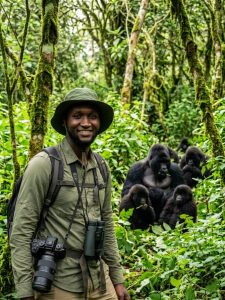
Credentials: Certified Uganda Safari Guide, Professional Wildlife Photographer, Photography Workshop Leader, Member of Nature Photographers Network
