
Uganda is celebrated worldwide as the home of mountain gorilla trekking, but limiting your safari ambitions to primates alone would be a mistake. The Pearl of Africa harbours one of the continent’s most rewarding Big Five safari experiences — one that weaves classic savannah species through rainforests, volcanic landscapes, and Nile-fed wetlands you simply cannot find anywhere else in Africa.
Lion, leopard, elephant, African buffalo, and rhinoceros are all present in Uganda. The twist? No single national park holds all five in one place. Each animal has its stronghold, and the most satisfying safari involves understanding which park to visit for which species, how to connect them logically, and what extraordinary wildlife lies beyond the headline animals.
This guide covers exactly that.
Uganda’s Big Five: Where to Find Each Animal
Uganda’s Big Five are distributed across several national parks rather than concentrated in a single reserve. That actually makes a Ugandan Big Five safari far more varied and adventurous than the classic single-park game drive — you are not just ticking animals off a list, but travelling through rainforests, sweeping savanna plains, massive waterfalls, and crater lakes along the way.
Lion: The Tree-Climbing Phenomena of Ishasha
Uganda’s lions are found primarily in Queen Elizabeth National Park and Murchison Falls National Park. Queen Elizabeth’s Ishasha sector holds one of Africa’s rarest wildlife spectacles: tree-climbing lions that lounge in the branches of ancient fig trees. This behaviour is documented in only two places on Earth — Ishasha and Tanzania’s Lake Manyara.
The Kasenyi Plains in the northern sector of Queen Elizabeth also deliver classic savanna game viewing, with lion prides regularly spotted stalking buffalo, Uganda kob, and warthog across open grasslands. A morning or evening game drive through Kasenyi is one of the best wildlife experiences in Uganda, full stop.
Best for tree-climbing lions: Ishasha (Queen Elizabeth NP)
Best overall sighting frequency: Murchison Falls NP
Most dramatic, isolated setting: Kidepo Valley NP
Leopard: The Elusive Prize of Kidepo
Leopards are present across Uganda’s major game parks but, as across Africa, remain elusive. Kidepo Valley National Park in the remote northeast offers Uganda’s best leopard sighting rates, with individuals frequently spotted on rocky outcrops and in acacia scrub. Murchison Falls NP also has a healthy leopard population, particularly in the Budongo Forest fringe areas. Early morning and late afternoon game drives offer the best chance at all parks.
African Elephant: The Largest Herds of Murchison
Uganda’s elephant population is one of East Africa’s most robust recovery stories. Murchison Falls National Park holds the country’s largest elephant population — herds of 50–100 individuals are commonly seen on northern circuit game drives. Queen Elizabeth National Park also has excellent elephant viewing, particularly in the Kasenyi plains and around Mweya Peninsula. Kidepo Valley’s elephants are smaller-tusked and more arid-adapted, while forest elephants are present within Bwindi Impenetrable Forest, though rarely seen by gorilla trekkers.
Largest herds: Murchison Falls NP
Best all-round viewing: Queen Elizabeth NP
Unique arid-zone elephants: Kidepo Valley NP
African Buffalo: The Reliable Constant
Buffaloes are frequently spotted and form part of most game drives across Uganda’s savanna parks. They are the most dependable member of the Big Five to encounter, appearing in healthy numbers in Queen Elizabeth, Murchison Falls, and Kidepo Valley.
Rhinoceros: The Ziwa Sanctuary Connection
Rhinos are extinct in Uganda’s wild national parks, but this does not mean you cannot complete the Big Five. Ziwa Rhino Sanctuary sits directly on the drive up from Entebbe to Murchison Falls, and a tracking walk there completes the Big Five for most itineraries. With over 30 white rhinos, it is a must-visit for any serious Big Five safari.
Beyond the Big Five: Uganda’s True Wildlife Treasures
Here is where Uganda transforms from a conventional safari destination into something genuinely extraordinary.
Mountain Gorillas: The Ultimate Encounter
Tracking mountain gorillas in the wild is one of the most powerful wildlife experiences available anywhere in the world. Bwindi Impenetrable National Park shelters approximately half of the world’s remaining mountain gorillas, and with 19 habituated gorilla groups, your chances of a successful trek are excellent — operators report a 90 percent success rate.
Gorilla trekking permits are strictly limited to protect the animals and minimise human impact. A maximum of eight people are permitted to trek to any one group per day, and the minimum age is 15. The trek itself can last anywhere from two to six hours depending on where the gorilla family has moved that day.
Key tip: Bring garden gloves for the trek, wear sturdy waterproof hiking boots, and pack a mask — it is essential for protecting both you and the gorillas from illness.

Chimpanzees: The Primate Capital
Kibale Forest National Park is one of Africa’s best primate hotspots, with 13 species recorded, including nearly 1,500 resident chimpanzees. The forest floor is generally flatter and easier to navigate than Bwindi, making it an excellent complement to gorilla trekking. Chimpanzee tracking is also available in Budongo Forest near Murchison Falls and in the Kyambura Gorge within Queen Elizabeth National Park.
The Shoebill Stork: A Prehistoric Wonder
Perhaps the most sought-after bird in Uganda is the prehistoric-looking shoebill stork. The downstream delta cruise at Murchison Falls gives birders their best shoebill odds in the country, while the Mabamba Wetland in Entebbe is another prime location.
Uganda is a birdwatcher’s paradise, with over 1,000 species representing more than half of all bird species in Africa. Queen Elizabeth National Park alone boasts 600+ species.
Golden Monkeys and Other Primates
Mgahinga Gorilla National Park is home to the rare and endemic golden monkey. Kibale’s forests are alive with L’Hoest’s monkeys, red-tailed monkeys, blue monkeys, and large troops of black and white colobus monkeys whose acrobatic leaps through the trees are a sight to behold. Night nature walks can reveal the tiny bushbaby with its large, luminous eyes, or the slow-moving potto — a unique glimpse into the jungle’s secret world.
Antelopes: The Graceful Residents of the Plains
While the African buffalo represents one species in the bovid family, Uganda is home to over 29 species of antelopes. The Uganda kob — so central to the country’s identity that it appears on the coat of arms — is a beautiful sight during mating season when males compete in lively rituals. Look also for the graceful topi, the majestic eland (the largest of all antelopes), and the elusive sitatunga, a semi-aquatic antelope found in Mabamba Wetland with specially adapted hooves for walking on marshy ground.
The Best Parks for Your Ugandan Safari
Uganda features ten national parks, but most travellers focus on four primary locations. Structuring your trip around these parks ensures you see the primates, big cats, and diverse birdlife that make the country unique.
Murchison Falls National Park
Uganda’s oldest and largest park sits in the northwest, where the River Nile squeezes through a seven-metre gap in the Rift Valley escarpment and detonates into the gorge below. This is the country’s big-game park, and for many travellers, it is the piece that turns a gorilla trip into a proper safari.
The three-hour afternoon cruise from Paraa upriver to the base of the falls is the single best wildlife experience in the park. You pass hundreds of hippo, enormous Nile crocodiles hauled out on sandbanks, elephant drinking at the water’s edge, and the shoebill stork if you are fortunate. The hike to the top of the falls — a steep 45-minute climb — ends standing beside the point where the entire Nile forces itself through that impossible gap.
Park entry: $45 per adult per day for foreign non-residents. The Nile boat cruise is charged separately at around $30 per person.
Queen Elizabeth National Park
The wide savannah plains of Queen Elizabeth are scattered with candelabra trees and watered by rivers and channels flowing between volcanic lakes. Cradled in a giant rift valley with the Rwenzori Mountains looming in the distance, the park is a haven for wildlife.
Beyond the tree-climbing lions of Ishasha, the park delivers four of the Big Five (all but rhino), along with hyena, hippo, and several antelope species. The Kazinga Channel boat cruise is a highlight, passing squacco herons, pied kingfishers, hippo, buffalo, and basking crocodiles. The park is also home to over 95 mammal species and more than 600 bird species.
Bwindi Impenetrable National Park
Bwindi is the primary sanctuary for mountain gorilla trekking. The terrain is steep, muddy, and covered in dense jungle vegetation. Trekkers need a moderate level of physical fitness because hikes can last anywhere from two to six hours depending on where the gorilla families move that day.
Bwindi can be thought of as four distinct trekking areas — Buhoma, Nkuringo, Rushaga, and Ruhija — all of which are home to multiple gorilla groups. Buhoma is the most frequented by tourists and a great choice for first-time travellers, while Nkuringo is the “hidden gem” for those looking to get off the beaten track.
Kidepo Valley National Park
Kidepo is one of Africa’s most pristine and least-visited wilderness areas, offering Uganda’s best leopard sighting rates and a dramatic, isolated setting for big cat encounters. The park’s elephants are smaller-tusked and more arid-adapted, and the landscape is unlike anything else in Uganda.
Planning Your Ugandan Safari: Practical Essentials
The Best Time to Visit
The dry seasons — June to August and December to February — are ideal for gorilla and chimpanzee trekking. Trails are easier, and wildlife is more visible in places like Bwindi, Kibale, and Queen Elizabeth National Park.
The wet seasons — March to May and September to October — bring heavy rains and slippery roads. That said, the landscape turns vibrant, lodges lower their rates, and birdwatching is at its peak. Gorilla permits can also be easier to get during these months.
What to Pack
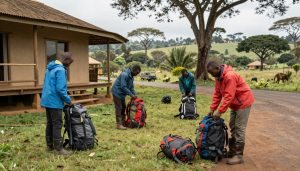
Pack lightweight, neutral-coloured clothing for game drives, a good pair of waterproof hiking boots for trekking, and layers for chilly mornings. A waterproof, lightweight jacket is essential as there can be rain showers even in dry months. Bring garden gloves for gorilla treks, binoculars, sunscreen, a hat, and insect repellent. A reusable water bottle will keep you hydrated during long game drives.
How Many Days Do You Need?
A 7–12 day safari is ideal for a full Big Five and gorilla experience. Popular combinations include a 10-day pairing of Murchison Falls with Kibale chimpanzee trekking and Bwindi gorilla trekking, or a 5-day Queen Elizabeth and Bwindi trip that combines big game with primate encounters.
Realistic Costs
Uganda is affordable day-to-day, but the big-ticket experiences come with serious price tags. Gorilla trekking permits are the most expensive single item and are non-negotiable. A typical three-day Murchison Falls safari from Entebbe, including transport, park fees, a guide, full board accommodation, and the boat cruise, runs from roughly $850 per person in mid-range lodges. Budget camps bring that down, while luxury tented camps push it above $1,700.
On a mid-range budget of $100 to $200 per day, you can hire a car and driver, stay in good lodges, and join guided treks or boat trips.
Building Your Ultimate Ugandan Safari Circuit
The most efficient Big Five route typically begins with a stop at Ziwa Rhino Sanctuary on the drive north from Entebbe, continues to Murchison Falls National Park for classic savanna game, then heads south to Queen Elizabeth National Park for lions, leopards, and the famous Kazinga Channel wildlife corridor.
From Queen Elizabeth, you can continue to Bwindi for gorilla trekking and Kibale for chimpanzee tracking — creating a seamless loop that covers the Big Five, the primates, and Uganda’s extraordinary birdlife in one journey.
A practical 9-day Big Five and gorilla itinerary:
-
Days 1–2: Ziwa Rhino Sanctuary and Murchison Falls National Park
-
Day 3: Transfer to Kibale Forest
-
Day 4: Chimpanzee tracking in Kibale
-
Days 5–6: Queen Elizabeth National Park (Ishasha tree-climbing lions and Kazinga Channel cruise)
-
Days 7–8: Bwindi Impenetrable National Park (gorilla trekking)
-
Day 9: Return to Entebbe
The Pearl of Africa Awaits
Uganda offers something no other African safari destination can match: the chance to track mountain gorillas through ancient rainforest in the morning and watch elephants gather at the Nile in the afternoon. The Big Five are here — you just have to know where to find them. And beyond those famous five lies a world of shoebills, golden monkeys, tree-climbing lions, and over 1,000 bird species waiting to be discovered.
The wild heart of Uganda is beating. All you have to do is answer the call.
Ready to plan your Ugandan safari? Contact TravelGiantUganda.com to start building your custom itinerary today.
