
Uganda’s Snakes: A Guide to the Country’s Most Misunderstood Reptiles
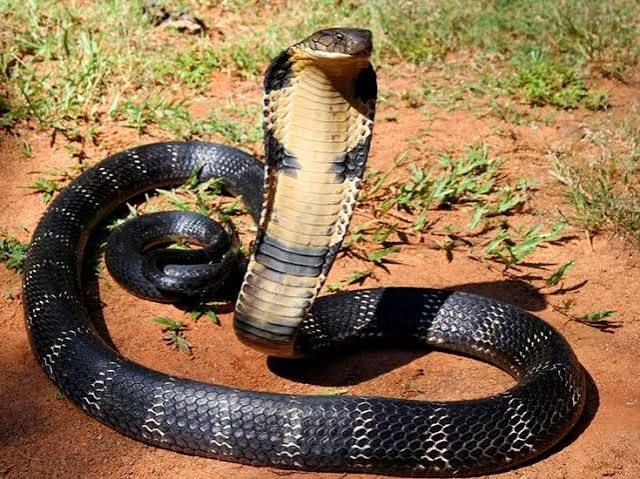
There is a moment on every Ugandan safari when a guide stops the vehicle, points at a shape in the grass, and watches the passengers’ faces change. Sometimes it is a lion. Sometimes it is an elephant. And sometimes it is a snake — and the reaction is entirely different. Uganda is home to an extraordinary diversity of reptiles, including 171 recorded snake species. Yet for most travellers, the word “snake” triggers a single, irrational response: fear. The reality is far more nuanced — and far less dangerous — than the myths suggest. Most Ugandan snakes are harmless. Most encounters are fleeting. And the few genuinely venomous species that exist are shy, secretive, and almost never encountered by visitors who follow basic precautions. This is the complete guide to Uganda’s snakes — what they are, which ones you should respect, how to stay safe, and why these misunderstood reptiles deserve far more curiosity than fear. Why Uganda Has So Many Snakes A Country of Remarkable Reptile Diversity Uganda’s snake diversity is a product of its geography. The country sits at the intersection of several major biogeographic zones — the Congo Basin rainforest, the Albertine Rift, the East African savannahs, and the Lake Victoria basin. This confluence creates an extraordinary variety of habitats, from montane forest and lowland rainforest to papyrus swamp and open grassland, each supporting its own community of reptiles. Of the 171 snake species recorded in Uganda, only a small percentage are venomous. The vast majority are harmless — colubrids, pythons, egg-eaters, house snakes, and a host of other species that pose no threat to humans whatsoever. The Harmless Majority Of the seventy-eight species figuring in the Uganda list, fifty-nine — approximately seventy-six per cent — are harmless, a term that embraces the non-venomous species, the giant constrictors, and the mildly poisonous back-fanged varieties. This is the single most important fact for any traveller to understand: the odds are overwhelmingly in your favour. If you see a snake in Uganda, it is statistically far more likely to be harmless than dangerous. Uganda’s Venomous Snakes: The Ones That Matter The Puff Adder (Bitis arietans) The puff adder is the most frequently encountered venomous snake in Uganda and the species responsible for the most snakebite fatalities in Africa. It is a stout, well-camouflaged viper that relies on its camouflage in savannahs and grasslands, sitting still rather than fleeing when approached — which is precisely why people accidentally step on it. The puff adder has an average length of around one metre and is strong and aggressive when threatened. It is found on the ground, in different parts of Uganda, including highly populated areas such as Kampala. It is very strong, but cannot lift its head from the ground. When it bites, it bites hard and low. Where you might encounter it: Savannah parks, grasslands, and even urban areas with suitable cover. The Gaboon Viper (Bitis gabonica) The Gaboon viper is the largest member of the genus Bitis and possesses the longest fangs of any snake — up to two inches. It is found in dense forests and rainforests of sub-Saharan Africa. Despite its formidable weapons, the Gaboon viper is slow and unaggressive. It rarely bites, but when it does, the effects can be disastrous because Gaboon vipers produce the largest quantities of poison of any poisonous snake and they do not release after a bite. Where you might encounter it: Dense forests, including Kibale, Bwindi, and Semuliki. The Black Mamba (Dendroaspis polylepis) The black mamba is one of Africa’s most feared snakes — and one of its most misunderstood. It is a large, agile, and extremely fast snake, capable of reaching speeds of up to 12 kilometres per hour. Adults average 2.5 metres and can reach 4.5 metres in length. Despite its reputation, the black mamba is shy and secretive by nature and will avoid confrontation whenever possible. It takes its name from the black colouring inside its mouth, not its skin, which is grey to olive. It is extremely venomous, with neurotoxic venom that attacks the central nervous system and affects cardio-pulmonary function. Where you might encounter it: Scrubland, savannah, and rocky areas. It is rare in Uganda and encounters are extremely uncommon. Jameson’s Mamba (Dendroaspis jamesoni) Jameson’s mamba is a slender, quick, green snake with an average length of 1.5 metres. It is arboreal, blending perfectly into green tree canopies. Unlike the vipers, its venom is primarily a rapid-acting neurotoxin that causes paralysis. It is an adaptable species that can be found in rainforests, woodlands, forest savanna, and even deforested areas and human development, including buildings, town parks, farmlands, and plantations. It is shy and quick, and encounters are rare. Where you might encounter it: Forests and forest edges, including Kibale, Bwindi, and Mabira. The Forest Cobra (Naja melanoleuca) The forest cobra — also called the brown forest cobra — is a large, dark-coloured cobra found in forested habitats across Uganda. It is venomous and can deliver a serious bite, but like all cobras, it is generally shy and will retreat if given the opportunity. Where you might encounter it: Forests and forest edges, particularly in western Uganda. The Egyptian Cobra (Naja haje) The Egyptian cobra — also called the asp — is a large, brown or olive-coloured cobra found in savannah and semi-arid habitats. Its venom is neurotoxic and can cause paralysis, droopy eyelids, trouble swallowing, and double vision within 15 to 30 minutes of a bite. Where you might encounter it: Savannah parks and dry areas. The Black-Necked Spitting Cobra (Naja nigricollis) The black-necked spitting cobra is venomous and capable of spitting venom into the eyes — a defence mechanism that can cause severe pain, swelling, and potential blindness if not treated promptly. Where you might encounter it: Savannah and grassland habitats. The Boomslang (Dispholidus typus) The boomslang is a rear-fanged snake with hemotoxic venom that causes severe swelling, bleeding, skin bruising, and may cause bleeding inside the body even days later. It is generally found in trees and shrubs and moves with great speed and agility. Despite its potent venom, the boomslang is shy and reluctant to bite, and its rear-fanged dentition makes venom delivery less efficient than in vipers or cobras. It is often confused with the green mamba, but can be distinguished by its short, blunt nose and large, prominent eyes with pear-shaped pupils. Where you might encounter it: Trees and shrubs in forested and wooded areas. Uganda’s Harmless Snakes: The Ones You’ll Actually See The African Rock Python (Python
The Red Colobus Monkey: An Endangered Albertine Rift Specialist

There is a monkey in Uganda’s forests that is more abundant than the chimpanzees, more acrobatic than the mangabeys, and more colourful than almost any other primate in the canopy. It leaps through the treetops with a grace that makes the forest look effortless, its rust-red crown and ashy-grey coat flashing against the green. And yet, it is dying — not from habitat loss alone, but from the silent, relentless predation of its own primate cousins. The Ugandan red colobus (Piliocolobus tephrosceles) — also called the ashy red colobus — is one of the most endangered primates in Africa. It is a leaf-eating specialist, an acrobat of the canopy, and an ecological keystone species of the Albertine Rift. But in Kibale National Park, its population has plummeted by 89% in just over three decades, and the primary cause is predation by chimpanzees — the first documented case of one nonhuman primate causing the population decline of another. This is the complete guide to the red colobus monkey — what it is, how it lives, why it is disappearing, and where you can still see it in Uganda. What Is a Red Colobus Monkey? A Species in Taxonomic Dispute The Ugandan red colobus was recognised as a distinct species in 2001, though debate over its classification continues. Many authorities consider it a subspecies of the Tana River red colobus (P. rufomitratus), while others treat it as a full species. What is not in dispute is its uniqueness: the Ugandan red colobus is found in only five locations across Uganda and Tanzania, and its largest remaining population is in Kibale National Park. The species was first described by D. G. Elliot in 1907, based on a specimen collected at the Ruahara River on the east side of Mount Rwenzori — the very heart of the Albertine Rift. Physical Description: The Ashy Acrobat The Ugandan red colobus is a medium-sized monkey with a striking appearance. Head-body length ranges from 45.5 to 67 centimetres in males and 49 to 58 centimetres in females, with a tail adding another 62 to 72 centimetres. Males are significantly heavier, weighing 8 to 11.4 kilograms, while females are considerably smaller. The coat is glossy black above, including the tail, and light grey to white below. The forearms and legs are a dull light grey, sometimes with tan or brown tones, and the haunches and upper thighs often have redder tones. The crown is rusty-red with a marked, dark reddish-brown forehead crest bordered by a black stripe on the temples. The face is slaty grey, outlined with grey whiskers, and there is a prominent tuft at the base of each ear. Like all colobus monkeys, the red colobus has reduced thumbs — hence the name “colobus,” from the Greek word for “maimed.” This adaptation allows for smoother, hook-like grips on branches, making the monkey a more efficient climber and swinger. The species is extremely sexually dimorphic, with males having a more massive head, larger canines, and longer cheek whiskers than females. The Digestive Specialist The red colobus is a folivore — a leaf-eater. Its diet consists mainly of young leaves, buds, unripe fruits, and seeds. To digest fibrous plant material that few other primates can handle, it has evolved a multi-chambered, sacculated stomach that functions much like a cow’s — fermenting tough plant material to extract nutrients. This adaptation makes the red colobus a critical player in forest ecology, helping to regulate tree growth and disperse seeds. Behaviour and Social Structure Life in the Troops Red colobus monkeys live in large, multi-male, multi-female troops that can number from 5 to 50 individuals, sometimes even more. In Kibale’s undisturbed forests, densities can reach 6 groups of 50 individuals per square kilometre. Group structure typically consists of a single male, a small number of females, and their young, though larger troops may contain multiple males. These subgroups often break away from the main troop to forage, rejoining later. Diet and Activity Red colobus are diurnal, active during the day, with peaks of activity in the morning and evening and a period of rest during the middle of the day. They are arboreal and spend the majority of their time in the treetops, where they forage for leaves and fruit. They follow routines of movement and have preferred sites for sunbathing or sleeping. Reproduction Births take place throughout the year, with a single offspring born after a gestation period of approximately five months. The infant is carried on its mother’s belly through the trees for up to three months. Females reach sexual maturity at around three to four years, and the interbirth interval is typically two to three years. The Chimpanzee Predation Problem The 89% Decline The most urgent threat to the Ugandan red colobus is not habitat loss or hunting — it is predation by chimpanzees. A landmark study spanning 32.9 years at Ngogo, in Kibale National Park, documented an 89% decline in the red colobus population, correlated with a sharp increase in encounter rates with chimpanzee parties. The study concluded that the red colobus decline was caused primarily by chimpanzee predation — the first documented case of predation by one nonhuman primate causing the population decline of another. Why Kibale? Kibale National Park is home to over 1,500 chimpanzees — the largest known population in East Africa. The Ngogo chimpanzee community, in particular, is the largest ever recorded, and its predation on red colobus is unusually intense. Chimpanzee predation may account for up to 12% of annual red colobus deaths in the park. The red colobus is extremely vulnerable to predation: it is noisy, conspicuous, and relatively slow, making it an easy target for chimpanzees. Unlike other colobus species, which have evolved more cryptic behaviour, the red colobus has not adapted to the specific predation pressure of chimpanzees. Other Threats While chimpanzee predation is the primary driver of decline in Kibale, the species faces additional threats across its range: Habitat loss and degradation from agricultural encroachment, logging, and human settlement. Agricultural encroachment already affects 18% of the Kibale Forest Reserve. Logging reduces population densities by as much as 70%. Human hunting for bushmeat, particularly in areas where the species occurs outside protected areas. Forest fragmentation, which isolates populations and reduces genetic diversity. Many groups are cut off from one another, limiting genetic exchange and increasing vulnerability to local extinction. Where to See Red Colobus Monkeys in Uganda Despite
The Grey-Cheeked Mangabey: The Forest’s Forgotten Primate
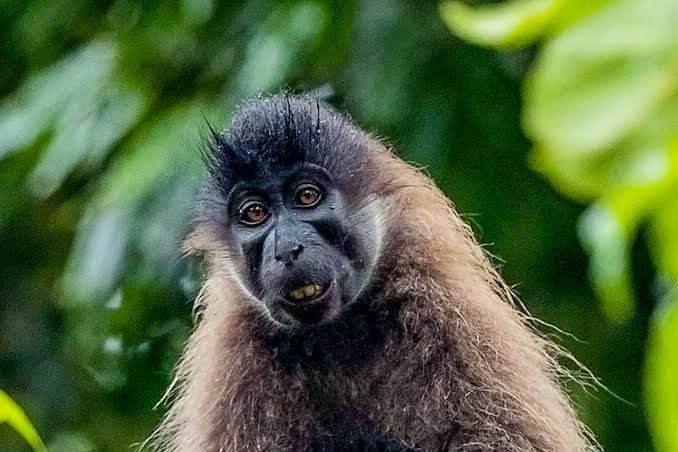
There is a monkey in Uganda’s forests that most travellers hear long before they see. Its call — a distinctive “whoop-gobble” that carries over 600 metres through the canopy — is one of the defining sounds of Kibale, Bugoma, and Mabira. Yet when visitors scan the treetops for primates, their eyes skip past it, searching for chimpanzees, colobus, or the flash of a red-tailed monkey. The grey-cheeked mangabey sits in the middle of the forest, in the middle of the canopy, and in the middle of the story — and yet it remains the forest’s forgotten primate. The grey-cheeked mangabey (Lophocebus albigena) is a large, dark, shaggy monkey found across the forests of Central and East Africa, with Uganda at the very eastern edge of its range. It is a frugivore, a seed disperser, a vocal communicator, and — in Uganda — a subspecies so distinct that some scientists consider it a separate species entirely. It is classified as Vulnerable on the IUCN Red List, and its future depends on the survival of the forests it calls home. This is the complete guide to the grey-cheeked mangabey — what it is, how it lives, where to see it in Uganda, and why this overlooked primate deserves far more attention than it receives. What Is a Grey-Cheeked Mangabey? A Mangabey by Name, a Baboon by Nature The grey-cheeked mangabey — also called the white-cheeked mangabey or cloaked mangabey — is a member of the Cercopithecidae family, the Old World monkeys. Its scientific name, Lophocebus albigena, derives from the Greek lophos (crest) and kebos (monkey), a reference to the distinctive crest of hair on its crown. Despite the common name “mangabey,” the grey-cheeked mangabey is more closely related to baboons than to the true mangabeys of the genus Cercocebus. Molecular studies have shown that it belongs to the Papionini tribe — the same group that includes baboons, mandrills, and macaques — and is only distantly related to the white-eyelid mangabeys it resembles. It is, in effect, a baboon that took to the trees. The Uganda Mangabey: A Subspecies in Dispute The population of grey-cheeked mangabeys found in Uganda and the adjacent Minziro Forest Reserve in Tanzania is classified as a distinct subspecies — the Uganda mangabey (Lophocebus albigena ugandae). The Uganda mangabey is significantly smaller than other grey-cheeked mangabey subspecies, with a shorter skull and smaller face. It is also less sexually dimorphic, meaning males and females are more similar in size than in other populations. The taxonomic status of the Uganda mangabey is a matter of ongoing scientific debate. In 2007, primatologist Colin Groves elevated the Ugandan population to full species status, naming it Lophocebus ugandae. This classification is not universally accepted; the IUCN continues to list it as a subspecies of L. albigena. Regardless of the taxonomic debate, the Uganda mangabey is recognised as a Vulnerable subspecies by the IUCN, assessed most recently in 2018. Physical Description: A Dark, Shaggy Forest Dweller Size and Build The grey-cheeked mangabey is a large, robust monkey with a build that reflects its baboon ancestry. Head-body length ranges from 45 to 73 centimetres in males and 50 to 56 centimetres in females, with males being the larger sex. The tail is long — 73 to 100 centimetres in males and 67 to 80 centimetres in females — and is used for balance as the animal moves through the canopy. The Uganda mangabey is notably smaller, with males measuring 54 to 70 centimetres and females 42 to 61 centimetres in head-body length, with tails of 65 to 75 centimetres (males) and 55 to 65 centimetres (females). Coat and Appearance The grey-cheeked mangabey has thick, shaggy fur that is almost black in its forest home, with a slightly rufous or golden mane around the neck. Its most distinctive feature is its gargoyle-like face, with thinly haired grey or white cheeks that give the species its common name. The face is dark, and the cheeks contrast sharply against the animal’s dark body. The crown of the head bears a distinctive crest of hair — a feature that gives the genus Lophocebus its name. The face itself is relatively bare, with dark skin and large, expressive eyes adapted for life in the forest canopy. Sexual Dimorphism The grey-cheeked mangabey exhibits moderate sexual dimorphism, with males being larger and more heavily built than females. The Uganda mangabey is notably less dimorphic than other subspecies, with males and females being closer in size. Behaviour and Social Structure A Multi-Male, Multi-Female Society Grey-cheeked mangabeys live in multi-male, multi-female social groups — a social system that is typical of many primates but unusual among the more despotic, single-male groups found in some guenons and colobus monkeys. Group size typically ranges from 10 to 20 individuals, though groups of up to 35 have been recorded. Within the group, male rank is an important factor in social interactions, and males compete for access to females while also engaging in sneaky copulations. Males also transfer between groups, with most adult males characterised by repeated intergroup transfers. Male Dispersal and Reproductive Tactics Unlike many primates, where females disperse and males remain in their natal groups, grey-cheeked mangabeys exhibit male-biased dispersal. Young males leave their natal groups and transfer between social groups in search of mating opportunities. The availability of estrous females is an important proximate cause for dispersal in male grey-cheeked mangabeys. This dispersal pattern means that group composition is constantly shifting, with immigrant males moving between groups and competing for rank and mating access. The arrival of immigrant males is associated with higher birth rates in the groups they join. Female Reproductive Patterns Female grey-cheeked mangabeys exhibit rank- and age-specific reproductive patterns. High-ranking females mature earlier, have their first births earlier, and exhibit significantly slower reproductive aging than low-ranking females. Reproduction is aseasonal and does not correlate with rainfall, but births correlate positively with the abundance of fig fruits (Ficus spp.) — a key food source for the species. The interbirth interval in Kibale Forest is approximately 33 months, with a mean ovarian cycle length of 47 days and a gestation period of approximately 186 days. Vocal Communication: The Whoop-Gobble and Beyond The grey-cheeked mangabey has one of the most complex vocal repertoires of any African primate. Research in Uganda’s Bugoma Central Forest Reserve identified four acoustically and contextually distinct call types: chuckles, grunts, screams, and whoop-gobbles. Grunts are the most commonly recorded call type, primarily associated with feeding or allogrooming. Chuckles are soft, low-intensity calls used in close-range social interactions. Screams are loud, high-intensity calls associated with aggression or alarm. The whoop-gobble is the most distinctive vocalisation
Uganda’s Monkeys: A Complete Guide to the Country’s 13 Species
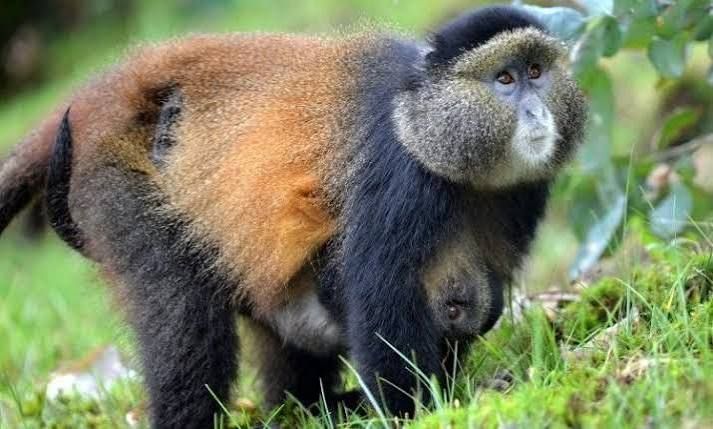
There is a country in East Africa where you can see more primate species in a single forest than in almost any other place on Earth. It is home to the world’s largest population of mountain gorillas, the most reliable chimpanzee tracking on the continent, and a supporting cast of monkeys so diverse and abundant that a single walk through the right forest can produce eight or more species in a morning. That country is Uganda. And the forest is Kibale. Uganda is home to 13 diurnal primate species, plus six nocturnal species, making it one of Africa’s top primate destinations. Kibale National Park alone — the “Primate Capital of the World” — hosts all 13 of these species within its 795 square kilometres of rainforest. From the massive mountain gorilla to the tiny Prince Demidoff’s bush baby, Uganda’s primates represent one of the most complete primate assemblages on the continent. This is the complete guide to Uganda’s 13 monkey species — what they are, how to identify them, where to see them, and why the country has become the continent’s premier primate-watching destination. Why Uganda Is the Primate Capital of Africa Uganda’s primate diversity is not accidental. The country sits at the intersection of several major biogeographic zones — the Congo Basin rainforest, the Albertine Rift, the East African savannahs, and the Lake Victoria basin. This confluence creates a remarkable variety of habitats, from montane forest and lowland rainforest to papyrus swamp and open woodland, each supporting its own primate community. The result is a primate checklist that includes great apes (mountain gorillas and chimpanzees), colobus monkeys (black-and-white and red colobus), guenons (red-tailed, blue, L’Hoest’s, De Brazza’s, Patas, and Vervet), mangabeys (grey-cheeked), and baboons (olive). The nocturnal species include pottos, bush babies, and galagos. For travellers, this means that a well-planned Uganda itinerary can deliver an extraordinary primate experience — from gorilla trekking in Bwindi to chimpanzee tracking in Kibale, with a supporting cast of monkeys that most visitors never even knew existed. The 13 Monkey Species of Uganda 1. Chimpanzee (Pan troglodytes) Conservation Status: Endangered The chimpanzee is Uganda’s most famous primate after the mountain gorilla. These great apes share approximately 98% of their DNA with humans, and they are capable of tool use, complex social behaviour, and vocal communication that includes laughter, hugs, and the famous “pant-hoot” call. Uganda’s chimpanzee population is concentrated in Kibale National Park, which hosts over 1,500 individuals — the highest concentration of chimpanzees in East Africa. Other populations occur in Budongo Forest, Kalinzu Forest, Kyambura Gorge, and Bwindi Impenetrable National Park, where a 2025 census confirmed 426 chimpanzees sharing the forest with mountain gorillas. Where to see them: Kibale Forest (chimpanzee tracking and habituation), Budongo Forest, Kalinzu Forest, Kyambura Gorge, Bwindi. 2. Ugandan Red Colobus (Piliocolobus tephrosceles) Conservation Status: Endangered The Ugandan red colobus is one of the most threatened monkeys in Uganda. It is a large, arboreal species with a reddish-brown coat, a dark face, and a long, tufted tail. Males weigh up to 10.5 kilograms, while females weigh around 7 kilograms. Red colobus are specialist leaf-eaters, with a diet that includes leaves, seeds, and unripe fruit from dozens of tree species. They are highly sensitive to habitat disturbance and are among the first species to disappear when forests are degraded. In Kibale, they are a key prey species for chimpanzees, and their populations have declined significantly due to chimpanzee predation. Where to see them: Kibale National Park (common in the canopy), Queen Elizabeth National Park. 3. Black-and-White Colobus (Colobus guereza) Conservation Status: Least Concern The black-and-white colobus is one of Uganda’s most recognisable and frequently spotted monkeys. The name “colobus” comes from the Greek word for “mutilated,” a reference to the almost nonexistent thumb — a feature shared by all colobus monkeys. They are born with white fur and a pink face, and as they mature they develop a full black body with a white beard, back, and shoulders. Black-and-white colobus are leaf-eaters, with leaves making up the majority of their diet, supplemented by flowers, fruits, and seeds. They live in small groups of around nine individuals, typically with a single male, several females, and their young. Where to see them: Kibale, Queen Elizabeth, Bwindi, Budongo, and almost every forested park in Uganda. 4. Olive Baboon (Papio anubis) Conservation Status: Least Concern The olive baboon is the most widespread and adaptable of Uganda’s monkeys. It is a large, dog-faced primate with a greenish-olive coat, a long muzzle, and prominent canine teeth. Olive baboons live in large groups — sometimes numbering over 150 individuals — and are frequently seen along roadsides, where they wait to ambush cars in search of food. They are omnivorous, eating grasses, roots, fruits, seeds, insects, and occasionally small mammals. Their social organisation is complex, with strong dominance hierarchies and intricate social bonds. Where to see them: Kibale, Queen Elizabeth, Murchison Falls, Bwindi, and almost everywhere in Uganda. 5. Red-Tailed Monkey (Cercopithecus ascanius) Conservation Status: Least Concern The red-tailed monkey — also known as Schmidt’s guenon or the black-cheeked white-nosed monkey — is one of Uganda’s most colourful and vocal monkeys. It has a reddish-brown tail, a white nose patch, and large cheek pouches that it uses to store food. Red-tailed monkeys live in social groups of around 35 members, typically with a single adult male and multiple females. They are frugivorous, feeding primarily on fruit, but also eating leaves, flowers, insects, and tree gum. They are known to associate with blue monkeys and red colobus in mixed-species groups. Where to see them: Kibale, Queen Elizabeth, Budongo, and most forested parks. 6. Blue Monkey (Cercopithecus mitis) Conservation Status: Least Concern Despite its name, the blue monkey is not actually blue — its coat is dark grey, but the way light reflects off its fur creates a bluish impression. Blue monkeys are shy and agile, living in one-male social groups of 13 to 27 individuals. They are insectivorous as well as frugivorous, spending up to 50% of their time feeding on invertebrates. They are frequently seen in the company of red-tailed monkeys, forming mixed-species associations that likely function in predator avoidance. Where to see them: Kibale, Queen Elizabeth, Bwindi, and most forested parks. 7. L’Hoest’s Monkey (Allochrocebus lhoesti) Conservation Status: Near Threatened L’Hoest’s monkey is one of Uganda’s most distinctive and elusive guenons. It has a short, dark grey coat, a striking white beard, and a saddle pattern on its back. It is the most terrestrial of Uganda’s monkeys, spending much of its time in
The Tree Hyrax: The Animal That Screams at Night
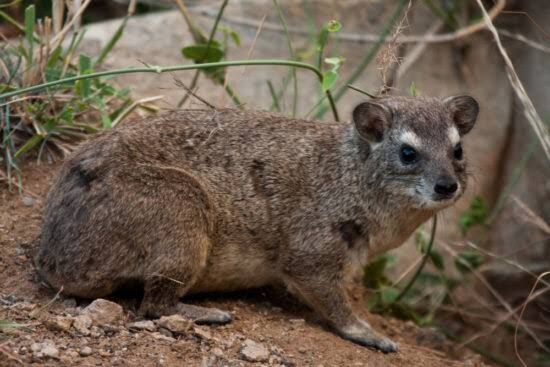
There is a sound in Uganda’s forests that stops travellers in their tracks. It begins as a low, rhythmic bark and builds into a series of escalating shrieks — blood-curdling, almost human-like, and loud enough to carry for hundreds of metres through the canopy. First-time visitors often assume it is a monkey, a bird, or something far more sinister. Guides recognise it instantly. It is the call of the tree hyrax — a small, secretive mammal that most people never see, but almost everyone hears. The tree hyrax is one of Africa’s most unusual creatures. It looks like a guinea pig, climbs like a monkey, and is — astonishingly — more closely related to elephants than to any rodent. It is nocturnal, solitary, and almost entirely arboreal, spending its days hidden in tree hollows and emerging only after dark to feed and call. In Uganda, it is found in the montane forests of the west, where its scream is one of the defining sounds of the night. This is the complete guide to the tree hyrax — what it is, why it screams, where to hear it in Uganda, and why this unassuming mammal deserves a place on your wildlife-watching list. What Is a Tree Hyrax? The Elephant’s Smallest Relative The tree hyrax (Dendrohyrax) is a small, herbivorous mammal belonging to the order Hyracoidea. It is a member of the family Procaviidae, which also includes the rock hyrax and the bush hyrax. But the tree hyrax is the odd one out — it is the only hyrax that lives primarily in trees, and it is nocturnal, while its rock-dwelling relatives are active during the day. Hyraxes, despite their rabbit-like or rodent-like appearance, are afrotherians — members of an ancient group of African mammals that also includes elephants, manatees, and aardvarks. They share anatomical and genetic traits with elephants, including similarities in the structure of their feet, teeth development, and skeletal formation. In the simplest terms: the tree hyrax is a miniature, forest-dwelling cousin of the elephant, separated by tens of millions of years of evolution. The Name The name “hyrax” comes from the Greek word hyrak meaning “shrew.” The genus name Dendrohyrax combines the Greek dendron (tree) and hyrax — literally “tree shrew,” though the animal is not a shrew at all. The common name “tree hyrax” distinguishes it from the rock hyrax, which lives among boulders and rocky outcrops. Physical Characteristics The tree hyrax is a small, stout mammal with a body shaped like a large guinea pig. Adults weigh between 1.8 and 5.5 kilograms and measure 44 to 60 centimetres in length, with a short, bushy tail. Its fur is thick, coarse, and greyish-brown to reddish-brown, providing excellent camouflage against tree bark and foliage. Its most distinctive physical features are its large, expressive eyes — adapted for night vision — and its specialised feet. The feet have rubbery, moist pads that provide traction on smooth bark and allow the hyrax to grip branches with remarkable security. Unlike the rock hyrax, whose feet are adapted for rocky terrain, the tree hyrax’s feet are designed for climbing. The hyrax has short limbs, a rounded face, and small, rounded ears. Its fur is lighter near the tips, and the ears often have a fringe of white hair. The Elephant Connection The tree hyrax’s relationship to the elephant is one of the most surprising facts in African wildlife biology. Despite its small size, the hyrax shares a common ancestor with elephants, manatees, and aardvarks — all members of the ancient clade Afrotheria. This lineage diverged tens of millions of years ago, with one branch giving rise to the largest land mammals on Earth and another producing the small, agile, forest-dwelling hyrax. The connection is visible in subtle anatomical details: the structure of the hyrax’s feet, the development of its teeth, and certain features of its skeleton all echo its giant relatives. It is a living reminder that evolution does not always move in the direction of size. The Famous Scream: Why Tree Hyraxes Call at Night The Sound The tree hyrax’s most famous feature is its extraordinary call — a series of escalating shrieks, screams, and barks that echo through the forest at night. The call has been described as “blood-curdling” and can sound startlingly like a human scream. It is one of the loudest calls of any African mammal, capable of reaching over 100 decibels. The call typically begins with a series of low, rhythmic barks, then builds into a crescendo of escalating shrieks before tapering off into a series of grunts. Each tree hyrax species has its own unique call pattern — a fact that has helped scientists identify new species, including the Dendrohyrax interfluvialis discovered in Nigeria in 2021, whose “barking” call was distinct from the shrieking calls of neighbouring populations. Why They Call The primary function of the tree hyrax’s scream is territorial. The calls are produced mainly by males, and they serve to advertise presence, establish territory boundaries, and communicate with neighbours. Because tree hyraxes are solitary and live at low densities in dense forest, vocal communication is essential for maintaining spacing between individuals. In the Taita Hills of Kenya, researchers recorded up to 2,000 calls from a single forest over a period of study, with calling most active during the dry season months. The calls are most frequent immediately after dusk and before dawn, when hyraxes are most active. The call also serves as a form of social communication. Automated acoustic recorders placed in forests inhabited by tree hyraxes collected diverse information on their communication, revealing that the animals use a complex system of whistles, barks, and grunts to locate each other and maintain social bonds. The Human Response For visitors unfamiliar with the sound, the first tree hyrax scream of the night can be genuinely startling. It is loud, sudden, and eerily human-like — a sound that has inspired local folklore and superstition across Africa. In Ghana, the Akan people call the tree hyrax “Oweataa” — a name that echoes the sound of its call. For guides and researchers, the call is a welcome signal — a reminder that the forest is alive, and that one of its most secretive residents is going about
The Pangolin: The World’s Most Trafficked Animal and Uganda’s Fight to Save It
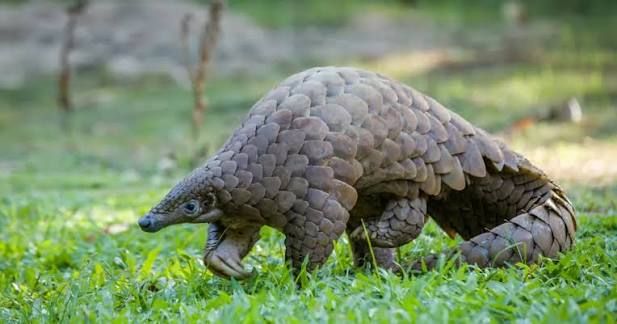
There is an animal in Uganda that is hunted not for its horns, not for its tusks, and not for its meat alone — but for its scales. It is a creature so ancient, so peculiar, and so quietly beneficial to the ecosystems it inhabits that its loss would ripple through forests and savannas in ways that scientists are only beginning to understand. It is the pangolin — the world’s most trafficked mammal — and Uganda sits at the centre of a global battle to save it. Pangolins are not charismatic megafauna. They do not roar, they do not display, and they do not feature in safari brochures. They are nocturnal, solitary, and almost entirely silent. They roll into a ball when threatened, relying on their armoured scales for protection. And that very defence — the trait that has kept them safe for millions of years — is precisely what has made them a target for the illegal wildlife trade. This is the complete guide to the pangolin — what it is, why it is trafficked, what Uganda is doing to save it, and how travellers can become part of the solution. What Is a Pangolin? A Mammal Unlike Any Other The pangolin is one of the strangest mammals on Earth. It is the only mammal covered in scales — large, overlapping, keratinous plates that cover its body from head to tail. Those scales are made of the same material as human fingernails and rhino horn, and they serve as armour against predators. There are eight species of pangolin in the world — four in Asia and four in Africa. All eight are listed under Appendix I of CITES, which prohibits international commercial trade. The four Asian species are classified as Critically Endangered by the IUCN, while the four African species are listed as Vulnerable. Pangolins are insectivores — they eat ants and termites, and almost nothing else. They have no teeth, and they use their long, sticky tongues — which can be longer than their bodies — to lap up insects from mounds and nests. They are solitary and nocturnal, active mostly at night. Physical Characteristics Pangolins range in size from a large housecat to more than four feet long (about 1.2 metres) and weigh between 4 and 72 pounds (1.8 to 33 kilograms) depending on the species. They have long snouts, powerful front claws for digging into ant and termite mounds, and poor vision — they rely on an excellent sense of smell to find food. When threatened, a pangolin rolls into a tight ball, presenting only its armoured scales to a predator. It can also release a stinky fluid from a gland at the base of its tail as a defence mechanism. The roll-into-a-ball response is so effective against natural predators that it has kept pangolins alive for millions of years. Against humans, it is useless — a rolled-up pangolin is simply easier to pick up and carry away. The Name The name “pangolin” comes from the Malay word “pengguling,” meaning “one who rolls up” — a reference to the animal’s defensive posture. In Uganda, pangolins are known by various local names depending on the language and region. The Pangolins of Uganda Three — Possibly Four — Species Uganda is home to three of the four African pangolin species, and some sources suggest four may be present. The Giant Pangolin (Smutsia gigantea) is the largest of all eight pangolin species. It is a terrestrial species, found in forest and savanna habitats, and it is endemic to Africa — distributed discontinuously across 18 range states from Senegal to Uganda and Tanzania. In Uganda, giant pangolins have been recorded in Murchison Falls National Park and other protected areas. The White-Bellied Pangolin (Phataginus tricuspis) — also known as the Tree Climbing Pangolin — is smaller and more arboreal. It is found in forested habitats and is particularly affected by canopy loss and declining forest connectivity. Temminck’s Pangolin (Smutsia temminckii) is a ground pangolin found in savanna and grassland habitats. It is classified as Vulnerable and is distributed across eastern and southern Africa, including Uganda. The Black-Bellied Pangolin (Phataginus tetradactyla) is primarily arboreal and is found in forest habitats. It is also affected by habitat fragmentation and canopy loss. Where Pangolins Live in Uganda Pangolins are widely distributed across Uganda’s forested and savanna landscapes. The State of Wildlife Resources in Uganda Report 2026 notes that pangolins occur in many forested and savanna grasslands across the country. Key sites include: Bwindi Impenetrable National Park — The Buhoma sector is a prime area for pangolin conservation and release. A Pangolin Rescue Center operates just 6 kilometres outside Buhoma. Murchison Falls National Park — Giant pangolins have been recorded in the Ayago area, and rescued pangolins are frequently transported to the park’s wildlife centre for veterinary care. Kibale National Park — Tree pangolins have been rescued and released into Kibale after being confiscated from traffickers. Queen Elizabeth National Park — Pangolins are present in the park’s forests and savannas. Kidepo Valley National Park — Pangolins are found in the park’s savanna and woodland habitats. Ziwa Rhino Sanctuary — Pangolins have been recorded in the sanctuary’s woodland areas. Why Pangolins Are Trafficked The Demand for Scales Pangolin scales are made of keratin — the same material as human fingernails, hair, and rhino horn. They have no proven medicinal value. Yet they are highly valued in traditional Asian medicine, where they are used to treat ailments ranging from lactation difficulties to arthritis. The scales are typically dried and ground into powder, which may be turned into pills. Pangolin meat is also considered a delicacy among some wealthy consumers in China and Vietnam. The Scale of the Trade The numbers are staggering. Estimates suggest more than 1 million pangolins have been captured from the wild over the past decade. Between 2010 and 2015 alone, authorities recorded 1,270 seizures across 67 countries, involving an estimated 120 tonnes of pangolin body parts. A 2026 CITES report identified at least 74 countries involved in illegal pangolin trade through 178 unique trade routes. The most heavily used route — Nigeria to Viet Nam — saw an estimated 82,215 whole pangolin equivalents detected. The trade is highly dynamic. A striking 67% of routes carrying more than 1,000 whole pangolin equivalents were used only once, suggesting traffickers frequently change routes to avoid detection. Uganda’s Role: Source and Transit Uganda functions as both a source and transit country within regional and global trafficking networks. Over the past decade, Ugandan
The Aardvark: Uganda’s Strangest Nocturnal Mammal

There is an animal in Uganda that looks like it was assembled from spare parts. It has the snout of a pig, the ears of a rabbit, the tail of a kangaroo, and the claws of a mole. It eats nothing but ants and termites. It lives almost entirely in darkness. It is so secretive that most Ugandans have never seen one, and so peculiar that scientists have given it an entire order of mammals all to itself. The aardvark (Orycteropus afer) is one of Africa’s most bizarre and least-understood creatures. It is the only living member of the order Tubulidentata — a lineage so ancient and so distinct that it has no close living relatives. It is a nocturnal, solitary, insect-eating mammal that spends its days in burrows it digs itself, emerging only at night to hunt for ants and termites. In Uganda, it is found in the savanna parks of the south and west, where it lives a life so secret that even researchers struggle to study it. This is the complete guide to Uganda’s strangest nocturnal mammal — what it is, how it lives, where to find it, and why it deserves a place on your wildlife-watching list. What Is an Aardvark? A Mammal With No Close Relatives The aardvark is one of the most taxonomically isolated mammals in the world. It is the only living species in the order Tubulidentata, and its family, Orycteropodidae, contains no other surviving members. Its closest living relatives are elephant shrews, golden moles, and tenrecs — small, insect-eating mammals found in Africa and Madagascar — but even these relationships are distant and debated. The aardvark’s evolutionary lineage stretches back over 60 million years, to a time shortly after the dinosaurs went extinct. It is, in every sense, a living fossil. The Name “Aardvark” is an Afrikaans word meaning “earth pig” — a reference to the animal’s pig-like snout and its habit of digging. In Uganda, it is known by various local names depending on the region and language. Physical Characteristics The aardvark is unmistakable once you know what you are looking for. The head. The aardvark has a long, pig-like snout with a flat, disc-shaped nose that houses an extraordinary sense of smell. Its long, rabbit-like ears can be folded back and closed when it is digging, protecting them from dirt and insects. Its small, weak eyes are adapted for darkness, and its eyesight is poor — it relies almost entirely on smell and hearing. The body. The aardvark has a stout, arched body covered in sparse, coarse hair that ranges from pale yellow to dull grey-brown. Adults typically weigh between 40 and 65 kilograms, with a head-and-body length of 100 to 130 centimetres and a tail of 44 to 71 centimetres. The teeth. The aardvark has one of the most unusual dentitions of any mammal. Its teeth are tubular, peg-like structures with no enamel that grow continuously throughout its life. They are not used for chewing — instead, the aardvark uses its powerful stomach muscles to grind up the ants and termites it swallows whole. This unique tooth structure is what gives the order Tubulidentata its name — “tube-toothed.” The claws. The aardvark has four powerful, spoon-shaped claws on each front foot and five on each hind foot. These claws are its primary tools for digging — both for excavating burrows and for breaking into termite mounds. They are so effective that the aardvark can dig a one-metre-deep burrow in just a few minutes. The tongue. The aardvark’s most specialised feature is its long, sticky, worm-like tongue, which can extend up to 30 centimetres from its mouth. The tongue is coated in sticky saliva that traps ants and termites, and it is inserted directly into termite mounds and ant nests to collect prey. The Name The name “aardvark” comes from the Afrikaans word meaning “earth pig” — a reference to the animal’s pig-like snout and its habit of digging. In Uganda, it is known by various local names depending on the region and language. Behaviour and Lifestyle Nocturnal and Solitary The aardvark is strictly nocturnal. It emerges from its burrow after sunset and spends the night foraging for ants and termites, returning to its burrow before dawn. It is solitary, and adults typically live alone except when mating or raising young. The aardvark’s nocturnal habits are one of the main reasons it is so rarely seen. It spends the entire day underground, in a burrow it has dug itself, and only emerges when it is dark enough to avoid predators and the heat of the day. The Burrow The aardvark is a master excavator. It digs burrows up to three metres deep and ten metres long, using its powerful front claws to break into the soil and its hind feet to push the loosened earth out behind it. A single aardvark may dig several burrows within its home range, moving between them as food sources change. These burrows are not just shelters. They are ecosystem engineering. Abandoned aardvark burrows are used by a wide range of other animals — including warthogs, porcupines, mongooses, hyenas, owls, and even snakes. The aardvark is, in this sense, one of Africa’s most important keystone species. Diet: An Ant and Termite Specialist The aardvark is a myrmecophage — an animal that specialises in eating ants and termites. Its diet consists almost entirely of ants, termites, and the occasional other insect. It can consume up to 50,000 termites in a single night. The aardvark does not destroy termite mounds the way some other insectivores do. Instead, it breaks into the mound, inserts its long, sticky tongue, and withdraws it coated in insects. It then swallows them whole, and its powerful stomach muscles grind them up. The aardvark is also capable of eating ants that other insectivores avoid — including species that produce formic acid or possess painful stings. Its thick skin and specialised digestive system allow it to handle prey that would deter most predators. Predators The aardvark’s primary predators are lions, leopards, cheetahs, spotted hyenas, and African wild dogs. Its main defence is its incredible digging speed — when threatened, it can excavate a bolt-hole in seconds and escape underground. If caught, it can strike out with its powerful claws and can bite with surprising force. Reproduction Aardvarks are solitary and mostly monogamous. After a gestation period of
The Giant Forest Hog: Uganda’s Elusive Giant
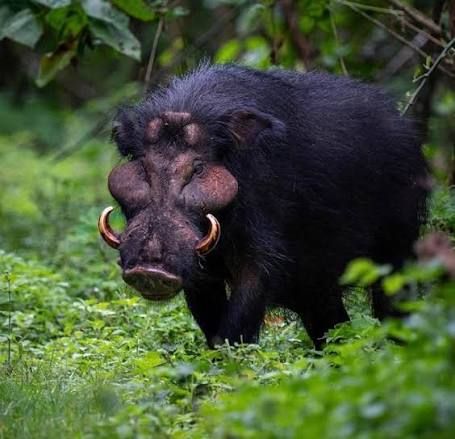
There is a creature in Uganda’s forests that most safari-goers never see — not because it is rare, but because it has spent millions of years perfecting the art of invisibility. It is the largest wild pig on Earth, a 275-kilogram animal with tusks up to 35 centimetres long, a coal-black coat, and a face marked by enormous, swollen glands that give it a permanent scowl. It moves through the dense undergrowth with a silence that belies its bulk. And it was not even known to Western science until 1904 — one of the last large African mammals to be formally described. The giant forest hog (Hylochoerus meinertzhageni) is the largest and most elusive member of the pig family. In Uganda, it is found in the montane forests of the west — Bwindi, Kibale, Mgahinga, Mount Elgon, and the Rwenzori foothills — where it survives in scattered populations that represent some of the last strongholds of the eastern subspecies in East Africa. It is classified as Least Concern globally, but experts are calling for its status to be raised to Near Threatened, with the eastern subspecies recommended for Vulnerable status due to severe hunting pressure. This is the complete guide to Uganda’s elusive giant — what it is, how it lives, where to see it, and why it deserves a place on your wildlife-watching list. What Is a Giant Forest Hog? The Largest Wild Pig on Earth The giant forest hog is the largest member of the pig family anywhere on Earth. A fully grown male can stand 75 to 110 centimetres at the shoulder and weigh between 140 and 275 kilograms — heavier than an adult lion. Females are smaller, weighing 100 to 200 kilograms, but they are still formidable animals. The species was named after Richard Meinertzhagen, the British officer and naturalist who collected the first scientific specimens in Kenya in 1904. It is the sole member of its genus, Hylochoerus, making it as taxonomically distinct among pigs as the shoebill is among birds. Three subspecies are provisionally recognised: H. m. ivoriensis in West Africa, H. m. rimator in Central Africa, and H. m. meinertzhageni in East Africa — the subspecies found in Uganda and the one that grows truly giant. Physical Characteristics The giant forest hog is unmistakable once you know what to look for. The coat. The hog’s skin is a slaty-grey, densely covered with coarse dark brown or black hair that becomes sparser with age. Adults are essentially coal-black, with long, stout bristles of 15 to 20 centimetres and a light erectile mane on the neck. The head. The hog’s most distinctive feature is its massive head, which is disproportionately large for its body. The face bears white to yellowish “whiskers” along the jaw-line, and the small, pointed, leaf-shaped ears are fringed with black hairs. The facial glands. Adult males develop enormous, swollen preorbital glands — the glandular patches below the eyes — along with prominent naked cheeks and a large depression on the forehead surrounded by five bony ridges. These features give the male giant forest hog an almost monstrous appearance, quite unlike any other pig. The tusks. The hog’s tusks flare outward from a flat muzzle with a very broad nasal disc up to 17 centimetres in diameter. Tusks can reach 35 centimetres in length. Size. Head-body length ranges from 130 to 210 centimetres, with a tail of 25 to 45 centimetres. The Name The common name “giant forest hog” is something of a misnomer for the western subspecies, which are “not much larger than bushpigs.” Only the East African hogs are true giants. In Uganda, you are seeing the real thing. Behaviour and Social Structure A Family Animal The giant forest hog is a social species that lives in family groups. Camera trap studies in Kibale National Park found that group size ranges from 3 to 11 individuals, with occasional solitary males. In Toro-Semliki Wildlife Reserve, adjacent to Kibale, researchers recorded a group of 25 animals — the largest ever documented. A typical group consists of a dominant male, one or two additional males, several adult females, and up to four juveniles. The dominant male patrols the group’s safety and will attack predators such as leopards or spotted hyenas, and fierce fights can erupt between males competing for leadership of the group. Home Range and Habitat Use The first ecological study of the species in Kibale National Park estimated the home range of a group at 10.7 square kilometres, with a core area of just 2.7 square kilometres. The hogs favour areas with dense bushes and sparse trees surrounded by mature forest — an ecotonal habitat where the edge effect is maximised and resources from different vegetation types can be exploited within a limited area. Within their home range, giant forest hogs establish “sleeping sites” — patches of about 5 x 5 metres located under the densest thickets, where they rest in the shade during the day. They also require a convenient and permanent water source for drinking and bathing. Diet: A Grazer, Not a Rooter Unlike other pigs, the giant forest hog is unable to root in the soil. Its skull and facial musculature are adapted to a folivorous rather than an omnivorous diet. Instead of ploughing up the ground like a warthog or bushpig, the giant forest hog grazes on grasses, sedges, and herbage, using its long tusks to dig for roots and minerals when necessary. Its diet also includes leaves, fruits, and animal matter, and it has been observed feeding on young green grasses, sedges, herbs, leaves, berries, and fallen fruits. Activity Patterns The giant forest hog is primarily nocturnal, which is one of the main reasons it is so rarely seen. It spends the day resting in dense thickets and becomes active at night, moving through the forest under cover of darkness. This preference for the night, combined with its dense forest habitat, makes it one of the most difficult large mammals in Africa to observe. Where to See Giant Forest Hogs in Uganda Uganda’s western montane forests are the eastern stronghold of the giant forest hog. The species is found in several protected areas, though sightings are never guaranteed. Kibale National Park: The Research Stronghold Kibale National Park is the most important site in Uganda for the giant forest hog — and one of the most important in all of East Africa. The park and the adjacent Queen Elizabeth National Park hold the largest population of giant forest hogs in Uganda and are the strongholds of
The Oribi: Uganda’s Smallest Antelope
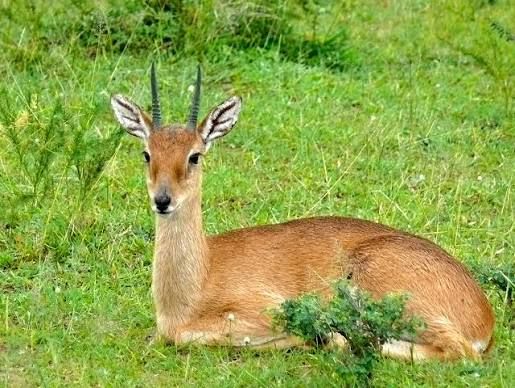
There is an antelope in Uganda that most safari-goers never notice. It stands barely knee-high to a buffalo, weighs less than a medium-sized dog, and moves through the grassland with a delicate, almost nervous elegance. It is not the fastest, the rarest, or the most famous animal in the park. It is not a lion, not a leopard, and not a gorilla. And yet, for those who take the time to look, the oribi offers something increasingly rare in African wildlife watching: a creature whose entire existence is defined by vigilance, speed, and the open grassland it calls home. The oribi (Ourebia ourebi) is one of Uganda’s smallest and most charming antelopes — a delicate, long-necked grassland species that bounces across open savanna with a stiff-legged, bounding gait called “stotting” that makes it one of the most visually distinctive antelopes in the landscape when alarmed. Present in Uganda’s grassland parks and around the margins of forest-savanna mosaics, the oribi is more common than its modest fame suggests, and the combination of its small size, conspicuous behaviour, and preference for short to medium grass makes it reliably visible on morning game drives in the right habitats. This is the complete guide to Uganda’s smallest antelope — what it is, how it lives, where to see it, and why it deserves a place on your wildlife-watching list. What Is an Oribi? A Small Antelope with a Big Personality The oribi is a small antelope found in eastern, southern, and western Africa. It is the sole member of its genus, Ourebia, and was described by the German zoologist Eberhard August Wilhelm von Zimmermann in 1783. While it is the only member of the genus, eight subspecies are identified. The oribi reaches nearly 50–67 centimetres (20–26 inches) at the shoulder and weighs 12–22 kilograms (26–49 pounds) — roughly the size of a large domestic dog. Females tend to be slightly larger and approximately 2 kilograms heavier than males, a reversal of the typical pattern in antelopes. Young oribi grow rapidly, attaining near-adult size in about 7 months; horns appear in males at about 4.5 months of age. Physical Characteristics The oribi is unmistakable once you know what to look for. Its most distinctive features are: The coat. The oribi has a silky, yellow to reddish-brown coat with white fur on the underparts of the body and rump. A conspicuous white rump patch is flashed when the animal runs. The coat is smooth and polished but may appear curly at the back. The face. The oribi has distinct facial markings, including white markings about the nostrils and sickle-like white markings above the eyes. A bare, glandular patch of dark skin below each ear (the preorbital gland) is conspicuous and is used for scent marking. These glands appear as vertical folds on the side of the face. The horns. Only males possess horns. They are thin, straight, and slightly ridged, reaching 8–19 centimetres (3.1–7.1 inches) in length — smooth at the tips and ringed at the base. The legs and neck. The oribi has very long legs and a long neck relative to its body size, giving it an alert, elegant appearance. The legs are slender and have a bushy growth of hair at the knees. The tail. The oribi has a short, bushy, usually dark tail. The Stotting Gait One of the oribi’s most endearing behaviours is its stotting gait — a stiff-legged, bouncing leap with the back arched and all four feet leaving the ground, performed when alarmed. This serves both as a predator signal (communicating that the animal has seen the predator and is fit enough to outrun it) and as an alarm signal to other oribi in the area. A group of oribi stotting across open grassland is one of the more endearing wildlife sights in Uganda. Behaviour and Social Structure Territorial and Monogamous Oribi are territorial mammals that do not move around a lot. Their home ranges vary from 0.05 square kilometres to just under 0.5 square kilometres. Males defend their group’s territory, which ranges from 25 to 100 hectares (62 to 247 acres) in size. Oribi are typically seen in small groups: a territorial male with one to four females and their offspring. Males are strongly territorial, marking their territories with dung middens, scent glands, and regular display postures on elevated ground. Territories are maintained year-round, with females forming stable associations with the resident male. Unlike many small antelopes, oribi do not use heavy cover for concealment — they inhabit open and semi-open grassland and rely on vigilance and speed rather than hiding when threatened. A Flexible Mating System Unlike all other small antelopes, oribi can exhibit three types of mating systems depending on the habitat: polyandry, polygyny, and polygynandry. The oribi has a monogamous to polygynous mating system, with males maintaining the territory and sharing it with one to two or more females. Females are able to conceive as early as ten months, and males are sexually active by fourteen months. Their gestation period lasts from six to seven months, and one young is born at a time. Oribi breed throughout the year, with a peak season in October and November. Communication Oribi possess six sets of glands that they use to mark their territory and for other communication purposes. These glands contain up to 75 chemical compounds that may be specific to each individual. A male oribi usually follows a single female while dispersing his scents all over their territory. This serves as both territory protection and courting behaviour. The continuous presence of the male leads to the female getting acclimatised to, and preferring, his scent, while also discouraging challenges from other males. It also prevents the female from moving too far from the male, limiting the territorial range and cost of its protection. They also use their faeces and urine. The oribi vocalises in “short, shrilling blasts”. Diet and Habitat The oribi largely inhabits both open and wooded grassland habitats and is mostly abundant in wetter areas. Although they prefer habitats with a minimum mean annual rainfall of about 500 mm, they may occur in areas with less rainfall. They prefer short grasses with patchy areas of tall grasses to provide hiding places. They like grasslands that are not extremely tall or dense and with some bushes. They avoid steep slopes. Speed and Predator Avoidance The oribi can run at speeds of up to 40–50
The Topi: The Savannah’s Forgotten Antelope
There is an antelope in Uganda that most safari-goers drive straight past. It stands on the open plains of Ishasha and Pian Upe, its coat a deep, maroon-brown, its horns lyre-shaped and heavily ringed, its gaze fixed on the horizon. It is not the fastest, the rarest, or the most famous animal in the park. It is not a lion, not a leopard, and not a gorilla. And yet, for those who take the time to look, the topi offers something increasingly rare in African wildlife watching: a creature that belongs entirely to the savannah, and to nowhere else. The topi — known scientifically as Damaliscus lunatus — is one of Africa’s most specialised antelopes. It is a denizen of open floodplains, short-grass savannahs, and lightly wooded plains. It is highly social, capable of forming herds hundreds strong. It is one of the fastest antelopes on the continent. And in Uganda, it is confined to a handful of protected areas that represent the easternmost edge of its range. This is the complete guide to the savannah’s forgotten antelope — what it is, how it lives, where to see it in Uganda, and why it deserves a place on your wildlife-watching list. What Is a Topi? A Member of an Ancient Tribe The topi is a member of the Alcelaphini tribe — the “bastard hartebeests” — a group of African bovids that also includes the hartebeest and the wildebeest. Within this tribe, the topi is placed in the genus Damaliscus, alongside the blesbok, bontebok, and tsessebe of southern Africa. The name “topi” derives from the Bantu word for “mud,” a reference to the dark, muddy colour of the animal’s coat. In Uganda, the topi is sometimes called the Uganda topi or Ankole topi (Damaliscus ugandae), and it is recognised as a distinct subspecies or geographic variant. The Uganda topi is found in the Ankole region of southwestern Uganda, extending to the Rutshuru Plains in the DRC and to Akagera National Park in Rwanda. Physical Characteristics The topi is a medium-sized antelope with a build that sits somewhere between the elegance of a gazelle and the bulk of a hartebeest. Size. Adult topi stand 100 to 130 centimetres at the shoulder and measure 150 to 230 centimetres in head-and-body length. Males are larger and darker than females, weighing an average of 137 kilograms compared to 120 kilograms for females. The largest males can reach 165 kilograms. The coat. The topi’s coat is one of its most distinctive features. It is a striking reddish-brown to purplish-red, with a glossy, almost lacquered sheen in good light. The Uganda topi is notably darker than its northern relatives — a maroon suffused with an ashy sheen. The face has a dark, mask-like colouration, the tail tufts are black, and the upper forelimbs and thighs bear greyish, dark purple, or bluish-black patches. The lower legs are a contrasting brownish-yellow to yellow, and the belly is white. The horns. Both males and females carry horns. They are lyre-shaped — curving outward and then upward in an elegant S-curve — and heavily ringed. In the Uganda topi, the horns are longer and more spreading than in the Serengeti topi, though they are considerably less robust than those of the hartebeest. Horns range from 30 to 40 centimetres in length. Distinguishing from the hartebeest. Topi are often confused with hartebeests, but the differences are clear on close inspection. The topi is darker in colour, with distinct sandy socks up to its knees and conspicuous black patches on the thighs and shoulders. The hartebeest, by contrast, has pale legs and underbelly with a darker upper body. The horns are also different: hartebeest horns grow from massive bases and make abrupt turns, generally ending with rearward-pointing tips, while topi horns are lyre-shaped and more gently curved. Behaviour and Social Structure The Lekking System The topi’s social system is one of the most fascinating of any African antelope. Males do not defend large territories in the conventional sense. Instead, they cluster into leks — traditional display grounds where males compete for the attention of females. The Ishasha population of Uganda topi in Queen Elizabeth National Park lives at high density — up to 47 individuals per square kilometre — and moves across the plains in concentrations of up to 2,000 individuals. Territorial males are as close as 50 metres apart, and some individual males reclaim the same territory for two to three years in a row. Central territories become so overused that their occupants have to leave them to graze — which they do very hurriedly before returning. Females and young live in herds of 200 to 300, sometimes even up to 1,000, moving around the lek accompanied by hundreds of bachelor males. Most females enter the lek individually or in small groups when in estrus, and they compete with each other fiercely for the attention of the highest-quality males. The Herdmaster System During the rut, the social organisation of topi becomes even more complex. Research at Ishasha in Queen Elizabeth National Park found that around 4,000 topi were using an 80-square-kilometre area of savanna. Females, accompanied by six-month-old calves, were organised into a mosaic of “harem” groups, each tended by a herdmaster bull. These groups were temporary, and females were constantly escaping from one bull’s sphere of influence — or “ward” — to join another. Bulls maintained a network of wards and displayed antagonistically towards one another, excluding other males which formed loose arrays at the periphery of the aggregations. Diet and Feeding Topi are grazers, with a strong preference for green, tender grass. They search until they find the greenest, tenderest grass and avoid anything too mature. They are highly selective feeders: studies in the Serengeti found that topi were significantly more selective of green leaf than either hartebeest or wildebeest, and were the only species to maintain a rapid bite rate on swards with high green leaf biomass. Their dependence on green vegetation means that topi populations are highly dependent on rainfall and grass quality. They can go without water for long periods, but only if they have access to green pastures. Speed and Predator Avoidance The topi is one of the swiftest antelopes in Africa, capable of reaching speeds of close to 50 miles per hour. This speed, combined with their herding behaviour and the vigilance of the herd, is their primary defence against predators. In Ishasha, their main predators are lions, leopards, and spotted hyenas. Where to See Topi in Uganda Uganda lies at
