
The Great Blue Turaco: Uganda’s Most Photogenic Bird

There is a bird in Uganda’s rainforests that looks less like a product of evolution and more like a living jewel. It is the size of a crow, with plumage that shimmers in shades of turquoise and cobalt, a crest that stands upright like a crown, and a flash of brilliant crimson on its wings that appears only in flight. When it moves through the canopy, it does so with a grace that seems almost deliberate — as if it knows exactly how photogenic it is. It is the Great Blue Turaco (Corythaeola cristata) — the largest and most spectacular member of the turaco family, and, by any measure, one of the most photogenic birds in Africa. It is noisy, social, and conspicuous — the opposite of Uganda’s many secretive forest species — and it is found in forests across the country, from the botanical gardens of Entebbe to the rainforests of Kibale and Bwindi. This is the complete guide to the Great Blue Turaco — what it is, why it is so remarkable, where to see it in Uganda, and how to photograph it. What Is a Great Blue Turaco? The Largest Turaco in the World The Great Blue Turaco is the largest species of turaco — a family of brightly coloured, fruit-eating birds found across sub-Saharan Africa. At 70 to 76 centimetres in length, it is significantly larger than any of its relatives, and it is the sole member of the subfamily Corythaeolinae within the turaco family. It was first described by French ornithologist Louis Pierre Vieillot in 1816, who named it Musophaga cristata. German ornithologist Ferdinand Heine later placed it in its own genus, Corythaeola, in 1860. Its closest relatives are the go-away birds and plantain eaters of the genus Crinifer, from which it diverged millions of years ago. Physical Characteristics: A Living Jewel The Great Blue Turaco is unmistakable. Its most striking features are: The plumage. The adult has predominantly grey-blue upperparts with an upright blue-black crest around 10 centimetres high. The underparts are a yellowish-green to deep brown, and the tail bears black and yellow barring. The male and female have similar plumage, making them difficult to distinguish in the field. The bill. The bill is bright yellow, providing a vivid contrast against the blue-grey plumage. The red wing flash. The most dramatic feature of the Great Blue Turaco is its brilliant red primary feathers, which are revealed only in flight. When the bird spreads its wings, the crimson flash is unmistakable and unforgettable — one of the most striking visual displays of any African bird. Size and weight. Adults weigh between 800 and 1,231 grams, with some sources reporting weights up to 1,231 grams. A Bird of the Rainforest Canopy The Great Blue Turaco is a bird of the African tropical rainforest, found across a vast range that stretches from Sierra Leone and Guinea in West Africa to Kenya, Uganda, and Tanzania in the east, and south to Angola and the Democratic Republic of Congo. Its global range covers approximately 8,220,000 square kilometres — an area larger than Australia — making it the most widespread of all turacos. Within this range, it is a bird of the forest canopy, rarely descending to the ground except to drink or to cross gaps between trees. It is diurnal, active during the day, and it relies on flight to move between fruiting trees. Behaviour: The Social Butterfly of the Forest Groups and Social Structure Unlike many of Uganda’s forest birds, which are secretive and solitary, the Great Blue Turaco is noisy, social, and conspicuous. It moves through the forest canopy in groups of 3 to 8 birds, feeding on fruit and leaves as it goes. These groups are not simply feeding aggregations — they are social units that move, roost, and call together. The birds are gregarious and pair off to breed, but they remain part of a larger social group throughout the year. Towards late evening, the group moves to a communal roost, showing a marked preference for very tall trees. Communication and Call The Great Blue Turaco is one of the most vocal birds in the African rainforest. Its call is a loud, deep, croaking sound that carries far through the forest and announces the group’s presence from a considerable distance. The call has been described as a series of “jeeeow” long calls and rapid “kok” short notes, and it is one of the most recognisable sounds of the Ugandan forest. The call serves multiple functions: it maintains contact between group members, advertises territory, and warns of danger. In the Ituri Rainforest of the Democratic Republic of Congo, the Mbuti people call the Great Blue Turaco “kulkoko” and associate it with okapis — they say the turaco warns the okapi of danger by calling loudly. Diet: A Frugivore with a Taste for Leaves The Great Blue Turaco is primarily a frugivore — a fruit eater. Studies of its diet have shown that 73% of its food consists of fruits, with 0.9% flowers and 25% leaves. When fruit is scarce, leaf consumption can increase to up to 50% of the diet. The species feeds on the fruits of at least 47 plant species, including figs, and it is an important seed disperser in the forests it inhabits. It is particularly fond of bananas and plantains — hence the alternative common name, “blue plantain eater”. Flight: A Reluctant Aviator Despite its size, the Great Blue Turaco is described as a poor flier, capable of covering distances of only about 200 metres at a stretch. It compensates with agility in the canopy, running along horizontal branches with its crest raised and using short glides to move between trees. When it does take flight, however, the result is spectacular — the brilliant red wing flash is revealed in full, making even a short flight a photographic opportunity. Reproduction: Flimsy Nests and Devoted Parents The Great Blue Turaco breeds year-round, with a peak during the wet season. The female lays two eggs, which are incubated for 29 to 31 days. The chicks fledge at around 31 to 38 days but remain dependent on their parents until they are approximately three months old. One of the most unusual aspects of the species’ breeding biology is its nest construction. Great Blue Turacos typically build flimsy nests that can leave eggs at risk of rolling
Uganda’s Owls: A Guide to the Night’s Silent Hunters
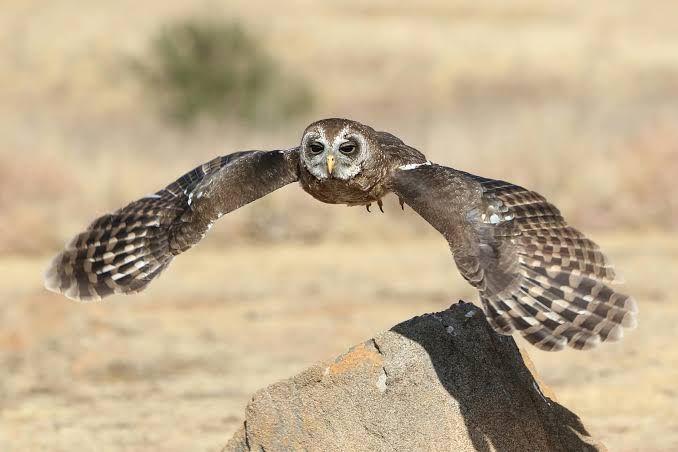
There is a sound that defines the African night more completely than any other — a sound so deeply woven into the continent’s identity that it has become synonymous with wilderness itself. It is the call of an owl: the deep, resonant boom of an eagle-owl rolling across a river valley, the paired hoots of a wood-owl echoing through rainforest, or the soft, insistent whistle of a scops-owl in the savannah. Uganda is home to 22 confirmed owl species — an extraordinary diversity for a country the size of the United Kingdom, and one that reflects the remarkable range of habitats found within its borders, from the lowland rainforests of the Congo Basin to the montane forests of the Rwenzori, the papyrus swamps of Lake Victoria, and the semi-arid savannahs of Karamoja . These are the night’s silent hunters — apex predators of the darkness, equipped with extraordinary senses, capable of flying without a sound, and playing a critical role in maintaining the balance of Uganda’s ecosystems. Yet most travellers never see one. This is the complete guide to Uganda’s owls — what they are, where they live, how to find them, and why they deserve a place on your Ugandan itinerary. Why Uganda Is an Owl Hotspot A Convergence of Habitats Uganda’s owl diversity is a product of its geography. The country sits at the intersection of several major biogeographic zones — the Congo Basin rainforest, the Albertine Rift, the East African savannahs, and the Lake Victoria basin. This confluence creates an extraordinary variety of habitats, from lowland swamp to high-altitude montane forest, each supporting its own community of nocturnal predators. The Albertine Rift — the western arm of the East African Rift Valley — is particularly important for owls. It is a global centre of endemism, and Uganda lies at its heart. Species like the Albertine owlet, a tiny highland endemic specific to the Albertine Rift forest zone, are found nowhere else on Earth . A Network of Protected Areas Uganda’s 30 Important Bird Areas (IBAs) cover just 8% of the country’s land surface, yet they capture the overwhelming majority of its owl diversity. The IBA network protects breeding populations of forest owls, savannah owls, and river specialists, including several species of national conservation concern. The proposed National Red List for Uganda identifies key owl conservation sites across the country, including Rwenzori Mountains National Park, Bwindi Impenetrable National Park, Kalinzu Forest Reserve, Budongo Forest Reserve, Murchison Falls National Park, Queen Elizabeth National Park, Mount Elgon National Park, and the Semliki Valley . Uganda’s Owl Species: A Complete Checklist Uganda’s 22 owl species can be grouped into four broad categories: eagle-owls, wood-owls, owlets, and specialist owls. The Eagle-Owls (Genus Bubo) The eagle-owls are the largest and most dramatic of Uganda’s owls. They are powerful predators, capable of taking prey as large as monkeys and small antelopes. Verreaux’s Eagle-Owl (Bubo lacteus) The Verreaux’s Eagle-Owl — also called the Giant Eagle-Owl — is the largest owl in Uganda and one of the largest in Africa, standing up to 65 centimetres tall. It is a striking bird with grey-brown plumage, dark stripes framing the face, a pale, horn-coloured beak, and large, dark eyes set off by diagnostic fleshy-pink eyelids. It is found throughout sub-Saharan Africa, including Uganda, where it inhabits savannah, woodland, and forest edges. Its deep, resonant call carries far through the forest on calm nights . Spotted Eagle-Owl (Bubo africanus) The Spotted Eagle-Owl is a medium-sized species, one of the smallest of the eagle-owls. It is found in Gabon, southern Democratic Republic of the Congo, southern Uganda, and central Kenya south to southern South Africa . It is a savannah and woodland specialist, and it is the only Ugandan owl known to nest on bare ground. Fraser’s Eagle-Owl (Bubo poensis) Fraser’s Eagle-Owl is a forest specialist found in the mid-altitude forests of western Uganda, including Bwindi and Kibale. It is a powerful owl that requires specific night walk timing in the breeding season for the most reliable encounters . Greyish Eagle-Owl (Bubo cinerascens) The Greyish Eagle-Owl — also called the Vermiculated Eagle-Owl — is a fairly large species found in the forests and woodlands of western Uganda . Shelley’s Eagle-Owl (Bubo shelleyi) Shelley’s Eagle-Owl is a large, rare forest species found in the lowland rainforests of western Uganda. It is one of Uganda’s least-known owls, and sightings are rare and unpredictable. Cape Eagle-Owl (Bubo capensis) The Cape Eagle-Owl is a large species found in rocky and mountainous habitats. In Uganda, it is recorded in the highlands of the southwest . The Wood-Owls (Genus Strix) African Wood-Owl (Strix woodfordii) The African Wood-Owl is one of the most frequently encountered owls in Uganda’s forests. It is a medium-sized species with dark brown plumage, prominent ear tufts, and large, dark eyes. It is strictly nocturnal and eats mostly insects but will also take reptiles, small mammals, and other birds . Its call is a deep paired hoot that echoes through the forest at night . It is found in Senegal and Gambia east to South Sudan, Uganda, the western Democratic Republic of the Congo, and northern Angola . The Owlets (Genus Glaucidium) Red-Chested Owlet (Glaucidium tephronotum) The Red-Chested Owlet is a small, forest-dwelling species found in the medium-altitude forests of the Albertine Rift, up to 2,100 metres. It is recorded in Rwenzori Mountains National Park, Bwindi Impenetrable National Park, Kalinzu Forest Reserve, and Budongo Forest Reserve. It is nationally Vulnerable in Uganda, with a suspected declining population due to habitat degradation and loss . It is rarely heard and was previously more widespread, with records from Mount Elgon . African Barred Owlet (Glaucidium capense) The African Barred Owlet is a small, brown owl found in much of southern, central, and eastern Africa . It is the most reliably encountered owl at Kibale National Park, where it responds readily to guide playback during night walks . It is also found in the Semliki Valley and Bwamba Forest in southwestern Uganda . Pearl-Spotted Owlet (Glaucidium perlatum) The Pearl-Spotted Owlet is a small, diurnal species found in savannah and woodland habitats. It is often active during the day, making it one of the few owls that can be seen on daytime game drives . Chestnut Owlet (Glaucidium castaneum) The Chestnut Owlet is a small species found
The Verreaux’s Eagle: Uganda’s Most Dramatic Raptor
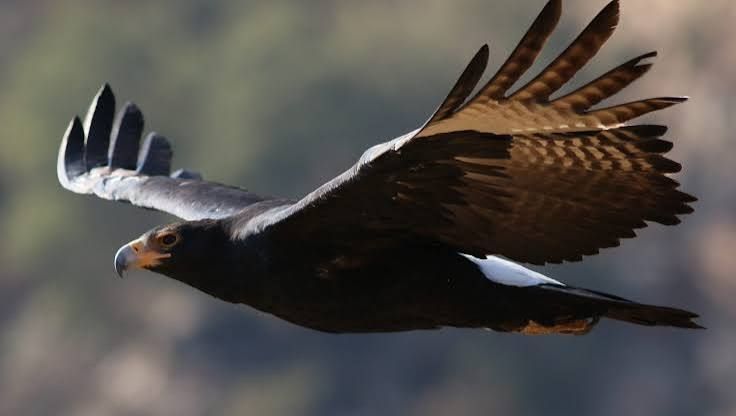
There is a silhouette that cuts across the Ugandan sky like a black blade — a massive, jet-black eagle with a wingspan that can reach nearly two and a half metres, soaring on thermals above the rocky inselbergs and volcanic cliffs of the country’s most remote corners. It is not the largest eagle in Africa, nor the most famous. But for sheer presence and raw predatory drama, no other bird of prey in Uganda commands the sky quite like it. It is the Verreaux’s Eagle (Aquila verreauxii) — also known as the African Black Eagle. And in Uganda, it is a creature of the far northeast, a specialist hunter of the rocky highlands, and one of the most sought-after raptors on any East African birding list. This is the complete guide to Uganda’s most dramatic raptor — what it is, how it lives, where to see it, and why it deserves a place at the top of your birding itinerary. What Is a Verreaux’s Eagle? A Specialist of the High Places The Verreaux’s Eagle is a large bird of prey found in the hilly and mountainous regions of southern and eastern Africa, extending marginally into Chad and very locally into the Middle East. It is one of the most specialised raptors on the African continent, with its entire life history — distribution, breeding, and daily behaviour — revolving around a single prey species: the rock hyrax. Its scientific name honours Jules Verreaux, the 18th-century French botanist and ornithologist who visited southern Africa and first collected specimens of the species. Physical Characteristics The Verreaux’s Eagle is unmistakable once seen, and unforgettable once known. Size. It is a genuinely large eagle, with a body length of 80 to 96 centimetres and a wingspan of 188 to 230 centimetres. Females are slightly larger than males, as is typical among raptors. The species weighs between 3 and 5.8 kilograms, with females at the heavier end of the range. The adult plumage. Adult Verreaux’s Eagles are entirely black, except for a striking white “V” pattern across the back and shoulders and a white rump that is exposed when the wings are unfolded in flight. The feet and cere (the waxy layer at the base of the beak) are bright yellow, providing a vivid contrast against the black plumage. The eyes are dark brown, and the beak is grey. The wings. In flight, the wings have a distinctive shape — broad in the middle and tapering at the tips. The underwing shows a narrow white panel on the inner primary feathers and a white rump, which together make the bird instantly recognisable even at considerable distance. Juveniles. Young birds are entirely different in appearance. They have yellow-brown plumage, with a reddish-brown crown and nape, a black face and throat, and a heavily streaked breast. Juveniles achieve full adult plumage over approximately four to five years, passing through a series of complex transitional stages. The Black Eagle The Verreaux’s Eagle is widely known as the African Black Eagle — a name it shares with no other African raptor. The name reflects the adult’s almost entirely black plumage, which makes it one of the most visually dramatic birds of prey on the continent. The Hyrax Specialist: A Diet of Extreme Specialisation An Extraordinary Predatory Adaptation The Verreaux’s Eagle’s most remarkable feature is its extraordinary dietary specialisation. In much of its range, rock hyraxes make up more than 90% of its diet — one of the most extreme levels of prey specialisation documented in any large raptor anywhere in the world. Rock hyraxes — small, rabbit-sized mammals that live in colonies among boulders and cliff faces — share the eagle’s mountainous habitat. The eagle’s distribution across Africa is strongly linked to the presence of hyraxes, and where hyrax populations decline, eagle populations follow. Hunting Technique Verreaux’s Eagles hunt by soaring along cliff faces and rocky ridges, using the terrain to mask their approach. They often hunt in tandem, with one bird distracting the prey while the other attacks. Their wing shape is adapted for gliding on updrafts created by wind striking mountain cliffs, allowing them to stay airborne for long periods or travel great distances while maintaining aerial control. They will also take small mammals, birds, reptiles, and eggs when hyraxes are scarce, and recent research has documented sustained carrion use — a behaviour that was previously poorly documented for the species. Breeding: Life on the Cliff Edge Nesting on Inaccessible Ledges Verreaux’s Eagles nest on cliff ledges, rocky outcrops, and sometimes large trees. The nest is a large, tidy mass of sticks, typically placed on an inaccessible ledge where it is safe from terrestrial predators. Pairs may build one to three nests and alternate between them over successive years. The “Cain and Abel” Struggle The breeding biology of the Verreaux’s Eagle is both fascinating and brutal. The female typically lays two eggs, usually three to four days apart. Both parents share incubation duties, which last approximately 45 days. When the eggs hatch, the older and stronger chick kills and eats its younger sibling within the first few days of life — a phenomenon known as “Cainism” or the “Cain and Abel struggle.” This ensures that the surviving chick receives the full attention and resources of its parents, maximising its chances of survival in a harsh environment where food is not always reliable. A Slow Reproductive Rate The Verreaux’s Eagle produces only one successful chick every two to three years — a slow reproductive rate that makes the species vulnerable to population declines. The chick takes its maiden flight at around three months, but remains dependent on its parents for food for several more months. It typically leaves the natal territory around December or January, once it has learned the hunting skills necessary to establish its own territory. Where to See Verreaux’s Eagles in Uganda Kidepo Valley National Park: The Premier Site Kidepo Valley National Park is the single most important site in Uganda for the Verreaux’s Eagle. It is the only place in Uganda where this species breeds — a resident breeding pair occupies the inselbergs (isolated rocky hills) of the park. Kidepo has the highest raptor diversity of any Ugandan national park, with over 50 raptor species recorded. Of the 56 raptor species in the park, 14 — including Verreaux’s Eagle, Egyptian Vulture, and Pygmy
Nile Crocodiles: The Giants of Uganda’s Rivers
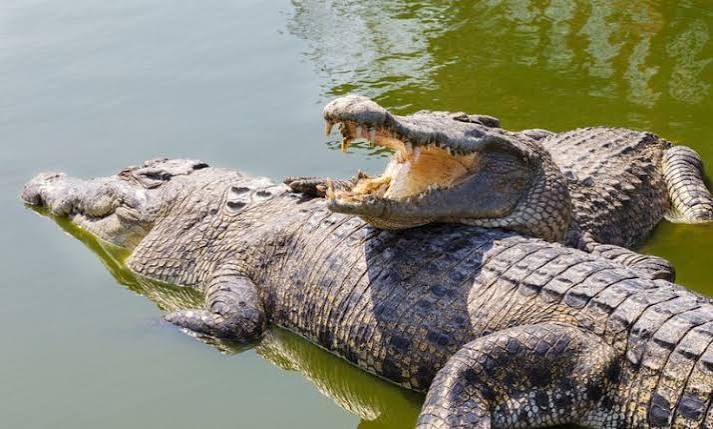
There is a sound that carries across the Nile at dusk — a low, guttural rumble that seems to come from the earth itself. It is the call of the Nile crocodile, and it is one of the most ancient sounds in Africa. These creatures have patrolled Uganda’s rivers and lakes for millions of years, and they are the largest freshwater predators on the continent. Uganda is one of the most reliable places in Africa to see wild Nile crocodiles. They bask in huge numbers along the banks of the Victoria Nile in Murchison Falls National Park and lurk in the waters of the Kazinga Channel in Queen Elizabeth National Park. They are a headline sighting on any boat cruise, a reminder that Africa’s waterways belong to creatures that were here long before us. This is the complete guide to Nile crocodiles in Uganda — what they are, where they live, why they are so dangerous, and how to see them safely. What Is a Nile Crocodile? The Nile crocodile (Crocodylus niloticus) is Africa’s largest crocodilian and the second-largest living reptile species on Earth, after the saltwater crocodile. It is an apex predator found in freshwater habitats across more than 25 African countries, and it has earned a reputation as both an ecological keystone species and one of the continent’s most genuinely dangerous animals. Three species of crocodile have been recorded in Uganda. The Nile crocodile is the most widespread and can be seen in Queen Elizabeth National Park, Murchison Falls National Park, along various stretches of the Nile River, and in Lakes Albert and Victoria. A newly described species, C. suchus, lives in Kidepo Valley National Park — a genetically distinct species that was initially thought to be a subspecies of the Nile crocodile but is now recognised as separate. The dwarf crocodile (Osteolaemus tetraspis) was recorded in rivers flowing into Lake George up until the 1950s but has not been sighted recently and may be extinct in Uganda. Size and Physical Characteristics Nile crocodiles exhibit significant sexual dimorphism, with males growing considerably larger than females. Adult males average around 5 metres (16 feet) in length, with exceptional individuals reported at up to 6 metres (nearly 20 feet) in rare cases. Large adult males typically weigh 400–500 kg (880–1,100 lbs), with exceptional specimens recorded at up to 900–1,000 kg (roughly 2,000+ lbs) — comparable to a small car. A 16-foot crocodile weighing over 500 kilograms has been documented in Uganda’s Murchison Falls National Park. Females run noticeably smaller, typically 20–30% shorter than males, averaging closer to 3.5 metres. They generally weigh between 150–300 kg. Sexual maturity is attained at 2.6 metres for females and 3.1 metres for males (Cott, 1961). The average lifespan in the wild is 45 years, though some individuals are believed to live much longer — one infamous crocodile in Uganda, nicknamed “Osama,” was estimated to be 75 years old when he was finally killed after a reign of terror lasting 14 years. The Bite The Nile crocodile’s bite force is among the strongest measured in any living animal, with widely cited estimates placing it around 5,000 pounds per square inch (psi) — enough to crush bone effortlessly and hold prey with essentially no chance of escape once caught. For comparison, an average human bite generates roughly 150–200 psi. Their jaws are designed for gripping and holding, not chewing — they will roll and thrash to dismember prey or swallow smaller animals whole. The Armour Nile crocodiles are covered in thick, bony plates called osteoderms that act as armour. These plates are not just defensive — they also help regulate body temperature and provide structural support for the animal’s powerful muscles. The skin on their backs is heavily armoured, while the belly skin is softer and more flexible, allowing them to move with surprising agility both in water and on land. Habitat and Distribution in Uganda Where They Live Nile crocodiles are widely distributed across Uganda’s freshwater habitats. They are found in rivers, freshwater marshes, lakes, and estuaries, and they gather in watery environments such as floodplains and mangrove swamps. The Victoria Nile between Murchison Falls and Lake Albert is the stronghold of the Nile crocodile in Uganda, and the population there has always been noted for its high density. The Kazinga Channel in Queen Elizabeth National Park is another major habitat, with a survey counting 1,102 crocodiles along a 130-kilometre survey distance. The Lake Albert Delta Wetland System — a Ramsar Site of international importance — is particularly significant. A study from October 2017 to September 2018 recorded 186 crocodile observations across five transects, with crocodiles most frequently encountered along the north shore of the delta, especially on riverbanks with woody vegetation followed by papyrus-dominated habitats. Crocodiles were infrequently observed on islands and muddy banks. Other populations exist in Lakes Victoria, Albert, Kyoga, and Mburo, the Semliki River, and various wetlands across the country. Potential crocodile habitat in Uganda appears to be extensive, comprising over 40,000 square kilometres of wetlands. The Kidepo Valley Population The Kidepo Valley National Park population represents something unique. It is the last known population of C. suchus — the West African crocodile — near the Nile River. This species, confirmed as distinct from the Nile crocodile in 2012, was the species used by temple priests in ancient Egypt, who recognised two species of crocodile in the Nile and selectively mummified the smaller species for use in the pharaoh’s tombs. The main threat to C. suchus is likely to be the increased drying of the region due to global warming — Kidepo Valley is already a fairly dry park with limited water. Behaviour and Ecology Seasonal Activity Crocodiles in Uganda exhibit a marginally bi-modal seasonal pattern, with the fewest observations from July to August and October to November, and the highest observations from January to February and April to May. This pattern likely reflects seasonal changes in water levels, prey availability, and temperature. In Murchison Falls National Park, crocodile sightings peak between the months of June and August, with the highest mean number of sightings on any single day being 67 (in July 2013). A second peak occurs between January and March, with the highest mean of 118 recorded in January 2014. Social Structure Crocodiles are gregarious and observe a hierarchy based on age and sex, but they do not form tight social clusters.
Hippos of the Nile: Uganda’s Most Dangerous Animal
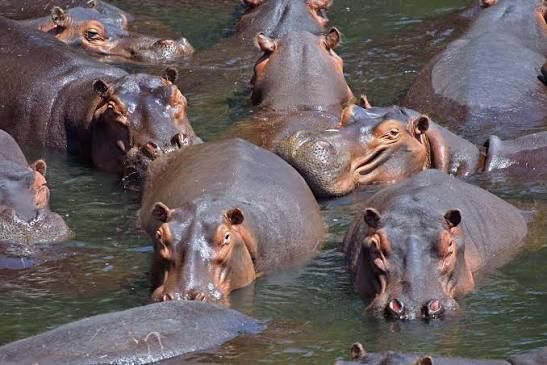
There is an animal in Uganda that kills more people than lions, leopards, and crocodiles combined. It is not a predator. It does not stalk its prey. It is a herbivore that spends most of its day submerged in the Nile, the Kazinga Channel, and the crater lakes of the west, with only its eyes and nostrils breaking the surface. And yet, when disturbed, it can snap a canoe in half with its jaws and reach speeds of 30 kilometres per hour on land. It is the hippopotamus — and it is, by every measure, Uganda’s most dangerous animal. This is the complete guide to the hippos of the Nile and the waters of Uganda: where they live, why they are so dangerous, what is being done to protect them, and how to see them safely on a Ugandan safari. How Many Hippos Are There in Uganda? The 2026 Census According to the State of Wildlife Resources in Uganda Report 2026, released by the Uganda Wildlife Authority (UWA), Uganda’s hippopotamus population increased from 8,226 in 2021–2022 to 9,026 in 2023–2025 — a rise of approximately 10%. This is a significant recovery for a species that was once decimated by poaching. Other sources place the national population at closer to 10,000 individuals, with the Murchison Falls National Park hosting an estimated 3,000 hippos — roughly 30% of the country’s total population. A History of Decline and Recovery Uganda’s hippo population has been through dramatic fluctuations. Aerial surveys in the 1960s recorded 26,000 hippos across Uganda’s protected areas. By 1983, that number had dropped to 13,000, and by 1995–1996, the population had collapsed to just 4,500. Civil unrest, poaching, and habitat loss drove the decline. Recovery began in the late 1990s and has continued steadily. The population rose to 5,300 in 1999–2003, 7,542 in 2004–2006, and has continued upward to the current figure of 9,026. Where Hippos Live in Uganda Hippos are present in aquatic habitats throughout Uganda — from the Nile in Murchison Falls to the Kazinga Channel in Queen Elizabeth National Park, the crater lakes of the west, and the shores of Lake Victoria and Lake Albert. Why Hippos Are Uganda’s Most Dangerous Animal The Statistics The numbers are sobering. A study conducted in the buffer zones of Queen Elizabeth National Park found that the incidence of wildlife-associated injuries was 80 injuries per 1,000 persons per year, and that hippos were the single most frequent cause of human injuries, accounting for 30% of all cases — followed by elephants (21%) and crocodiles (18%). A human-wildlife conflict study in Uganda revealed that hippopotamus attacks have a casualty rate of 86.7% — the most deadly of any wild mammal in the country. Across Africa, hippos are estimated to kill about 500 people each year. Why Hippos Attack Hippos are not naturally aggressive toward humans. They are herbivores that spend their days in the water and their nights grazing on grass. But they are extremely territorial, particularly in the water, and they are highly protective of their young. Key behavioural factors: Territoriality in water. Male hippos defend stretches of river or lake as their territory. Any boat, canoe, or swimmer that enters that territory may be perceived as a threat. Protective mothers. Female hippos with calves are particularly dangerous. They will attack anything they perceive as a threat to their young. The “dive and attack” pattern. Hippos typically submerge when disturbed, then surface to attack. This makes their behaviour unpredictable — they may disappear underwater and reappear directly beneath a boat. Speed and power. Despite their bulk — up to 4,000 kilograms in large males — hippos can run at speeds of 30 kilometres per hour on land and are surprisingly agile in water. A bite that can snap a canoe. A hippo’s jaws can open to 150 degrees and deliver a bite force strong enough to snap a canoe in half. Recent Attacks in Uganda Hippo attacks are not a historical curiosity. They are a present and persistent danger across Uganda. In November 2025, a 42-year-old fisherman named Patrick Otim was attacked by a hippo while fishing on Tochi Stream in Oyam District. His body was found two weeks later, with severe injuries including bite wounds that had broken his neck, hands, and back. In September 2025, two people in Kasese District were seriously injured by a hippo that escaped from Queen Elizabeth National Park into the community. A 17-year-old boy suffered stomach injuries that exposed his internal organs. In March 2026, three people drowned on Lake Victoria near Lulamba Island in Kalangala District after a hippopotamus attacked their boat. In May 2026, a farmer in Luuka District was killed by a hippo, heightening fear among communities living near swampy areas. “These animals are very large, and once a hippo enters your garden, it does not leave any plant standing,” said one resident. The Kazinga Channel: The World’s Densest Hippo Concentration A Wildlife Spectacle The Kazinga Channel in Queen Elizabeth National Park is one of the most important hippo habitats in Africa. The 32-kilometre waterway connecting Lake Edward to Lake George holds one of the world’s largest concentrations of hippos — estimates range from 1,600 individuals to as many as 8,000 during peak periods. The channel is also home to one of the three largest hippo populations in the world, alongside Zambia’s Luangwa Valley and Tanzania’s Rufiji River. The Boat Cruise The Kazinga Channel boat cruise is one of Uganda’s signature safari experiences. The two-hour cruise passes within metres of hippo pods, along with crocodiles, elephants, buffalo, and an extraordinary array of birdlife. Safety is paramount. On the Kazinga Channel, the captain maintains a safe distance from hippo groups on the channel margin — passengers are advised not to request closer approach for photography. Life jackets are mandatory, and passengers must follow crew instructions at all times. In March 2026, a hippo charged a tourist boat on the Kazinga Channel after a passenger pointed a camera at it. The captain accelerated in time to avoid a collision — a reminder of how quickly a peaceful wildlife encounter can turn dangerous. The Nile Hippos: Murchison Falls National Park Uganda’s Largest Hippo Population The Victoria Nile in Murchison Falls National Park supports Uganda’s largest hippo population — an estimated 3,000 individuals. The river’s papyrus margins and sandbanks provide ideal habitat, and the
Uganda’s Frogs: The Hidden World of the Rainforest

There is a world beneath the roots of Uganda’s rainforest that most travellers never see. It exists in the leaf litter, under fallen logs, in the folds of banana leaves, and along the mossy edges of forest streams. It is a world of tiny, jewel-coloured bodies and voices that fill the night with sound. It is the world of Uganda’s frogs — and it is one of the most extraordinary, and least-appreciated, wildlife spectacles in East Africa. Uganda is home to up to 90 documented amphibian species, with around 28 anuran (frog and toad) species recorded in Kibale National Park alone and 27 amphibian species in Bwindi Impenetrable National Park. Many of these are found nowhere else on Earth. They are the hidden architects of the rainforest — controlling insect populations, serving as food for birds and snakes, and acting as living indicators of ecosystem health. And in Uganda’s forests, they are under threat. This is the complete guide to Uganda’s frogs — what they are, where they live, how to find them, and why this hidden world deserves a place on your Ugandan itinerary. Why Uganda Is a Frog Hotspot Uganda’s frog diversity is a product of its geography. The country sits at the intersection of several major biogeographic zones — the Congo Basin rainforest, the Albertine Rift, the East African savannahs, and the Lake Victoria basin. This convergence of habitats creates an extraordinary range of niches for amphibians, from lowland swamp specialists to high-altitude montane species. The Albertine Rift — the western arm of the East African Rift Valley — is particularly important. It is a global centre of amphibian endemism, and Uganda lies at its heart. Of the 27 amphibian species recorded in Bwindi Impenetrable National Park, 11 are endemic to the Albertine Rift, meaning they are found nowhere else on Earth. This concentration of endemic species makes Uganda’s forests — Bwindi, Kibale, Mgahinga, the Rwenzori, and the forests of the west — among the most important amphibian conservation sites in Africa. The Star Species: Uganda’s Most Remarkable Frogs The Uganda Clawed Frog (Xenopus ruwenzoriensis) The Uganda clawed frog is one of the most scientifically remarkable amphibians on Earth. It is a fully aquatic species, found in Uganda and possibly the Democratic Republic of Congo, and it is unusual in that it is polyploid — it has 12 sets of chromosomes (dodecaploidy), making it one of the most genetically complex vertebrates known to science. The Uganda clawed frog is threatened by habitat loss, and in December 2024, a conservation grant was awarded to Makerere University to study its status amidst climate change and habitat degradation. Where to find it: The Rwenzori region and other forested areas of western Uganda. The Rwenzori Torrent Frog (Petropedetes johnstoni) The Rwenzori torrent frog is a high-altitude specialist, found in the fast-flowing streams of the Rwenzori Mountains. Like other torrent frogs, it is adapted to life in rushing water, with strong limbs and specialised toe pads for gripping wet rocks. It is one of the many Albertine Rift endemics that make Uganda’s montane forests so important for amphibian conservation. The African Foam-Nest Treefrog (Chiromantis rufescens) The African foam-nest treefrog is a large, arboreal species found in the tropical rainforests of Central Africa, with its range extending into Uganda. It is a remarkable frog for several reasons. Males have no visible gular pouch, and they produce a very quiet, inconspicuous call consisting of clicks and a buzzing sound. But its most distinctive behaviour is its nesting: the eggs are placed in a foam nest built above water, often above very small, temporary water bodies such as elephant footprints. After five to eight days, the tadpoles wriggle their way through the hardened shell of the nest and drop into the water below. Where to find it: Forests across Uganda, including Kibale and Bwindi. The Albertine Rift Reed Frog (Hyperolius alticola) The Albertine Rift reed frog is a small, colourful species endemic to the Albertine Rift, found in western Uganda and eastern Congo. It is usually found in association with riverside vegetation at middle elevations, and it calls from high off the ground. Like other reed frogs, it deposits its eggs on leaves overhanging water, where the tadpoles drop into the water after hatching. Where to find it: Bwindi Impenetrable National Park, Kibale National Park, and the forests of western Uganda. The Western Rift Puddle Frog (Phrynobatrachus versicolor) The Western Rift puddle frog is described as the most common member of its genus in the forest. It is a robust, medium-sized species, extremely variable in appearance and largely diurnal. It inhabits swampy habitats throughout the forest and is found from Congo to Rwanda, Burundi, and southeastern Uganda in mountain swamps. Where to find it: Kibale National Park, Bwindi Impenetrable National Park, and swampy forest habitats across western Uganda. The White-Snouted Reed Frog (Hyperolius frontalis) The white-snouted reed frog is another Albertine Rift endemic, found in western Uganda and eastern Congo. It calls over moving water — small creeks or rivers in middle-elevation forest. It is one of several reed frog species that have evolved to exploit the narrow niche of forest streams and riversides. The Striped Leaf-Folding Frog (Afrixalus quadrivittatus) The striped leaf-folding frog is a small tree frog found in and around permanent water sources across Uganda. It is one of the most commonly encountered frogs in the country, and it is known for its habit of folding leaves to create a shelter for its eggs — a behaviour that gives the species its common name. The Angola River Frog (Amietia angolensis) The Angola river frog is a river specialist, found only along rivers and streams. It is a common species in Uganda, and it is frequently encountered on forest walks near water. The Kivu Reed Frog (Hyperolius kivuensis) The Kivu reed frog is a small, colourful species found in and around permanent water sources. It is one of several reed frog species that are commonly encountered in Uganda’s wetlands and forest edges. The Common Reed Frog (Hyperolius viridiflavus) The common reed frog is one of the most widespread and abundant frogs in Uganda. It is found in a
Dragonflies of Uganda: The Unsung Predators of the Wetlands

There is a sound that defines Uganda’s wetlands at midday — not the call of a fish eagle, not the grunt of a hippo, but the dry rustle of wings. It is the sound of dragonflies, hundreds of them, patrolling the papyrus edges and open water with a precision that borders on the mechanical. They hover, dart, stop dead in mid-air, and reverse direction without warning. They are the most accomplished fliers in the insect world, and in Uganda, they are everywhere. Uganda is home to 231 recorded dragonfly species — a diversity that places the country among the most important dragonfly hotspots in Africa. These are not merely beautiful insects. They are apex predators of the wetland world, consuming mosquitoes and other flying insects in vast numbers. They are bioindicators, their presence or absence revealing the health of the water they inhabit. And in Uganda, they are facing the same threats that confront the wetlands themselves: pollution, drainage, and habitat loss. This is the complete guide to Uganda’s dragonflies — what they are, where to find them, and why these unsung predators deserve far more attention than they receive. Why Uganda Is a Dragonfly Hotspot Positioned Between Two Worlds Uganda’s extraordinary dragonfly diversity is a product of geography. The country sits between two of Africa’s most important biogeographical regions — the Congo Basin rainforest to the west and the East African savannahs to the east. It also contains the Albertine Rift, the western arm of the East African Rift Valley, which is one of the continent’s most important centres of endemism. This convergence of habitats — lowland rainforest, montane forest, papyrus swamp, savannah, and open water — creates an extraordinary range of niches for dragonflies and their close relatives, the damselflies. The result is that Uganda hosts 231 species — more than many countries three times its size. A Network of Protected Wetlands Uganda’s 30 Important Bird Areas (IBAs) cover just 8% of the country’s land surface, yet they capture a remarkable proportion of its biodiversity. Surveys have shown that the IBA network contains 86% of Uganda’s dragonfly species, including 11 of the 13 Ugandan dragonfly species assessed as globally threatened or Near Threatened in a provisional Red List of East African dragonflies. This means that when you visit a Ugandan national park or forest reserve, you are visiting one of the most important dragonfly conservation networks in Africa. The Albertine Rift: A Centre of Endemism The Albertine Rift is particularly important for dragonflies. A comprehensive study published in 2025 examined odonate assemblages in Bwindi Impenetrable National Park and Bugoma Central Forest Reserve, documenting the unique communities of these forests and the threats they face. The study found that Bwindi hosted more range-restricted and globally threatened species, including the Endangered Neodythemis munyaga and Albertine Rift endemics such as Stenocypha molindica and Stenocypha jacksoni, strongly associated with the park’s high-altitude, pristine streams. Bugoma, by contrast, had higher overall diversity but was under substantial anthropogenic pressure, threatening critical odonate habitats. The Star Species: Uganda’s Most Remarkable Dragonflies Endemic Species Found Nowhere Else Uganda is home to several dragonfly species found nowhere else on Earth. These endemics are a special responsibility — and a special attraction for dragonfly enthusiasts. Zyxomma atlanticum is a small dragonfly in the family Libellulidae, endemic to Uganda. Its natural habitats are subtropical or tropical moist lowland forests and shrub-dominated wetlands. It is a forest specialist, rarely encountered outside its preferred habitat. Tetrathemis ruwensoriensis is another Ugandan endemic, found in the Rwenzori Mountains — hence its scientific name. It inhabits subtropical or tropical moist montane forests and rivers, and it is threatened by habitat loss. Its presence in the Rwenzori highlands makes it a target species for any dragonfly-focused visit to the region. Onychogomphus bwambae is a clubtail dragonfly (family Gomphidae) endemic to Uganda. It is found in subtropical or tropical moist lowland forests and rivers, and it is also threatened by habitat loss. It is associated with the forests of the Bwamba Valley in western Uganda. Lokia coryndoni is a Libellulid dragonfly endemic to Uganda. Its natural habitat is subtropical or tropical moist lowland forests, and like many of Uganda’s endemics, it is threatened by habitat loss. Notogomphus flavifrons is a clubtail dragonfly endemic to Uganda. It inhabits subtropical or tropical moist lowland forests and rivers, and it is threatened by habitat loss. These five species — and others — are found only in Uganda. Their survival depends entirely on the protection of the forests and wetlands they inhabit. Widespread and Charismatic Species Not all of Uganda’s dragonflies are rare endemics. Many of the species you will encounter are widespread, abundant, and relatively easy to identify. The Southern Banded Groundling (Brachythemis leucosticta) is one of Africa’s most common and widespread dragonflies. It is highly engaging, tending to follow people and animals in the grass around wetlands, and it is gregarious, sometimes seen in very large numbers, perched on bare ground close to water. It is a classic wetland species and often the first dragonfly a visitor notices. The Little Scarlet (Crocothemis sanguinolenta) is a striking red dragonfly encountered in or near fresh water in a wide variety of habitats, from semi-arid bush to tropical forest. Males are vivid scarlet, making them one of the most conspicuous dragonflies in Uganda. The Julia Skimmer (Orthetrum julia) is commonly sighted along rivers and streams near woodland habitats. It is a perching species, often seen on rocks or overhanging vegetation, darting out to capture prey before returning to its perch. The Long Skimmer (Orthetrum trinacria) is a large, widespread species found in rivers, shrub-dominated wetlands, swamps, freshwater lakes, freshwater marshes, and intermittent freshwater marshes. Its adaptability makes it one of the most frequently encountered dragonflies in Uganda. The Highland Dropwing (Trithemis dorsalis) is a montane species found in the highlands of western Uganda and neighbouring countries. It is a beautiful dragonfly with deep red or purple coloration, adapted to cooler, high-altitude wetlands. The Role of Dragonflies in Uganda’s Wetlands Apex Predators of the Insect World Dragonflies are among the most effective predators in the animal kingdom. Both as adults and as aquatic nymphs, they feed on a wide range of insects, including mosquitoes, midges, and other biting flies. A single dragonfly can consume hundreds of mosquitoes per day, making them a natural ally in the
Uganda’s Butterflies: A Guide to the Country’s 1,200 Species
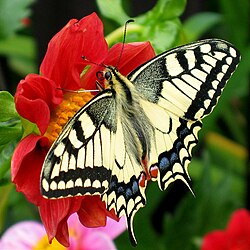
There is a world of colour and motion in Uganda that most travellers never notice. It exists in the sunlit gaps between forest trees, along the edges of papyrus swamps, and in the flowering gardens of safari lodges. It is the world of Uganda’s butterflies — over 1,200 species of them, a diversity so extraordinary that this small East African country holds more than half of all butterfly species found on the entire African continent. For every traveller who comes to Uganda for gorillas, there is another kind of traveller — the lepidopterist, the photographer, the naturalist — who comes for the butterflies. And they are rewarded with one of the richest butterfly faunas on Earth. The country’s 30 Important Bird Areas, covering just 8% of its land surface, capture 73% of all butterfly species and 82% of those of the highest conservation priority. Uganda is, by any measure, one of the world’s great butterfly destinations. This is the complete guide to Uganda’s butterflies — what they are, where to find them, and why they deserve a place on your East African itinerary. Why Uganda Is a Global Butterfly Hotspot 1,200 Species in a Country the Size of the UK Uganda is roughly the size of the United Kingdom, yet it supports more than 1,235 recorded butterfly species — about double the number found in South Africa. This extraordinary diversity is a product of geography. Uganda sits at the intersection of several major biogeographic zones: the Congo Basin rainforest, the Albertine Rift, the East African savannahs, and the Lake Victoria basin. Each of these regions contributes its own butterfly community, and the result is a country where a single forest can hold more butterfly species than an entire European nation. The Albertine Rift — the western arm of the East African Rift Valley — is particularly important. It is home to 117 butterfly species found nowhere else on Earth. These endemic species are concentrated in the montane forests of the Rwenzori Mountains, Bwindi Impenetrable Forest, and the Virunga Volcanoes. Bwindi alone has more species endemic to the Albertine Rift than any other site, with 42 recorded endemics. A Haven for Lepidopterists Uganda is probably the best country in Africa for access to butterflies. The road network is good, the climate is pleasant year-round, and the major habitats — savannah and forest — are comfortable to walk in and offer a rich selection of species. For serious butterfly watchers, Uganda offers something increasingly rare: the chance to see hundreds of species without the crowds that accompany gorilla trekking. A morning walk in Kibale or Mabira can produce 50 or more species, and the country’s forests are still being surveyed, with new records added regularly. The Star Species: Uganda’s Most Sought-After Butterflies The African Giant Swallowtail (Papilio antimachus) The African Giant Swallowtail is the largest butterfly in Africa and one of the largest in the world. Its wingspan ranges from 18 to 23 centimetres — wider than an outstretched human hand. The wings are long and narrow, with a ground colour of orange-brown marked with black, and the butterfly is toxic to predators, having sequestered cardiac glycosides from its larval foodplant. The species is found in the tropical rainforests of West and Central Africa, with its range stretching from Sierra Leone east to Uganda. In Uganda, it is represented by the subspecies Papilio antimachus parva, which is found in the country’s western forests. It is a canopy-dwelling species, though males occasionally descend to mud-puddle, where they can be observed in groups. Where to see it: Mabira Forest Reserve, Kibale Forest National Park, and Budongo Forest Reserve. Sightings are never guaranteed, as the species spends most of its time high in the canopy. The Ugandan Glider (Graphium almansor uganda) The Ugandan Glider is a striking swallowtail found in the Albertine Rift forests of Uganda and the eastern Democratic Republic of Congo. It is a fast-flying, canopy-dwelling species that occasionally descends to feed on flowers and damp ground. Its presence in Uganda’s forests is a reminder of the country’s connection to the Congo Basin fauna. Where to see it: Bwindi Impenetrable National Park, Kibale Forest, and Semuliki National Park. The Cream-Banded Swallowtail (Papilio leucotaenia) The Cream-Banded Swallowtail is a spectacular forest swallowtail found in the Albertine Rift montane forests at altitudes of 2,100 to 2,300 metres. It is found in the Democratic Republic of Congo, Burundi, Rwanda, and Uganda. It is a large, striking species with cream-coloured bands across its dark wings, and it is one of the most sought-after butterflies in East Africa. Where to see it: Bwindi Impenetrable National Park and the Rwenzori foothills. The Forest Queen (Euxanthe wakefieldi) The Forest Queen is a large, elegant butterfly of the family Nymphalidae. It is a forest specialist, found in the canopy and mid-story of Uganda’s western forests. It is known for its powerful, gliding flight and its preference for rotting fruit and tree sap, which makes it possible to attract with baited traps. Where to see it: Kibale Forest National Park, where it is regularly recorded. The Blue-Spotted Charaxes (Charaxes cithaeron) The Blue-Spotted Charaxes is one of Uganda’s most spectacular Charaxes species — a genus known for its fast, powerful flight and its habit of feeding on animal dung, rotting fruit, and tree sap. It is a large butterfly with blue spots on a dark background, and it is a favourite among photographers for its striking appearance and its willingness to settle on baited ground. Where to see it: Kibale Forest National Park, Mabira Forest Reserve, and Budongo Forest. Abisara neavei — A Scientist’s Favourite Ugandan lepidopterist Perpetra Akite has a particular fondness for a forest butterfly called Abisara neavei — a white and black species with a tail and an agile flight. Akite, who has studied butterflies at Makerere University since childhood, keeps a picture of the butterfly in her Bible. But she is finding fewer of them than she used to. “When I was a girl, I used to get probably forty, fifty butterflies in a trap in a night,” she says. “And now you put it almost the same time, and you’re getting ten, you’re getting five. You know, it’s almost not there”. Her experience reflects a broader decline in Uganda’s butterfly populations — a decline that scientists link to habitat loss, climate change, and agricultural intensification. The Endemic Butterflies of the Albertine
Chameleons of Uganda: The Rainbow Reptiles of the Forest

Uganda is home to one of the most extraordinary reptile assemblages on the African continent. While gorillas, chimpanzees, and tree-climbing lions dominate the safari narrative, a parallel world of dazzling, slow-moving, and deeply misunderstood creatures thrives in the forests, highlands, and savannahs of this remarkable country. These are the chameleons of Uganda — the rainbow reptiles of the forest, and one of the most overlooked wildlife groups in East Africa. Uganda is home to 13 chameleon species across 4 genera, a diversity that reflects the country’s extraordinary range of habitats, from the lowland rainforests of the Congo Basin to the montane forests of the Rwenzori Mountains and the savannahs of the north. Many of these species are found nowhere else on Earth. Several are endangered. And almost all of them are harmless, beneficial, and utterly fascinating. This is the complete guide to the chameleons of Uganda — what they are, where they live, how to find them, and why they deserve a place on your wildlife-watching list. What Is a Chameleon? The Anatomy of a Living Marvel Chameleons are among the most specialised lizards on Earth. They possess a suite of adaptations that are unique among reptiles — and, in some cases, unique among all vertebrates. Laterally compressed bodies. Chameleons have bodies that are flattened from side to side, a shape that allows them to move through dense vegetation with minimal resistance. A prehensile tail. Unlike most lizards, a chameleon’s tail does not regenerate. Instead, it is used as a fifth limb — a grasping organ that wraps around branches and provides stability as the animal climbs. A telescopic tongue. A chameleon’s tongue can be longer than its entire body, and it launches forward with extraordinary speed and precision to capture prey. Zygodactylous feet. Chameleon feet are arranged in a “zygodactylous” configuration — two toes facing forward and two facing backward — creating a pincer-like grip that is perfectly adapted to grasping branches. Independently moving eyes. Perhaps the most extraordinary adaptation of all: each of a chameleon’s eyes can move independently, allowing the animal to observe two different directions simultaneously. When prey is detected, both eyes converge forward to judge distance accurately before the tongue is launched. The ability to change colour. Chameleons are famous for their colour-changing abilities. But contrary to popular belief, colour change is not primarily about camouflage. It is a form of communication — used to signal stress, social status, reproductive condition, and aggression. A calm chameleon may display softer greens or browns, while a stressed or displaying individual may become darker or show stronger contrasting patterns. Colour change also plays a role in temperature regulation. A Misunderstood Reptile Despite their extraordinary biology, chameleons are widely feared and misunderstood in Uganda. Many people are afraid of them. Some cultures believe they bring bad luck. Others believe they are venomous. In reality, all chameleons are completely harmless — and beneficial, because they eat insects, including pest species. Chameleons are not venomous. They do not bite humans. And they play a vital role in controlling insect populations, supporting agriculture and forest health. Uganda’s Chameleon Species: A Complete Checklist Uganda’s 13 chameleon species are distributed across four genera, each with its own ecological niche and morphological specialisation. The species can be broadly grouped into four categories: savannah chameleons, forest chameleons, pygmy chameleons, and side-striped chameleons. Savannah Chameleons (Genus Chamaeleo) Flap-Necked Chameleon (Chamaeleo dilepis) The flap-necked chameleon is one of the most widespread and adaptable chameleons in Africa. It is a large species, reaching up to 40 centimetres in length, and it can be distinguished by the occipital lobes — small flaps at the back of the head. It is found in savannah, woodland, and even gardens and farmland across much of Uganda. It is listed in CITES Appendix II. Slender Chameleon (Chamaeleo gracilis) The slender chameleon is a small, agile species found in savannah and woodland habitats. It is less frequently encountered than the flap-necked chameleon, but it is widespread across Uganda’s northern and eastern regions. Smooth Chameleon (Chamaeleo laevigatus) The smooth chameleon is a small species with smooth, uniform scaling. It is found in savannah and grassland habitats, where it feeds on insects among the grasses and low shrubs. Forest Chameleons (Genus Kinyongia) Rwenzori Helmeted Chameleon (Kinyongia carpenteri) The Rwenzori helmeted chameleon is endemic to the Rwenzori Mountains, found nowhere else on Earth. It is considered Near Threatened with declining populations. It is a medium-sized forest chameleon with a distinctive helmet-like casque on its head. Tolley’s Forest Chameleon (Kinyongia tolleyae) Tolley’s forest chameleon is endemic to Uganda. It is a forest species found in the country’s western forests, where it lives in the canopy and understory vegetation. Rwenzori Plate-Nosed Chameleon (Kinyongia xenorhina) The Rwenzori plate-nosed chameleon — also called the strange-horned chameleon or single welded-horn chameleon — is native to the rainforests of the Rwenzori Mountains of western Uganda and eastern Democratic Republic of Congo. It is Near Threatened and listed in CITES Appendix II. It is one of the two species endemic to the Rwenzori range. Pygmy Chameleons (Genus Rhampholeon) Boulenger’s Pygmy Chameleon (Rhampholeon boulengeri) Boulenger’s pygmy chameleon is one of Uganda’s smallest chameleons. It is a leaf-litter specialist, found in the forest floor vegetation of Uganda’s western forests. Its small size and cryptic coloration make it extremely difficult to spot. Side-Striped Chameleons (Genus Trioceros) Sudanese Unicorn Chameleon (Trioceros conirostratus) The Sudanese unicorn chameleon is found in wooded-grassland and closed-forest habitats at elevations ranging from 1,304 to 2,582 metres in northeastern Uganda. It has been recorded in six Central Forest Reserves across the region. Most individuals are detected in wooded grasslands and adjacent agricultural fields, and far fewer in closed forests. It is listed as Least Concern by the IUCN. Elliot’s Groove-Throated Chameleon (Trioceros ellioti) Elliot’s chameleon — also called the montane side-striped chameleon — is a species indigenous to Africa, found in the montane forests of Uganda and neighbouring countries. It is a small, live-bearing species that inhabits cool, highland forests. Kenyan High-Casqued Chameleon (Trioceros hoehnelii) The helmeted chameleon — also called the high-casqued chameleon — is a medium-sized, tree-dwelling reptile with a prominent helmet-like casque on its head. It is found in cool, elevated environments in East Africa, including Mount Elgon National Park and the Rwenzori Mountains National Park in Uganda. It is typically found at
Ultimate Guide to Eco-Friendly Safaris in Uganda
Understanding Eco-Friendly Practices for Safaris Top Eco-Friendly Lodges and Accommodations in Uganda Eco-Conscious Safari Activities Best Practices for Responsible Travel in Uganda
