
Kitum Cave: Where Elephants Mine for Salt
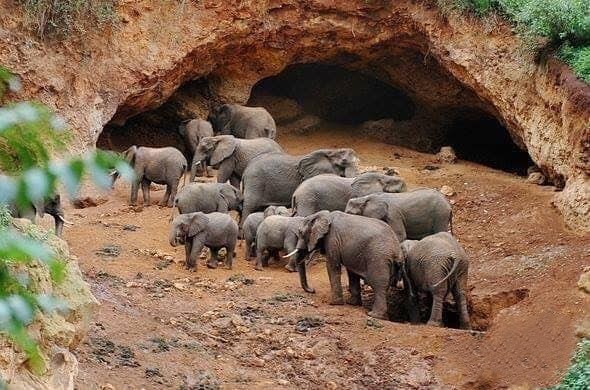
The name Kitum means “place of ceremony” in the Maasai language, and the cave has been a sacred site for local communities for generations. It is a place where the mountain itself holds salt — and where elephants, for thousands of years, have gone underground to mine it. Kitum Cave is one of five named “elephant caves” on Mount Elgon, an extinct shield volcano that straddles the border between Uganda and Kenya. It is the most famous of them all — a 200-metre-deep tunnel into the side of the mountain, carved not by water or lava, but by the tusks of generations of elephants. It is also, for reasons that have made it infamous in scientific literature, one of the most dangerous places in Africa for a different reason entirely. This is the complete guide to Kitum Cave — the elephants, the salt, the geology, the disease, and everything you need to know before you visit. Where Is Kitum Cave? Kitum Cave is located on the Kenyan side of Mount Elgon, in Mount Elgon National Park, in Trans Nzoia County, approximately 30 kilometres from the town of Kitale. It sits at an elevation of approximately 2,400 metres on the eastern flank of the mountain, not far from the border with Uganda. The cave extends approximately 200 metres into the side of Mount Elgon, with an entrance tunnel about 40 metres long and an entrance width of approximately 50 metres. The interior includes large chambers with ceilings up to 4 metres high, and deep crevasses that have claimed the lives of young elephants and other animals over the centuries. Coordinates: 1°02′57″N 34°34′49″E The Geology: A Cave Unlike Any Other Formed in Volcanic Ash Most caves form in limestone, carved by the slow dissolution of rock by acidic water. Kitum Cave is different. It is a karst cave formed in pyroclastic volcanic rock — the solidified debris of volcanic eruptions, including ash, tuff, and agglomerate. Mount Elgon itself is an extinct shield volcano that first erupted approximately 24 million years ago. During its active period, rivers of basaltic lava created an exceptionally high dome that may have once stood taller than Kilimanjaro before erosion reduced it to its current height. The mountain still has the largest volcanic base in the world, covering over 4,000 square kilometres. The rock of Kitum Cave is a volcanic agglomerate — a mass of small and large blocks of old solid lava, bound together by fine-grained volcanic ash. This rock is rich in sodium, calcium, magnesium, and phosphates — remnants of the ancient lava that the elephants come to mine. Carved by Elephants? For decades, geologists debated how Kitum Cave formed. Some suggested wave action, others running water, others gas bubbles in lava. But the most compelling explanation — and the one now widely accepted — is that the cave was created primarily by elephants. The hypothesis was first proposed in the early 1980s by researchers studying Mount Elgon’s elephants. A rough calculation estimated the volume of Kitum Cave at 5 million litres and, assuming a conservative excavation rate of one litre of rock per week, suggested it would have taken 100,000 years for elephants to carve the cave. Later measurements showed the volume was even larger — between 20 and 40 thousand cubic metres — but also that the excavation rate was likely underestimated. One observation recorded a young bull elephant at a Kenyan safari lodge ingesting between 13.8 and 20.7 kilograms of salty soil in 45 minutes. If even a fraction of that rate applies to the elephants of Kitum, the cave could have been carved in a fraction of the original estimate. Today, the elephant speleogenesis hypothesis — that elephants, over thousands of years, excavated the cave by mining and ingesting the salt-rich rock — is considered “entirely plausible”. Not a Lava Tube It is worth noting what Kitum Cave is not. Despite its location on a volcano, it is not a lava tube. Lava tubes form when the surface of a lava flow solidifies while molten rock continues to flow beneath it, eventually draining away to leave a hollow tunnel. Kitum Cave shows none of the characteristic features of a lava tube. It is a karst cave in volcanic rock — a geological rarity. The Elephants: The World’s Only Underground Miners The Salt Miners of Mount Elgon The elephants of Mount Elgon are the only elephants in the world known to excavate for salt in underground caves. They enter the caves at night, navigating pitch blackness by feeling with their trunks for routes worn over thousands of years by their ancestors. Once inside, they use their tusks to score the salt-rich walls, prising away lumps of rock to consume. One elephant can excavate up to 20 kilograms of salt rock in a single night. The practice has shaped the elephants themselves: the elephants of Mount Elgon have particularly stubby tusks, worn down by generations of mining. Why They Mine The elephants need salt. Mount Elgon is very poor in minerals due to the heavy rainfall that sweeps nutrients out of the soil. Deep in the crevices of caves like Kitum lie valuable seams of sodium-rich rock that the elephants need for their diet. A study examining samples from the cave walls found they contained more than 100 times the amount of sodium per gram than the average level found in plants. For elephants that would otherwise struggle to find sufficient minerals, the caves are an essential resource. A Learned Tradition The behaviour is not instinctive. It is passed down from generation to generation — a unique tradition that exists only on Mount Elgon. Calves accompany their mothers into the caves, learning the routes and the technique of scraping the walls. The elephants have been visiting these caves for centuries, possibly even millennia, and over time they have modified and enlarged the caves, digging deeper and deeper into the mountain. Other Animals Elephants are not the only creatures that visit Kitum Cave. Buffaloes, bushbucks, and hyenas come to the cave to eat the salt left behind by the elephants. The cave is also home to fruit bats and insect-eating bats, whose guano accumulates deep inside. The Disease: The Most Dangerous Place on Earth The Marburg Virus Kitum Cave has a darker claim to fame. It is a natural reservoir for
The Caves of Uganda: A Complete Guide
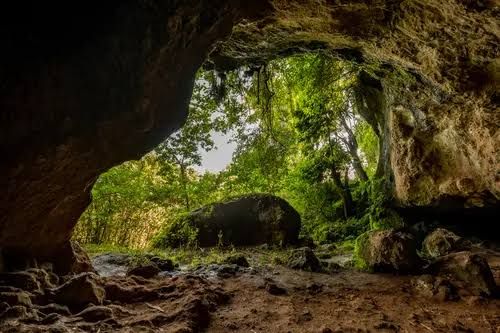
Uganda is a country defined by what lies on its surface. The snows of the Rwenzori. The savannahs of Murchison Falls. The rainforests of Bwindi. But beneath the red earth and volcanic rock of this extraordinary country lies another world — a hidden realm of caves, lava tubes, and rock shelters that tell the story of Uganda’s geology, its wildlife, and its people. Some of these caves were carved by elephants. Some sheltered a people who lost their forest. Some are wrapped in legends of kings and spirits that stretch back centuries. And some are simply extraordinary geological formations, unknown elsewhere in Uganda. This is the complete guide to the caves of Uganda — what they are, where to find them, and why they deserve a place on your Ugandan itinerary. Why Uganda’s Caves Matter Uganda’s caves are not simply geological curiosities. They are a window into the country’s deep history — a record of volcanic activity, of ancient human habitation, and of the complex relationship between people, wildlife, and the land. They are also, for the most part, overlooked. Uganda’s caves receive a fraction of the visitors of the country’s national parks, and most travellers never even know they exist. That is precisely what makes them so rewarding. A visit to a Ugandan cave is not a crowded tourist experience. It is a quiet, torch-lit journey into a world that few people ever see. The caves of Uganda can be divided into four broad categories: Elephant caves — where elephants mine for salt, carving the rock with their tusks over centuries. Cultural and sacred caves — sites of deep spiritual significance, where the Batwa took refuge and where kings once held court. Geological caves — formed by volcanic activity or the weathering of limestone, with formations found nowhere else in Uganda. Rock shelters — home to ancient rock paintings that date back thousands of years. The Elephant Caves of Mount Elgon Kitum Cave: The Cave the Elephants Carved The most famous cave in the Mount Elgon region — and one of the most remarkable wildlife caves in the world — is Kitum Cave. It lies on the Kenyan side of the border, but its story is inseparable from Uganda’s and its sister caves on the Ugandan slopes. Kitum is not a lava tube. It is a non-solution cave formed in pyroclastic volcanic rock — a cave that has been literally carved out of the mountain over thousands of years by the tusks of elephants. The elephants of Mount Elgon are the only elephants in the world known to excavate for salt in underground caves. They enter the caves at night, navigating pitch blackness by feeling with their trunks for routes worn over thousands of years by their ancestors. Deep inside, they use their tusks to score the salt-rich walls, prising away lumps of rock to consume. One elephant can excavate up to 20 kilograms of salt rock in a single night. The practice has shaped the elephants themselves. The elephants of Mount Elgon have particularly stubby tusks — worn down by generations of mining. And the caves themselves have been shaped by the elephants, their walls scarred and furrowed by tusk marks that go back millennia. The Ugandan Elephant Caves While Kitum lies across the border in Kenya, the Ugandan slopes of Mount Elgon hold their own elephant caves — often reached on day hikes from the Sipi Falls area and the Kapkwai Forest Exploration Centre. Kapkwai Cave sits on the hiking trails near the forest centre of the same name, and holds cultural value for the Bagisu and Sabiny peoples. It is one of the most accessible of the Mount Elgon caves. Tutum Cave is described as the hidden treasure on Mount Elgon, accessed through the Kapkwai Exploration Centre. Mackingeny Cave is the most spectacular of the Mount Elgon caves, with a waterfall pouring from its mouth and bats roosting deep inside. Khaukha Cave is found on Wanale Ridge in Mbale — one of the most dramatic rock formations in eastern Uganda. Kaptuuch Caves in Tumbaboi, Kapchorwa District, and Mukuuso Cave in Kween District are among the other caves that can be visited on hikes around the mountain. Practical Information: Mount Elgon Caves Access: All Mount Elgon caves require a guided hike, typically with an armed ranger. Hikes range from a few hours to a full day, depending on the cave and your starting point. Best Time to Visit: The dry seasons (June–August and December–February) offer the most comfortable hiking conditions. What to Bring: Sturdy hiking boots, a torch or headlamp, a rain jacket, water, and snacks. Some caves are muddy and slippery inside. The Cultural Caves of Uganda Garama Cave: The Batwa’s Last Refuge Garama Cave is a 342-metre-long lava tube on the slopes of Mount Mgahinga, at an altitude of approximately 2,300 metres. It is one of the most culturally significant caves in Uganda — the last refuge of the Batwa people, the forest’s first inhabitants. For generations, the Batwa used Garama Cave as a home, a refuge from enemies, a royal residence, and a court of justice. The cave was the headquarters of the once-powerful Batwa kingdom — a place where the Batwa King held court, where disputes were settled, and where warriors took shelter from reprisals. The cave served multiple functions. It was a resting place for the Batwa King — a throne centre for the leader. It was a court of justice and a place of palaver. And it was a slaughterhouse — a site where recently killed animals were brought to be butchered and dried over fires, preserving meat for days and making it lighter to carry on expeditions. The Batwa feared staying in the cave for long periods, worried about falling into the pool of water within and drowning in the darkness. But when enemies threatened, it was the safest place they knew. Today, Garama Cave is the final stop on the Batwa Cultural Trail in Mgahinga Gorilla National Park. Visitors descend into the cave with Batwa guides, hearing the stories of the people who once called it home. The trail ends with a cultural performance at the cave entrance — a ceremonial ground for Batwa cultural leaders. Practical Information: Location: Mgahinga Gorilla
Karuma Falls: Uganda’s Forgotten Waterfall

There is a place on the Nile where the river roars over granite ledges, splitting into channels of white foam that stretch for kilometres, and where a bridge built to carry cotton to market now carries thousands of travellers a day past one of Uganda’s most overlooked natural spectacles. Almost every vehicle heading north from Kampala to Murchison Falls, Gulu, or Kidepo crosses it. Almost none stop. This is Karuma Falls. It is not a single, dramatic plunge like Murchison Falls. It is something different — a sustained, thunderous cataract where the Victoria Nile forces its way through natural rock formations over a stretch of several kilometres. It is one of the most accessible major river features in Uganda, sitting directly on the main highway north. And for decades, it has been treated as little more than a toilet stop on the long drive to somewhere else. That is beginning to change. With a new hydropower tourism product launched in 2026 and a replacement bridge under construction, Karuma is finally being recognised for what it is: a destination in its own right. Where Is Karuma Falls? Karuma Falls sits on the Victoria Nile in northern Uganda, approximately 257 to 280 kilometres north of Kampala on the Kampala–Gulu highway. The falls straddle the boundary of Kiryandongo and Oyam Districts and mark the eastern limit of Murchison Falls National Park. The site is immediately south of where the highway crosses the Nile, making it one of the most accessible major waterfalls in Uganda by road. The drive from Kampala takes approximately four to five hours on tarmac road. Distances from key points: Masindi: approximately 97–110 kilometres southwest Gulu: approximately 70–77 kilometres north Murchison Falls (Paraa): approximately 80 kilometres downstream The falls sit at an elevation of about 1,000 metres above sea level. The Falls: Geology, Character, and Legend A Cataract, Not a Waterfall Karuma Falls is not a waterfall in the traditional sense. It is a series of rapids — the Nile forced through natural rock formations over a stretch of several kilometres. The water is broken into white foam across a wide stretch of river, churning through granite ledges that split the current into roaring channels. Below the bridge, the turbulent ledges and channels continue for approximately 23 kilometres before the current eases. The effect is less a postcard waterfall and more a sustained, thunderous cataract on one of the world’s longest river systems. The Name and the Legend The name “Karuma” comes from the Luo word meaning “great spirit”. According to local belief among the Acholi and Langi communities, a powerful spirit named Karuma placed the stones in the bed of the Nile at this point, splitting and breaking the current to form the falls. Long before the road came, before the bridge was built, Karuma was a landmark for traders and herders moving between Lango and Acholi territories. It was a crossing point, a boundary, and a place with spiritual weight. Communities on both banks regarded the river here as a threshold between the human world and something older. Early European References In 1862, the explorer John Hanning Speke passed near Karuma Falls while searching for the source of the Nile, making it one of the earliest recorded European references to this stretch of the river. The Karuma Bridge: A Lifeline Across the Nile The Original Crossing The Karuma Bridge was built in 1963, primarily to help cotton farmers in the West Nile region move their goods across the river to markets further south. It spans the falls on the Kampala–Gulu–Pakwach highway and remains the only fixed Nile crossing between Jinja and Lake Albert. For decades, crossing the bridge was a routine part of travel between central and northern Uganda. That changed in the early 2000s when the Lord’s Resistance Army (LRA) used the Karuma Bridge area as an ambush point, attacking vehicles crossing from both directions. The bridge became one of the most feared stretches of road in Uganda during those years. The Uganda People’s Defence Force pushed the LRA out of the country and into the forests of the Democratic Republic of Congo in 2007, and the area has been safe for travel ever since. Today, there is no security threat at Karuma, and the bridge sees heavy traffic daily from buses, trucks, and tourist vehicles heading north. The New Bridge A new Karuma Bridge is under development. The construction contract was signed in Tokyo in July 2026, with a groundbreaking ceremony scheduled for September 2026 and civil construction works expected to commence in October 2026. The new crossing will be a 240-metre elevated cable-stayed bridge built about 12 metres higher than the existing structure, which was constructed in 1963. Japan has pledged financing for the $150 million** project, with a **$33 million grant from the Japan International Cooperation Agency (JICA). The new bridge will replace the ageing existing structure and is expected to improve transport and trade links to Northern Uganda, South Sudan, and the wider region. The Karuma Hydropower Project Uganda’s Largest Power Plant Adjacent to the historic crossing, the Karuma Hydropower Station — a 600-megawatt plant — was commissioned in September 2024 and is Uganda’s largest power installation, with six 100-megawatt turbine units. The project was built by Chinese state-owned engineering firm Sinohydro Corporation Limited at a total cost of approximately $1.7 billion. Construction began in December 2013 and was originally planned to take 60 months but ultimately took nearly 114 months, with operations commencing in September 2024. Designed to Preserve the Falls One of the most remarkable aspects of the Karuma project is its design. Unlike many dammed rivers, where hydropower development has completely submerged the visible surface features of the falls, engineers deliberately designed the Karuma project as an underground facility to minimise disruption to the visible waterfalls. As of 2026, the 600-megawatt station is operating almost entirely hidden, while the Nile’s turbulent waters continue to roar over the same broken granite outcrops that travellers have crossed for decades. An Honest Assessment It is important to be honest about what has changed. The dam’s operation has slowed the river’s most violent flows, and Karuma Falls today is no longer the pristine natural spectacle it was before construction began in 2013. But the underground engineering has achieved what it set out to do — the falls remain impressive, especially during
Bujagali Falls: What Remains After the Dam
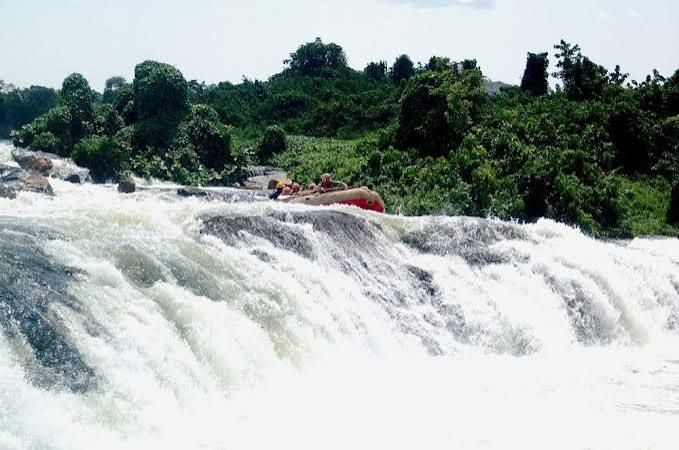
There is a place on the Nile where the river once roared. Where the water churned through a series of cascading rapids, sacred to the Basoga people, a place where spirits were said to dwell in the white water. For generations, this was Bujagali Falls — not a single waterfall, but a series of raging rapids about six miles north of the source of the Nile, a place of power, pilgrimage, and extraordinary natural beauty. Today, Bujagali Falls no longer exists. Where the rapids once thundered, there is now a concrete dam generating 250 megawatts of electricity — power for a nation that desperately needed it. The falls are gone, submerged beneath a reservoir that was created to fuel Uganda’s development. But what remains? What is left of the place that once drew adventurers, pilgrims, and travellers from around the world? And what does its loss tell us about the trade-offs between development and heritage? This is the story of Bujagali Falls — what it was, what happened to it, and what remains today. What Was Bujagali Falls? A Natural Wonder of the Nile Bujagali Falls was a rapids system on the Victoria Nile, located approximately eight kilometres downstream from Jinja in eastern Uganda. It was not a traditional waterfall with a single dramatic drop, but a series of cascading rapids that stretched across more than six kilometres of river, where fast-moving water pushed through rocky channels, creating a spectacle of churning white water visible from the shore. The falls were formed where the Nile meandered over a steep, rocky section of its bed, cascading over rocky shelves and sending spray into the air. The surrounding area was an open stretch of riverbank lined with trees, and the churning water was visible from the shore, making it a popular destination for picnics, photography, and relaxation. The Birthplace of Adventure Tourism in Uganda Before the dam, Bujagali Falls was the epicentre of Uganda’s adventure tourism industry. It was here, in the 1990s and 2000s, that white water rafting on the Nile was born. The falls and the surrounding rapids — including the legendary Silverback — became world-famous among kayakers and rafters, drawing adventure seekers from across the globe. Bujagali was not just a spectator attraction. It was a place where you could stand on the rocks and watch expert kayakers tackle some of the most challenging white water in Africa, or where you could launch a raft for a full-day journey through the rapids downstream. The site was the launch point for rafting companies and the base for a thriving community of guides, porters, and hospitality workers. A Sacred Site of the Basoga People For the Basoga people — the dominant ethnic group in eastern Uganda — Bujagali Falls was far more than a tourist attraction. It was a place of profound spiritual significance, considered home to powerful spirits that were central to the traditional religion of the Busoga Kingdom. The falls were believed to be inhabited by a host of spirits, ranging from ancestral and family spirits to one of Busoga’s most venerated and powerful spirits, the princely Nabamba Budhagalii (also spelled Budhagaali). This spirit was considered the supreme god of the falls and was seen as the father or elder brother of other water spirits at the Source of the Nile and Itanda Falls. The Budhagaali spirit was embodied in a human medium — a traditional healer or diviner known as Jaja Bujagali — who was perceived as an “archbishop” in the traditional religion of Busoga. The most famous of these was Nabamba Budhagali, born Donozio Namunkanga Mukembo Zirabamuzale, who served as the 39th spiritualist to submit to the spirits of the falls. He was the chief oracle of the spirits who lived at Bujagali Falls, and he was believed to protect the community through his rituals and intercessions. Rituals were performed at the falls to appease the spirits, to seek blessings, and to maintain the spiritual balance of the community. The falls were a place of pilgrimage and ceremony, and the spirits were believed to incarnate themselves in human form as traditional healers or diviners. The Bujagali Dam: A Decade of Controversy The Need for Power Uganda’s need for electricity was — and remains — urgent. At the time of the dam’s construction, only 26 percent of the population had access to grid electricity, and in rural areas, where 96 percent of Uganda’s poor live, only 8 percent had access to power. More than 90 percent of Ugandans had no access to electricity at all. Hospitals operated without reliable power. Schools had no lights. Businesses closed at dusk. The Bujagali Dam was proposed as the solution — a 250-megawatt hydroelectric facility that would help reverse Uganda’s power problem. The project’s director, Glenn Gaydar, described it as the “best long-term solution” to Uganda’s energy crisis. The First Attempt and Its Collapse The project was first proposed in 2001, with AES Energy, an American firm, and Uganda’s Madhvani Group as the original developers. But the project collapsed in 2003 when AES withdrew amid fraud investigations and persistent objections from environmentalists who warned of the ecological and cultural costs of flooding the rapids. AES wrote off its $76 million investment, saying delays had increased risks and reduced potential returns. The Second Attempt: Bujagali Energy Limited A new consortium was formed — Bujagali Energy Limited (BEL) — owned jointly by Sithe Global Power of the United States and Industrial Promotion Services, a division of the Aga Khan Fund for Economic Development. Construction began in June 2007 with Italian firm Salini Impregilo as lead contractor. At the peak of activity, over 2,500 workers were employed on the site, roughly 2,200 of them Ugandan nationals. The dam’s five turbines were commissioned one by one, with the first coming online in February 2012 and the last in June, bringing the station to its full 250-megawatt capacity. The Flooding of the Falls In late 2011, the water level behind the dam began to rise. Richard Njuba, a river guide who had been taking visitors for close-up views of the falls for three years, noticed the change. Less than two weeks later, the cascading falls were gone. The flooding of Bujagali Falls to create a reservoir was one of the last steps before the launch of Uganda’s $862-million
Itanda Falls: Uganda’s Most Terrifying Rapids
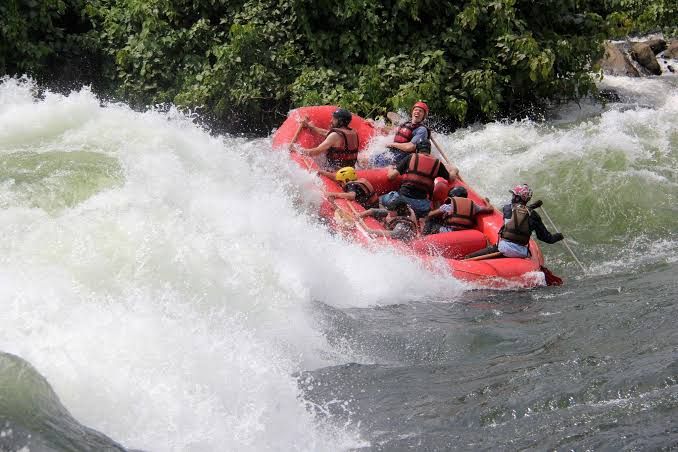
There is a stretch of the Nile where the river stops being a river. It becomes a wall of churning white water, a series of cascading rapids that thunder through a rocky gorge with a roar that can be heard a kilometre away. The ground shakes. The spray rises in permanent clouds. And even the most experienced kayakers in the world approach with a mixture of reverence and fear. This is Itanda Falls. It is not a waterfall in the traditional sense — it is a series of rapids, graded at the highest level of commercial difficulty, and widely considered one of the most challenging stretches of white water on the planet. It is the place where the Nile shows its wild side, and it is not for the faint of heart. This is everything you need to know about Uganda’s most terrifying rapids. Where Is Itanda Falls? Itanda Falls is located on the Victoria Nile in eastern Uganda, approximately 27 to 38 kilometres north of Jinja — the adventure capital of East Africa. It lies in Butagaya sub-county, along Lubanyi Road, and is reached by a partly rough and bumpy road that adds to the off-the-beaten-path feel of the journey. The falls sit downstream from the Source of the Nile and upstream from several calmer sections of the river used for boat cruises. The drive from Jinja town takes approximately 45 minutes to an hour, depending on road conditions. Coordinates: 0°35′59″N 33°03′27″E The Rapids: Uganda’s Most Terrifying White Water Grade 5, Grade 6, and Everything in Between Itanda Falls is not a single rapid. It is a complex of rapids that includes Grade 4, Grade 5, and Grade 6 sections — the highest levels of difficulty used in white water classification. The rapids are formed where the Nile meanders over a steep, rocky section of its bed, cascading from a height of about thirty feet and sending a thick mist of spray into the air. On a rock by the edge of the falls, visitors are swept into “the very heart of fascination, when three dramatic segments of giant rapids come into full view” — each with its own distinct character and ridge structure. The water flows fast because the riverbed is steep and rocky. The current is described as “rocket-like,” capable of trapping even the most experienced kayakers. Whirlpools can drag a person down 50 metres before letting go, according to journals kept by rafters. And the water is estimated by locals to be 100 metres deep. The average drop at the Kalagala and Itanda Falls site is about 14 metres, with a maximum drop of around 5 metres. The Sound of Thunder The most immediate sensory experience at Itanda is the sound. The deafening roar of the heavy rapids can be heard from a kilometre away. As you descend a narrow terraced footpath downstream, the thundering waters and the crisp freshness of the air become “heady” — a full-body experience that overwhelms the senses. Watching the Water Even without entering the water, watching Itanda Falls is mesmerising. The Nile splits into two at this juncture, dividing Central and Eastern Uganda. On the east side, the majority of the water plummets through Itanda. The contrasts are extraordinary — green water, white foam, and red earth, with dramatic cliffs and swirling currents providing a backdrop that photographers describe as unforgettable. What to Do at Itanda Falls Expert Kayaking: The World’s Best Paddlers Itanda Falls is a global destination for elite kayakers and freestyle paddlers. The rapids are Grade 5+ — extremely difficult, with massive hydraulics, steep drops, and technical manoeuvring required. This is not a beginner’s destination. Kayaking here is reserved for advanced and professional paddlers. The falls host international kayaking competitions and training expeditions, and professional teams use Itanda as a training ground for high-volume river navigation. The best time to run the rapids is during the high water season — March to May and November to December — when the river is full, powerful, and dynamic. Spectator Viewing: The Safest Way to Experience the Falls For most visitors, the best way to experience Itanda is as a spectator. Elevated cliffs and natural viewpoints offer panoramic views of the raging Nile, and watching expert kayakers tackle the rapids is a spectacle in itself. The area is exposed and scenic, so bring a camera, binoculars, and sun protection. The best time for photography is mid-morning to early afternoon, when kayakers are most active. A telephoto lens allows you to capture the action from a safe distance. Tubing: A Gentler Adrenaline Fix For those seeking a less intense adventure, tubing allows you to ride the rapids while seated in an inflatable tube, guided by an experienced guide. The activity lasts 1 to 2 hours and covers a distance of about 2 to 3 kilometres on the water. Hiking and Nature Walks The slopes around Itanda Falls are made of rocks that can be hiked, making the climb to the top of the falls relatively easy — though it should always be done with a local guide, as the rocks are slippery and the terrain can be risky. From the top, visitors can meet and interact with the local community and take in panoramic views of the Nile. Birdwatching The area around Itanda supports rich birdlife. Cormorants, kingfishers, storks, herons, and pelicans are among the species regularly seen flying over the falls or visiting the water’s edge to drink. Early mornings and late afternoons offer the best sightings. Cultural Tours and Community Interaction Local guides introduce visitors to Basoga cultural beliefs, river-based livelihoods, and traditional uses of the Nile. These tours support community income and cultural preservation. The Cultural Significance of Itanda Falls A Sacred Site of the Basoga People Itanda Falls is not just a natural wonder. For the Basoga people — the dominant ethnic group in eastern Uganda — it is a place of deep spiritual importance. For generations, the falls have been regarded as a sacred site connected to ancestral spirits and traditional beliefs. Local elders consider the roaring waters a place of power, cleansing, and communication with the spiritual world. The falls are associated with a rainmaking ritual and sacrifice to the rain-god during droughts, as documented in academic study of Busoga water cosmology.
Murchison Falls: Everything You Need to Know Before You Go
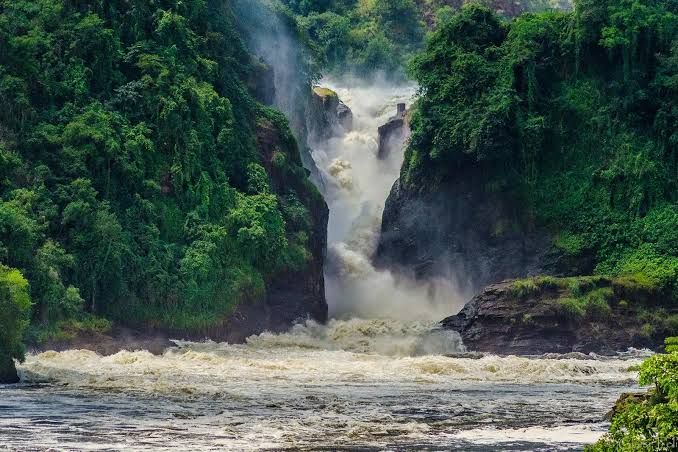
Murchison Falls is Uganda’s largest national park and its most complete safari destination. The park hosts 76 species of mammals and 451 bird species. It is home to Uganda’s largest lion population, along with elephants, giraffes, buffalo, hippos, Nile crocodiles, and a supporting cast of antelopes including Uganda kob, waterbuck, hartebeest, and oribi. What sets Murchison Falls apart is not just the wildlife — it is the experience. Unlike the crowded savannahs of Kenya or Tanzania, Murchison Falls remains uncrowded. On a typical morning game drive, you may encounter only three or four other vehicles. You can spend time with a lion pride without a convoy of trucks jostling for position. The Falls: What You Need to Know The Top of the Falls The hike to the top of Murchison Falls is included in the standard park entry fee and takes approximately 45 minutes from the trailhead. The trail is roughly 2 kilometres from the parking area and gains around 100 metres of elevation, passing through rocky terrain and green vegetation. The reward is extraordinary: you stand at the point where the entire Nile is squeezed through a gap the width of a small car, then released in an explosion of water and sound. The spray soaks you. The ground shakes. And the rainbow that arches across the gorge is a permanent feature, not a fleeting one. The Nile Boat Cruise The boat cruise from Paraa to the base of the falls is widely considered the single best wildlife experience in Uganda. The three-hour journey passes through one of the densest concentrations of hippos in Africa — over 5,000 individuals — along with enormous Nile crocodiles, elephants drinking at the water’s edge, and a spectacular array of birdlife including the shoebill stork. The boat stops a few hundred metres short of the falls, and most operators offer the option to disembark at the bottom for the hike to the top. For those who prefer solitude, the downstream delta cruise winds through papyrus swamps toward Lake Albert, offering superb birdwatching and your best chance of spotting a shoebill. Cost: Approximately USD $30 per person** for the standard cruise, with private arrangements ranging from **$200 to $500. Wildlife: What You Will See The Big Five (Almost) Murchison Falls is home to four of the Big Five: lion, leopard, elephant, and buffalo. The fifth — the rhinoceros — is found at Ziwa Rhino Sanctuary, located on the drive north from Kampala, making it the natural stop to complete the Big Five on a single trip. The Elephants Murchison Falls holds Uganda’s largest elephant population, with herds of 50 to 100 individuals commonly seen on northern circuit game drives. During especially dry years, temporary super-herds of over a hundred elephants have been recorded. Watching a family group cross the Nile — calves swimming between adults, only the tips of trunks visible above the surface — is one of the most memorable wildlife sights in East Africa. The Lions The Chief Warden of the Murchison Falls Conservation Area is unequivocal: “You think about a lion, you will definitely see it in Murchison Falls. If you want to see baby ones, you will see them. But also, if you want to see the real African man-eaters of lions, still you will find them at Murchison Falls.” Lions concentrate north of the Nile in the delta area and open plains, where visibility across the grassland makes for consistent predator sightings. The Buligi game tracks are the park’s premier game drive route, and morning drives beginning at 6:30 AM offer the best chance of finding lions before the heat drives them into the shade. The Giraffes Murchison Falls protects one of the largest remaining populations of Rothschild’s giraffe — one of the most endangered giraffe subspecies. Identifiable by their creamier coat and legs that are white all the way down with no patterning, these gentle giants are a conservation success story and a highlight of any game drive. The Birds With 451 recorded bird species, Murchison Falls is one of Uganda’s premier birding destinations. The park’s wetlands, savannah, and forest habitats support an extraordinary diversity of birds, including the shoebill stork, African skimmer, Goliath heron, and Abyssinian roller. The Budongo Forest on the park’s southern edge adds a further 360 forest species. Activities: Beyond the Game Drive Chimp Trekking in Budongo Forest The Budongo Central Forest Reserve, adjacent to Murchison Falls, is home to over 800 habituated chimpanzees — one of East Africa’s largest mahogany forests and one of the best places in Uganda to track chimpanzees. Trekking here costs approximately USD $130 per person** for the standard one-hour experience, with a four-hour habituation experience available at **$230. Night Game Drives Night drives in the northern sector offer a completely different side of the park. Leopards, civets, genets, porcupines, and servals become active after sunset, and the stargazing — far from city light pollution — is spectacular. Guided Nature Walks Walking safaris with an armed UWA ranger allow you to explore the park on foot, tracking animal signs, identifying plants, and experiencing the bush at close range. This is one of the few Ugandan parks where walking is permitted in savannah habitat. Nile Fishing For anglers, the waters below Murchison Falls offer some of Uganda’s finest sport fishing, with Nile perch exceeding 100 kilograms and hard-fighting tiger fish. All equipment and licensed guides are provided. Ziwa Rhino Sanctuary Located on the drive north from Kampala, Ziwa Rhino Sanctuary is the only place in Uganda to see wild white rhinos. Rhino tracking on foot with a ranger brings you within metres of these massive animals — an unforgettable experience and the perfect way to complete the Big Five. Park Fees: What You Will Pay Daily Park Entry Fees (2026) Visitor Category Adult Child (5–14) Foreign Non-Residents USD $45 USD $20 Foreign Residents USD $35 USD $10 East African Citizens UGX 25,000 UGX 5,000 Children under 5 Free Free Source: UWA 2026 tariff Park entry is charged per person, per 24-hour period from the time of entry. If you stay beyond 24 hours without paying a second day’s fee, the overstay is charged at double the standard daily rate. Children
Sipi Falls: Uganda’s Most Beautiful Waterfall and How to Visit
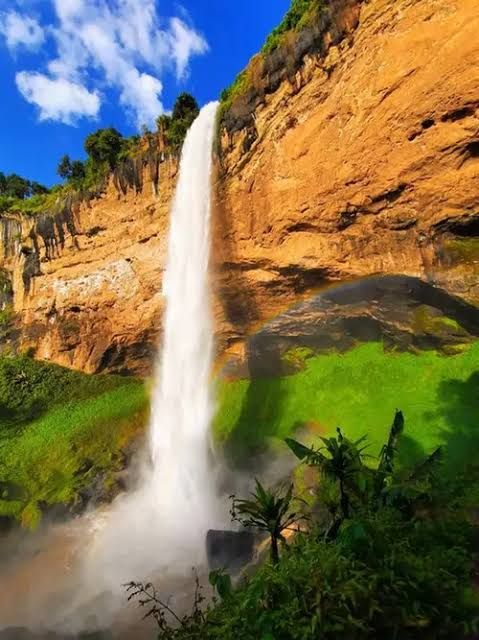
There is a place in eastern Uganda where three waterfalls cascade down the foothills of Mount Elgon, each one more beautiful than the last. The highest plunges 100 metres in a single, powerful stream. The second drops 85 metres into a deep cavern, its mist creating rainbows in the afternoon sun. The third, at 65 metres, falls over rocky steps into a pool where you can swim and stand behind the curtain of water in a natural cave. They are called Sipi Falls. And for many travellers who make the journey to this quiet corner of Uganda, they are the most beautiful waterfalls in the country. This is the complete guide to Sipi Falls — what to see, how to hike, what it costs, and everything you need to plan your visit. Where Is Sipi Falls? Sipi Falls is located in the Kapchorwa District of eastern Uganda, on the northwestern slopes of Mount Elgon and on the edge of Mount Elgon National Park, near the border with Kenya. The falls lie at an altitude of approximately 1,600 to 1,775 metres, giving the area a cool, pleasant climate that makes hiking comfortable year-round. The name “Sipi” comes from the “Sep” plant — a native wild banana-like plant that grows along the banks of the Sipi River and is used by locals to treat measles and flu. The surrounding area is characterised by Arabica coffee plantations, banana plantations, traditional Sabiny villages, and spectacular views over the Karamoja Plains. It is one of Uganda’s most fertile regions, incredibly lush and green, with colourful chameleons hiding among the flowers and vegetation. The Three Waterfalls of Sipi Sipi Falls is not a single waterfall. It is a series of three distinct cascades, each with its own character and personality. The Main Fall (100 metres) The largest and most iconic of the three, the Main Fall drops 100 metres in a powerful, single stream. It is the postcard image of Sipi, photographed from viewpoints across the valley. You can stand at its base to feel the immense power of the spray, or hike to the top for a view that stretches across the Karamoja Plains. This is also the waterfall used for abseiling — a 100-metre descent alongside the thundering water. Simba Falls (85 metres) The middle fall, known as Simba Falls, drops 85 metres over a cliff into a plunge pool below. It is described as the “serene middle child” — the best spot for quiet reflection. A trail goes behind the waterfall halfway up the cliff, offering a safe and fantastic viewpoint with amazing views of the Karamoja Plains and Mount Elgon slopes. Ngasire Falls (65 metres) The smallest and most intimate of the trio, Ngasire Falls cascades 65 metres over a series of rocky steps. It is often the first falls visitors encounter and is easily accessible. After a relatively difficult hike, the waterfall creates a lovely “natural shower” that you can enjoy soaking in. Near the bottom of the waterfall, behind it, lies a man-made cave — a wonderful behind-the-waterfall experience where you can sit in silence in the shadow of the gushing falls. Hiking Sipi Falls: The Complete Guide The Full Three-Falls Circuit The guided trail connecting all three waterfalls takes 3 to 5 hours for the complete circuit, covering approximately 7 to 12 kilometres depending on the route. The hike is rated as moderate difficulty, with some steep sections and ladders. Expect muddy paths, particularly during the rainy season, and come prepared with good hiking shoes and a walking stick. The hike descends steeply from the main viewpoints to the base of each fall through terraced coffee and maize fields, passing through local villages and communities where you will see people going about their daily lives. Views from the lower trail sections show the falls from angles the upper road cannot provide. Choosing Your Route Your hike can either start from the bottom or the top, depending on whether you prefer to hike up a slippery trail or hike down it. Local guides lead all waterfall walks and provide essential navigation through the farmland terrain, as the trails are not clearly marked and can be confused with routes used by village residents. For those who prefer a gentler version, some operators can drive you to specific trailheads to minimise the uphill walking. What to Bring Sturdy hiking shoes with good grip — paths can be steep and slippery near the waterfalls A walking stick — available locally, and invaluable on muddy descents A rain jacket — the mist near the main falls will soak you At least 2 litres of water Insect repellent A camera — the views are spectacular Cash — for guide fees, community fees, and tips Activities Beyond the Waterfalls Abseiling (Rappelling) Down the Main Fall For the adventurous traveller, abseiling down the 100-metre main waterfall is one of East Africa’s most exciting adventure activities. Operators provide safety equipment, harness fitting, and descent supervision for all experience levels. No prior abseiling experience is necessary because guides prepare and accompany all participants. The descent takes approximately 20 minutes, and the view from the waterfall face is extraordinary throughout. Coffee Tours: From Bloom to Brew The Sipi area is a major Arabica coffee-growing region on the slopes of Mount Elgon, with coffee growing at altitudes between 1,600 and 1,900 metres. Coffee farm tours take visitors through the full journey — from cherry picking to pulping, washing, drying, roasting, and finally cupping. Local Sabiny farming families host visitors on their coffee plots for picking, pulping, washing, drying, and roasting demonstrations. The walking trail between the falls passes directly through active coffee plantations at different processing stages. You won’t just watch — you will pick the cherries, de-pulp the beans, and roast them over an open fire. Ziplining and Other Adventures A 1.1-kilometre zipline across the gorge is available for those seeking an adrenaline rush. Rock climbing and mountain biking are also available through adventure operators based in the village. Cultural Encounters The Sipi area is home to the Sabiny people, and cultural encounters are an integral part of the experience. You will walk through their villages, learn about their traditions and daily life, and enjoy the warmth of their hospitality. Birdwatching The Sipi area records more than 250
The Waterfalls of Uganda: Every Major Fall Ranked

Uganda is a country defined by water. The Nile begins its 6,650-kilometre journey here, spilling out of Lake Victoria and carving its way north through savannah, forest, and rift valley escarpment. Along the way, it drops, tumbles, and thunders over some of the most dramatic waterfalls in East Africa. Add to that the volcanic highlands of Mount Elgon, the crater lakes of Fort Portal, and the forested rivers of the southwest, and you have a country with an astonishing concentration of waterfalls. But Uganda’s waterfalls are not created equal. Some are world-famous spectacles that draw thousands of visitors. Others are remote, barely-visited cascades hidden in forest or at the end of a long dirt road. Some are easy half-day trips from Kampala. Others require a flight, a park permit, and a full day of driving. This guide ranks Uganda’s major waterfalls by accessibility, drama, and overall experience — the three factors that matter most when you are planning a trip. Whether you have a spare afternoon in Kampala or a full week to explore the west, there is a waterfall here for you. How This Ranking Works Waterfalls are ranked by a combination of three factors: Drama. The sheer volume of water, the height of the drop, and the spectacle of the surrounding landscape. Accessibility. How easy it is to reach from Kampala or Entebbe, and how much walking or hiking is required once you arrive. Overall experience. The quality of the visit as a whole — the scenery, the wildlife, the cultural context, and the activities available. This is not a ranking of height or volume alone. A modest waterfall in a spectacular setting with a great story will rank higher than a taller one that is difficult to reach and offers little else. The Complete Ranking: Uganda’s Major Waterfalls Rank Waterfall Region Best For Drive from Kampala 1 Murchison Falls Northwestern Uganda Sheer power and drama 5–6 hours 2 Sipi Falls Eastern Uganda Hiking and scenery 4–5 hours 3 Itanda Falls Eastern Uganda Adventure and rapids 2–2.5 hours 4 Kisiizi Falls Southwestern Uganda History and emotion 7–8 hours 5 Aruu Falls Northern Uganda Remote wilderness 5–6 hours 6 Sezibwa Falls Central Uganda Easy half-day trip Under 1 hour 7 Karuma Falls Northwestern Uganda Nile en route to Murchison 4–5 hours 8 Griffin Falls Central Uganda Forest and ziplining 2 hours 9 Nkusi Falls Western Uganda Off-the-beaten-path 4–5 hours 10 Mahoma Falls Western Uganda Crater lakes and culture 5–6 hours 1. Murchison Falls: The Most Powerful Waterfall in the World Location: Murchison Falls National Park, northwestern Uganda Drive from Kampala: 5–6 hours (or 1-hour charter flight) Hike Required: Short walk from boat landing or viewpoint Best For: Sheer, unmatched power Murchison Falls is not just Uganda’s most famous waterfall. It is one of the most powerful waterfalls on Earth — a point where the entire Victoria Nile, carrying the outflow of Lake Victoria, is forced through a gap just seven metres wide before plunging 43 metres into the gorge below. The experience begins on the water. The three-hour boat cruise from Paraa to the base of the falls is widely considered the single best wildlife experience in Uganda, passing hundreds of hippos, enormous Nile crocodiles, and elephants drinking at the water’s edge. From the boat landing, a steep 45-minute hike takes you to the top of the falls, where you stand beside the point where the river disappears into the rock — a place Winston Churchill visited in 1907 and described as one of the most dramatic sights in Africa. The roar is constant. The spray soaks you. And the knowledge that you are standing at the point where the longest river on Earth is compressed through a gap the width of a small car is genuinely humbling. Why it ranks #1: No other waterfall in Uganda combines this level of raw power, this quality of wildlife viewing, and this iconic status. It is the definitive Ugandan waterfall experience. Practical details: Park entry is USD $45** per adult per day for foreign non-residents. The Nile boat cruise costs approximately **USD $30 per person for the standard cruise, with private arrangements ranging from $200 to $500. 2. Sipi Falls: The Hiking Paradise Location: Kapchorwa District, Mount Elgon, eastern Uganda Drive from Kampala: 4–5 hours Hike Required: 1–4 hours depending on the trail Best For: Hiking, coffee, and scenery Sipi Falls is not one waterfall. It is three, cascading down the north-western slopes of Mount Elgon through coffee plantations and forest, with the main fall dropping approximately 100 metres. What sets Sipi apart is the hiking. Unlike many waterfalls, where you drive to a viewpoint and take a photograph, Sipi is built around trails. The short loop (1–2 hours) covers the main 100-metre drop and is suitable for most fitness levels. The full circuit (3–4 hours) links all three falls, includes steep and muddy sections, and rewards hikers with sweeping views over the Karamoja plains. The surrounding area is also one of Uganda’s premier coffee-growing regions, and coffee tours are available on the surrounding plantations. The Sipi River Lodge offers abseiling — a controlled descent down the face of one of the falls — for those seeking an adrenaline rush. Why it ranks #2: Sipi offers the most complete waterfall experience in Uganda — hiking, scenery, coffee, culture, and adventure, all in one place. Practical details: The trailhead is near Kapchorwa, approximately 4–5 hours from Kampala. The short loop takes 1–2 hours; the full circuit takes 3–4 hours. A guide is recommended. 3. Itanda Falls: The Adventure Capital’s Rapids Location: Jinja, eastern Uganda Drive from Kampala: 2–2.5 hours Hike Required: Minimal Best For: Adventure, rapids, and watching kayakers Itanda Falls is not a traditional waterfall. It is a stretch of the Victoria Nile 27 kilometres north of Jinja where the river churns through narrow rocky channels with Grade 6 rapids — the highest level of difficulty for commercial rafting and kayaking. The falls are a magnet for adventure travellers. Expert kayakers and white-water rafters tackle the rapids here, and watching them navigate the churning water is a spectacle in itself. The spray and thunderous force of the water is genuinely impressive, and the surrounding forested islands provide a beautiful setting. Itanda is also a site of cultural significance for the Busoga
Uganda’s Hornbills: The Forest’s Loudest Residents
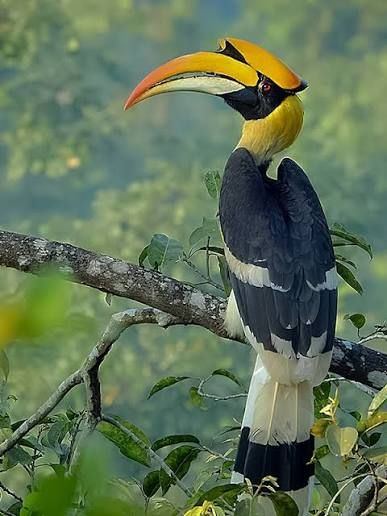
There is a sound that defines Uganda’s forests long before you see its source. It is a deep, resonant whoosh of wings, followed by a chorus of raucous, laughing calls that carry for kilometres through the canopy. It is the sound of hornbills — and in Uganda, they are impossible to ignore. Uganda is home to 14 to 15 confirmed hornbill species, a diversity that reflects the country’s extraordinary range of habitats, from the savannahs of Murchison Falls and Kidepo to the lowland Congo Basin forests of Semuliki and the montane rainforests of Bwindi and Kibale. They are among the most conspicuous and loudest birds in any Ugandan habitat, alerting visiting birders to their presence long before visual location is made. They are also among the most extraordinary. Hornbills possess massive, curved bills topped with casques — structures that have evolved for display, communication, and in some species, as resonating chambers for their calls. Their nesting behaviour, in which the female seals herself inside a tree cavity, is one of Africa’s most remarkable breeding strategies. And their sensitivity to forest quality makes them vital indicators of ecosystem health. This is the complete guide to Uganda’s hornbills — what they are, where they live, and why these loud, charismatic birds deserve a place at the top of your birding list. What Is a Hornbill? A Bird Defined by Its Bill Hornbills are a family of birds (Bucerotidae) found across Africa and Asia, known for their long, downward-curving bills, often topped with a casque — a hollow or solid structure that varies in size and shape between species. The casque is not a weapon; it is used for display, species recognition, and as a resonating chamber that amplifies the birds’ calls. The bill itself is surprisingly light, composed of a honeycomb of hollow cells that make it far less heavy than it appears. Despite its size, the hornbill’s bill is a precision instrument for plucking fruit, capturing insects, and excavating nest cavities in rotting wood. The Extraordinary Nesting Behaviour The most remarkable aspect of hornbill biology is their nesting strategy. Hornbill pairs are monogamous and mate for life, often using the same nest hole for multiple consecutive breeding seasons. The nesting process is extraordinary. The female seals herself inside a tree cavity using mud, droppings, and food remains, leaving only a narrow slit through which the male passes food to her and the chicks. She remains inside the cavity for the entire nesting period — two to three months — during which she lays and incubates her eggs, and the male is solely responsible for food provisioning and external defence of the nest. This behaviour protects the female and chicks from predators and competitors, but it also makes hornbills extremely sensitive to nest hole availability and forest quality. Habitat destruction affects hornbill populations more severely than many other African bird groups. Uganda’s Hornbill Species: A Complete Checklist Uganda’s hornbill species divide clearly between forest species and open-country species, with very little habitat overlap between the two groups. Understanding this division helps visitors find them efficiently. Savannah Hornbills Abyssinian Ground Hornbill (Bucorvus abyssinicus) The Abyssinian Ground Hornbill is Uganda’s most impressive hornbill — a large, turkey-sized bird that walks in pairs and small groups across open savannah. It is a striking bird with black plumage, a massive bill, and colourful blue and scarlet facial skin. It is best seen at Murchison Falls and Kidepo at dawn, where game drives deliver close-range sightings. Southern Ground Hornbill (Bucorvus leadbeateri) The Southern Ground Hornbill is similar in appearance to its Abyssinian relative but is found in the savannahs of southern and eastern Africa. It is a rare and localised species in Uganda. African Grey Hornbill (Lophoceros nasutus) The African Grey Hornbill is common and widespread in savannah and woodland. It is a smaller species with subdued grey plumage and is frequently observed in small family groups or pairs. Jackson’s Hornbill (Tockus jacksoni) Jackson’s Hornbill is a key target species found only in Uganda’s far north. It is easily recognised by its red bill and is usually found in Uganda’s drier areas, particularly Kidepo Valley National Park. Hemprich’s Hornbill (Lophoceros hemprichi) Hemprich’s Hornbill is found in the rocky escarpments of northern Uganda. It is a distinctive species with a pale bill and dark plumage, adapted to cliff and gorge habitats. Crowned Hornbill (Lophoceros alboterminatus) The Crowned Hornbill is found in Ethiopia, Uganda, Kenya, DRC, Somalia, Angola, Namibia, Zimbabwe, Mozambique and South Africa. It is a medium-sized species with a dark bill and a distinctive white crown. African Pied Hornbill (Lophoceros fasciatus) The African Pied Hornbill is widely distributed across West and Central Africa, extending into Uganda in the east. It is distinguished by its large bill and contrasting black and white plumage, and it is frequently found in savannas and forests. Forest Hornbills Black-and-White-Casqued Hornbill (Bycanistes subcylindricus) The Black-and-White-Casqued Hornbill is the most common and conspicuous hornbill in Uganda’s forests. It is found in Kibale, Bwindi, Budongo, and Mabira, where its loud, laughing call is one of the forest’s most characteristic sounds throughout the day. Pairs and small groups move through the canopy frequently during productive morning birding sessions. Piping Hornbill (Bycanistes fistulator) The Piping Hornbill is the largest hornbill species at Semuliki and is also found in the forest canopies of Bwindi and Kibale. Its metallic piping call carries far across the forest canopy, announcing its presence long before it is seen. White-Thighed Hornbill (Bycanistes albotibialis) The White-Thighed Hornbill is found in the forests of western Uganda. It is a large, noisy species that moves through the canopy in groups, creating a conspicuous movement pattern. Black-Casqued Wattled Hornbill (Ceratogymna atrata) The Black-Casqued Wattled Hornbill is a large Congo Basin species found in Uganda only at Semuliki National Park. It is a striking bird with a massive black casque and prominent wattles. White-Crested Hornbill (Horizocerus albocristatus) The White-Crested Hornbill is a forest species found in Semuliki, where it moves through the canopy in groups of four to eight birds. It is a distinctive species with a white crest and long tail. Red-Billed Dwarf Hornbill (Lophoceros camurus) The Red-Billed Dwarf Hornbill is the smallest and most distinctive hornbill at Semuliki — and one of the smallest hornbills in Africa. It is a tiny, easily-overlooked species whose loud
The African Fish Eagle: The Sound of the Nile
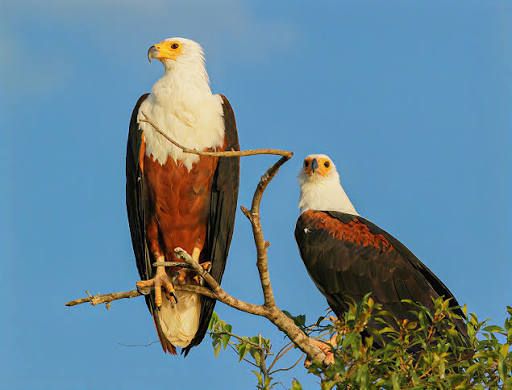
There is a sound that defines the African wilderness more completely than any other. It is not the roar of a lion, the rumble of an elephant, or the whoop of a hyena. It is a sound that carries across water at dawn — a wild, ringing cry that rises from the treetops, echoes off the escarpment, and fades into the silence of the river. It is the call of the African Fish Eagle, and it is, for millions of people around the world, the sound of Africa itself. In Uganda, this call is inseparable from the Nile. It rings out over the Victoria Nile at Murchison Falls, over the Kazinga Channel in Queen Elizabeth National Park, over the shores of Lake Mburo, and across the waters of Lake Victoria. It is a sound that travellers remember long after they leave — a sound that means they are somewhere wild, somewhere free, somewhere genuinely African. This is the complete guide to the African Fish Eagle — what it is, how it lives, where to see it in Uganda, and why its call has become the most recognisable sound of the continent. What Is an African Fish Eagle? A Sea Eagle of the African Interior The African Fish Eagle (Icthyophaga vocifer, formerly Haliaeetus vocifer) is a large bird of prey in the family Accipitridae — the same family that includes hawks, eagles, and kites. It is a sea eagle, a member of the genus Haliaeetus, which also includes the iconic Bald Eagle of North America and the White-Tailed Eagle of Europe. Despite its name, it is not a true eagle in the strictest sense — it is a fish eagle, a specialised lineage that evolved to hunt in and around water. The species was first described by French naturalist François Levaillant in 1798, who gave it the name vocifer — Latin for “loud-voiced” — in reference to its extraordinary call. It is the national bird of Zambia, Zimbabwe, Namibia, and South Sudan, and it appears on the flags, coats of arms, and currency of several African nations. Physical Characteristics The African Fish Eagle is a large, powerful raptor with a striking appearance that makes it instantly recognisable. Size. It measures 63 to 75 centimetres in length, with a wingspan of 175 to 210 centimetres. Females are larger than males, weighing 2 to 3.6 kilograms, while males weigh 2 to 2.5 kilograms. The plumage. The adult is unmistakable. It has a pure white head, neck, breast, and tail, contrasting sharply with a rich chestnut or rufous belly and wing coverts. The flight feathers and back are black, creating a bold three-colour pattern that is visible from a considerable distance. In flight, the white head and tail against the dark wings make the bird instantly identifiable. The bill and feet. The bill is yellow with a black tip, and the eyes are dark brown to yellow, set in a pale face. The feet are yellow with powerful, curved black talons. The toes are covered with spiky structures called spiricules — an adaptation that allows the eagle to grip slippery fish more securely. Juveniles. Young birds are entirely different in appearance. They are mostly brown, with a mottled, paler head and breast, and a dark tail. They take four to five years to reach full adult plumage. The Call: The Sound of Africa The African Fish Eagle’s call is its most famous feature. It is a loud, ringing, two-syllable cry — described variously as “weee-ah, hyo-hyo-hyo” or “whow-kayow-kwow” — that carries for kilometres across water and forest. It is often performed as a duet between the male and female, with the female’s call being deeper and the male’s higher. The call serves multiple functions: it advertises territory, maintains contact between paired birds, and communicates with neighbouring pairs. It is most frequently heard in the early morning, before the heat of the day, and again in the late afternoon. On still mornings, the sound carries across the water in a way that is almost impossible to describe — a sound that has become synonymous with the African wilderness. The call is so iconic that it has been used in countless films, documentaries, and television advertisements to signify “Africa” — even when the footage was shot on a different continent. It is, quite simply, the most recognisable bird call in the world. Behaviour and Ecology A Fish Specialist The African Fish Eagle is, as its name suggests, a fish specialist. Its diet consists primarily of fish, including catfish, tilapia, lungfish, and other freshwater species, typically weighing 200 grams to 1 kilogram. It will also take waterbirds, small turtles, terrapins, crocodile hatchlings, monkeys, and carrion when the opportunity arises. The eagle hunts by perching in a tall tree overlooking water, waiting for a fish to surface. When prey is spotted, it launches into a steep dive, snatching the fish from the surface with its talons. It then carries the fish to a perch to eat it — typically head-first, to avoid the spines of catfish. The eagle’s spiricules — the spiky structures on its toes — allow it to grip slippery fish with remarkable security. Its reversible outer toe lets it hold prey with two toes forward and two backward, a powerful grip that few fish can escape. Kleptoparasitism One of the most remarkable behaviours of the African Fish Eagle is kleptoparasitism — the practice of stealing food from other birds. Fish eagles are frequently seen harassing other fish-eating birds, including cormorants, pelicans, and goliath herons, forcing them to drop their catch and then swooping down to retrieve it. This behaviour is particularly common during the breeding season, when the eagles need to feed growing chicks. Monogamy and Pair Bonds African Fish Eagles are monogamous and form long-term pair bonds that can last for years. Pairs defend territories along rivers, lakes, and coastlines, and they call together in duets to advertise their presence and maintain their bond. The pair bond is reinforced by shared nesting duties and communal calling. A pair of fish eagles calling in duet is one of the most memorable wildlife experiences in Africa — a sound that seems to define the landscape itself. Breeding African Fish Eagles breed during the dry season, when fish are concentrated in shrinking water bodies and easier to catch. The pair builds a large stick nest in a tall tree near water, often reusing the same nest year after year and adding to it until it becomes a substantial structure.
